Heavy structural steel racking, mezzanine systems, and high-density material handling components manufactured to international tolerances and exported direct to Canadian distribution facilities.
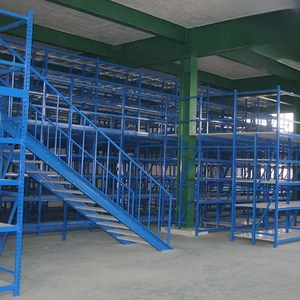
Structural multi-tier mezzanine platforms integrating directly with selective and narrow aisle racking to double or triple usable square footage in high-ceiling facilities.
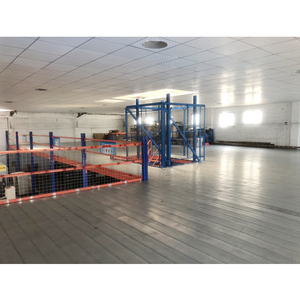
Demountable bolt-together steel structures designed for modular pick-towers, sorting hubs, and dynamic overhead office-over-storage configurations.
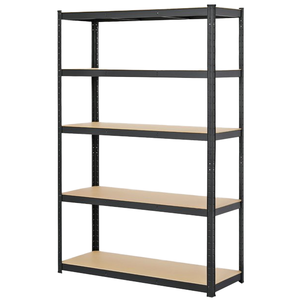
High-rigidity boltless shelving for small part logistics, manual SKU picking, e-commerce order replenishment, and assembly store operations.
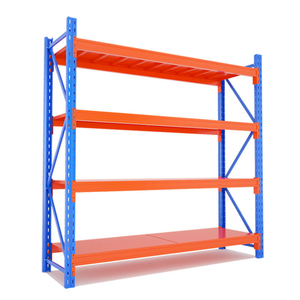
Heavy-gauge welded wire deck shelving units engineered for high air circulation, maximum sprinkler water penetration, and retail stockroom visibility.
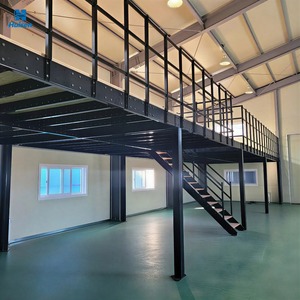
Cold-formed and hot-rolled structural beam mezzanine floors with heavy point-load ratings, staircase towers, safety gates, and industrial decking.
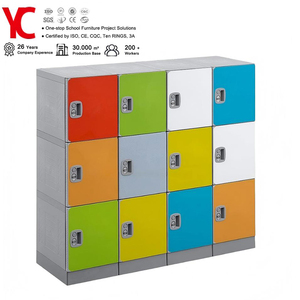
Reinforced steel mesh personal lockers and security enclosures for distribution personnel, tooling quarantine, and high-value bonded inventory storage.
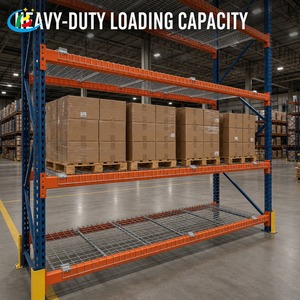
NFPA 13 sprinkler-compliant galvanized wire decking with outside waterfall borders and step-channel supports, engineered to prevent loose carton drops.
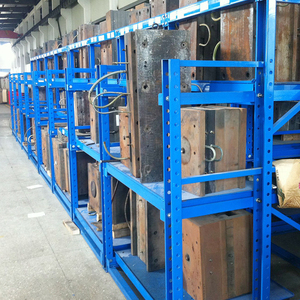
Heavy roll-out drawer racks accommodating tooling, injection dies, stamping blocks, and heavy engineering spares with overhead jib crane accessibility.
Across key Canadian metropolitan supply chain corridors—principally the Greater Toronto Area (GTA) along Highway 401, Metro Vancouver's Lower Mainland, Greater Montreal, and the Calgary-Edmonton logistics axis—industrial real estate values and triple-net (NNN) lease rates have created a decisive financial imperative for vertical warehouse densification. With industrial land availability restricted by agricultural land reserves (ALR in British Columbia) and municipal urban containment boundaries, warehouse operators and third-party logistics (3PL) providers are constrained from expanding footprints horizontally.
Conventional selective pallet racking systems require aisle operating widths between 3.5 metres and 3.8 metres (11.5 to 12.5 feet) to accommodate standard counterbalanced forklifts or reach trucks. In contrast, Very Narrow Aisle (VNA) racking systems compress working aisle dimensions to 1.6 to 1.9 metres (5.25 to 6.25 feet), reclaiming up to 45% to 55% of dead aisle floor area and converting it into live, revenue-generating pallet storage positions. When combined with vertical building clear heights of 12 to 16 metres (40 to 52 feet), VNA systems systematically lower the cost-per-pallet-stored, offsetting escalating Canadian real estate expenses.
Analysis shows that deploying high-bay VNA racking in a 100,000 sq.ft facility increases pallet capacity from ~8,200 standard positions to over 13,800 positions. Avoiding the lease or acquisition of a second satellite warehouse saves an estimated CAD $1.1M to $1.8M annually in net lease, municipal tax, utilities, and heating costs in Canadian climate conditions.
Procuring industrial racking for the Canadian commercial market requires strict conformity with national and provincial building regulations. Racking systems are not mere shelving furniture; under Canadian law, they are classified as free-standing engineered steel structures subject to structural design codes and mandatory professional engineer (P.Eng) validation.
Our narrow aisle racking components are fabricated from certified structural steel grades matching ASTM A1011 / CSA G40.20/G40.21 high-yield specifications. CSA S16 establishes rigorous limit states design rules for cold-formed steel sections, torsional-flexural buckling limits, and beam-to-column connector performance under full design dead, live, and seismic load combinations ($1.25D + 1.5L$ and $1.0D + 1.0E$). Uplift locking pins are rated to withstand a minimum 5.0 kN upward force to prevent accidental disengagement by mechanical turret truck tines.
Canada exhibits extreme variations in seismic spectral acceleration. The Pacific Northwest corridor (Vancouver, Richmond, Delta, Nanaimo) and the St. Lawrence Valley seismic zone (Montreal, Ottawa, Quebec City) represent high-hazard seismic zones where design spectral response acceleration parameters $S_a(0.2)$ exceed 0.8g to 1.1g. In accordance with the National Building Code of Canada (NBCC):
Engineered anchor baseplates (up to 16mm thick) with multiple anchor bolt holes dissipate vertical base moments into the concrete slab without exceeding punching shear limits.
Heavy tubular or closed-profile diagonal horizontal bracing configured for enhanced ductility factors ($R_d = 1.5$ to $2.0, R_o = 1.3$) dissipating seismic wave harmonics.
Aisle-spanning structural portal frames tie dual runs together across narrow aisles, restricting longitudinal and transverse sway under lateral earthquake excitations.
Under Section 7 of Ontario's Occupational Health and Safety Act (OHSA, R.R.O. 1990, Regulation 851 for Industrial Establishments), newly installed or significantly modified racking systems require an independent Pre-Start Health and Safety Review (PSR) stamped by a licensed Professional Engineer (P.Eng) prior to operational loading. As a dedicated manufacturer and supplier, Divakaran supplies comprehensive technical dossiers—including mill test reports, anchor pull-out load calculations, beam deflection criteria ($L/180$), and load capacity plaques conforming to CSA A344 standards—ensuring seamless PSR sign-off across Ontario, Quebec, Alberta, and BC.
Selecting the optimal racking system requires balancing storage density, pallet selectivity, capital expenditure, and materials handling equipment (MHE) kinematics. The following comparative engineering matrix outlines key performance benchmarks for Canadian warehouse designers:
| Storage System Type | Operating Aisle Width | Floor Space Utilization | Pallet Selectivity | Handling Equipment | Floor Flatness Spec (DIN / F-min) | Ideal Application |
|---|---|---|---|---|---|---|
| Standard Selective Racking | 3.5m – 3.8m (11.5' – 12.5') | 35% – 40% | 100% Direct Access | Standard Counterbalance / Reach Truck | Standard Flatness (FF 25 / FL 20) | General warehousing, fast moving SKUs, low ceiling |
| Narrow Aisle (NA) Racking | 2.6m – 3.0m (8.5' – 9.8') | 45% – 50% | 100% Direct Access | Articulated Truck / Bendi / Flexi | Moderate Flatness (FF 35 / FL 25) | Mid-height warehouses without floor rail modifications |
| Very Narrow Aisle (VNA) | 1.6m – 1.9m (5.2' – 6.2') | 60% – 68% | 100% Direct Access | Man-Up / Man-Down Turret Truck (AS/RS) | Superflat (DIN 15185 / F-min 75-100) | High-bay distribution, costly land, cold chain storage |
| Double-Deep Pallet Rack | 3.2m – 3.5m (10.5' – 11.5') | 50% – 55% | 50% Immediate (LIFO) | Deep-Reach Pantograph Forklift | Standard Flatness (FF 25 / FL 20) | Medium SKU variety, homogeneous pallet batches |
| Drive-In / Drive-Through | Dedicated Lanes | 70% – 75% | Low (Last-In First-Out) | Standard Counterbalance entering bay | Standard Flatness (FF 25 / FL 20) | Bulk food & beverage, seasonal high-volume lots |
*Note: DIN 15185 and ASTM E1155 (F-min) define defined-traffic floor tolerances necessary to eliminate mast sway on VNA turret trucks operating at elevations exceeding 10 metres.
Because Very Narrow Aisle systems leave mere inches of lateral clearance between the forklift mast and rack frame uprights, mechanical precision is non-negotiable. Two primary truck guidance systems are supported by our engineering designs:
Heavy structural steel angle profiles ($L100 \times 75 \times 8$mm or $L125 \times 90 \times 10$mm) or heavy-duty C-channels are anchored directly to the concrete floor along both sides of the racking run. Low-profile guide wheels mounted to the base of the turret truck physically contact the guide rail, steering the machine automatically down the aisle. Entry lead-in funnels are fabricated with thickened sacrificial steel bumpers to cushion truck entry alignment.
A continuous sub-floor loop antenna is saw-cut into the centreline of each aisle, filled with epoxy, and energized with a low-frequency radio current (approx. 5 kHz to 10 kHz). Onboard truck sensors track the frequency path automatically. Wire guidance eliminates raised metal floor obstructions, facilitates unimpeded floor sweeping, and simplifies pallet staging at aisle mouths.
When operating a "man-up" order-picking turret truck at lift heights of 14 metres (46 feet), a minute floor deviation of just 2 millimetres across the truck's wheel base amplifies into a 25 to 35 millimetre dynamic mast deflection at the top shelf beam level. To eliminate frame impact risks, Canadian VNA facilities must adhere to DIN 15185 defined-traffic tolerance limits or ASTM E1155 F-min 75 to F-min 100 ratings. Our engineering consultation team works alongside Canadian general contractors to coordinate slab leveling, contraction joint armoring, and rack anchor drill testing before system erection.
How regional logistics dynamics, climate zones, and provincial regulations shape narrow aisle racking requirements across Canada.
The warehousing sector across Canada is experiencing three rapid technological shifts impacting rack system procurement:
Facing persistent warehouse labor shortages across Ontario and Alberta, Canadian operators are retrofitting narrow aisle layouts with autonomous driverless turret trucks. Racking systems require tight manufacturing tolerances ($\pm 1.0$mm hole pitch accuracy) to integrate with robotic optical and LIDAR positioning targets.
With commercial electricity tariffs and industrial carbon pricing in Canada, refrigeration costs are measured per cubic metre. Converting -25°C blast freezers to Very Narrow Aisle profiles reduces conditioned refrigerated air volume by over 40% while preserving 100% individual pallet SKU accessibility.
Major Canadian institutional real estate investment trusts (REITs) require Environmental Product Declarations (EPDs). Our continuous roll-forming production incorporates high-efficiency electric furnace steel with low embodied carbon, aiding LEED certification scoring for green industrial builds.
Operating as a primary manufacturer—never an intermediary trader—since 1977, our dedicated manufacturing facilities in Umbergaon, Gujarat, combine automated fabrication lines with over 45 years of specialized storage system engineering. Having supplied complex warehousing installations across Canada, Bahrain, Sri Lanka, and the Middle East, our technical team understands the precise documentation, quality assurance, and metallurgical standards demanded by North American procurement specialists.
Exclusively premium structural steel coils with verified yield strengths up to 350 MPa. Every lot is delivered with certified Mill Test Reports (MTRs) detailing chemical composition and mechanical elongation properties.
Multi-stage CNC continuous roll-forming lines punch and form upright columns up to 16 metres in single unbroken lengths. Laser-monitored hole indexing ensures repeatable, distortion-free field erection.
7-stage automated chemical pre-treatment and iron phosphate conversion coating, followed by electrostatic epoxy-polyester powder curing at 200°C. Delivers unmatched resistance against abrasion, peeling, and corrosion.
Engineered Knock-Down (CKD) packing maximizes 40ft High-Cube container volume. Factory-direct intermodal shipping routes directly to the Port of Vancouver, Port of Montreal, or inland rail depots in Brampton/Calgary.
From preliminary slab evaluation to post-commissioning maintenance documentation.
Essential technical and commercial considerations for Canadian operations and logistics directors.
Submit your warehouse layout drawings, clear height specs, and pallet dimensions. Our structural design engineers will generate a customized CAD aisle density proposal, load calculation sheet, and containerized freight quotation.