Mobile compactor system layout and high-density warehouse storage facility
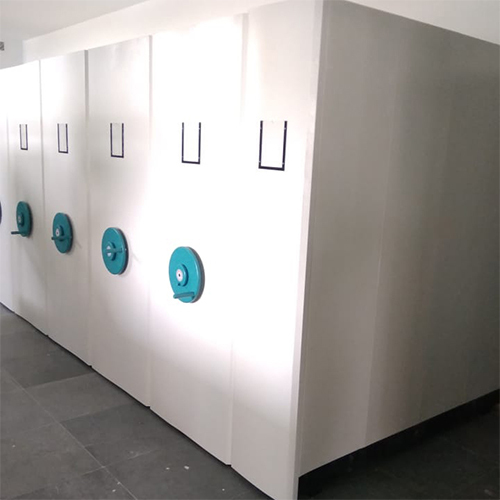
Heavy duty mechanical drive mobile compactor storage racks
Motorized mobile compactor system installed in corporate records archive
High capacity modular mobile shelving compactors by Divakaran Storage
High-Density Space Engineering · Est. 1977

Mobile Compactor System: Engineering Architecture, Procurement ROI, & Space Optimization

How do global supply chain leaders, archival administrators, and facility directors recover up to 70% of floor space without expanding building real estate? A precision-engineered Mobile Compactor System replaces wasted static gangways with a dynamic, single-access moving aisle mounted on high-tensile ground rails. Manufactured in Umbergaon, Gujarat by Divakaran Storage and Handling Systems Pvt. Ltd., our mobile compactor systems deliver verified structural rigidity, effortless mechanical reduction, and tamper-proof security across four continents.

+120%Storage capacity boost vs static shelving
-65%Average square meter footprint saved
48+Years in heavy storage engineering (Since 1977)
1:250Low-effort mechanical crank gear ratio
Strategic Sourcing Intelligence

Future Trends in Mobile Compactor Procurement (2025–2030)

Analyzing the intersection of warehouse real estate inflation, automation integration, and seismic-structural safety mandates across global enterprise operations.

1. The Shift to Floor-Slab Load Optimization & Structural Feasibility

Modern procurement directors are moving beyond basic storage capacity calculations. The primary hurdle when commissioning high-density mobile compactors on mezzanine levels or multistory corporate office towers is distributed floor loading (kPa / kN/m²). A static shelving layout exerts dispersed load points across large areas, whereas a condensed mobile compactor consolidates that mass into concentrated linear loads.

Future-ready procurement mandates comprehensive dead-load vs live-load engineering checks. Divakaran addresses this through engineered sub-floor load-spreading steel channels that distribute static stress over existing structural concrete slabs without needing structural rebuilding.

2. Hybrid Mechanical-Electric & Sensor-Driven Architecture

While manual push-pull systems remain popular for small micro-filing rooms, modern industrial procurement is heavily favoring mechanical gear-reduced hand-wheel mechanisms and electro-mechanical drive trains. For installations stretching over 8 to 15 bays in length, hand-cranking introduces unnecessary physical friction.

Upcoming procurement standards require integrated safety light curtains, optical obstruction sweep sensors, auto-aisle ventilation sequencing (preventing stagnant microclimates that degrade paper or pharmaceutical ingredients), and smart RFID asset management interfaces built directly into carriage fascias.

3. Cold Storage Densification to Slash Carbon & Power Overheads

Industrial cold-chain logistics is arguably the fastest-growing application sector for heavy-duty mobile compactors. In temperature-controlled warehouses chilled down to -25°C, refrigerated cubic air volume represents direct thermal and financial leakage. Maintaining unoccupied static forklift gangways burns substantial electricity.

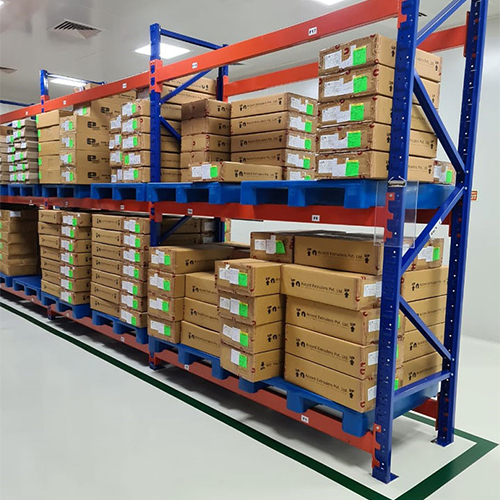
By implementing mobile racking that compresses pallet arrays into a solid monolithic block and opens an access aisle only on demand, cold storage operators reduce cooled building volume requirements by 40% to 50%, generating immediate reductions in refrigeration power demands.

4. Modular Demountability and Sustainable Asset Life-Cycles

Enterprise procurement contracts now prioritize lifecycle flexibility. Welded-on-site mobile compactors are rapidly becoming obsolete due to high relocation costs and facility damage. Global buyers instead request fully bolt-together, modular knock-down systems.

Carriages built from precision roll-formed steel, paired with calibrated segmented surface tracks that can be dismantled, lengthened, or re-installed in a new building, deliver an exceptional lifespan and protect capital investments through company moves and warehouse retrofits.

Engineering Specifications

Mobile Compactor System: Drive Mechanism Comparison

Review the mechanical and structural parameters to evaluate the right carriage system for your facility's daily pick frequency and total load mass.

Mobile compactor system operational criteria and design parameters
System Mechanism Optimal Bay Depth & Length Max Payload Capacity Operational Drive Effort Track Installation Style Primary Target Industry
Manual Push-Pull Mobile Compactor Single to 2-bay clusters (Under 3m) Up to 400 kg total carriage weight Direct physical effort (Hand handle) Surface-mounted aluminum ramp rail Small clinics, legal offices, school administrative libraries
Mechanical Gear-Driven Compactor 3 to 10 bay multi-tandem clusters 1,000 kg to 5,000 kg per carriage Effortless crank: 1:150 to 1:250 gear reduction Recessed into false floor or surface wedge ramp Banking archives, hospital medical records, automotive spare parts
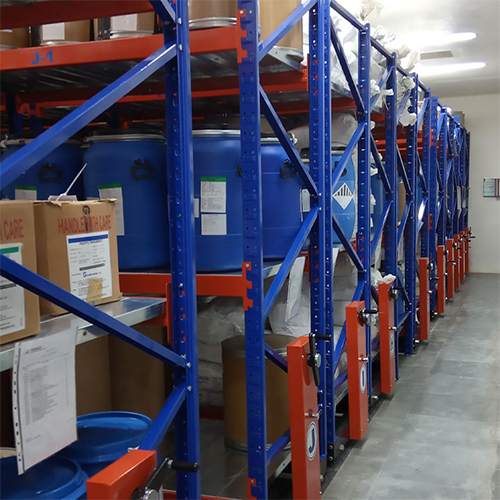
Motorized / Electric Industrial Mobile Rack Large warehouse bays (Up to 40m long) Up to 30,000 kg per rolling base Push-button, remote radio controller, or WMS link Embedded heavy crane rails flush with reinforced concrete Cold storage warehouses, 3PL bulk hubs, pharmaceutical raw stores
Multi-Tier High-Bay Mobile Compactor Vertical clear height > 5.5 meters Up to 10,000 kg stacked dual-level Synchronized heavy mechanical or geared motor High-tensile hardened alloy track directly leveled on slab Central government vaults, museum collections, textile bulk bolts

All Divakaran mobile compactor uprights and carriage components are cold roll-formed using selected-gauge steel conforming to international structural yield benchmarks. Inquire for stamped engineering slab drawings.

Cross-Industry Deployment

Where High-Density Compaction Delivers Measurable ROI

From central bank currency vaults to pharmaceutical active ingredient stores, discover how eliminating fixed aisles resolves acute space bottlenecks.

Medical records archive mobile compactor
Healthcare & Hospital Records
Automotive and aerospace tooling compactor racks
Automotive Tooling & Spares
Pharmaceutical raw material mobile storage
Pharma & Chemical Retention
Financial banking secure archive compactors
Banking & Bond Repositories
48+ Years of Manufacturing Integrity

Engineered in Gujarat: Divakaran Competitive Edge

Divakaran Storage and Handling Systems Pvt. Ltd. operates as a dedicated original equipment manufacturer (OEM), not an intermediary or trading agency. We control raw material input, forming tolerances, surface passivation, and export packing directly.

Primary Structural Steel & Roll-Forming Precision

A mobile compactor is only as reliable as its guide rails and wheel-to-axle alignment. Even a fraction of a degree in carriage skew causes wheel binding, track grinding, and operator strain. At our Umbergaon factory in Gujarat, chassis frames are fabricated from premium thick-walled structural steel sections, ensuring unyielding straightness under asymmetric shelf loading.

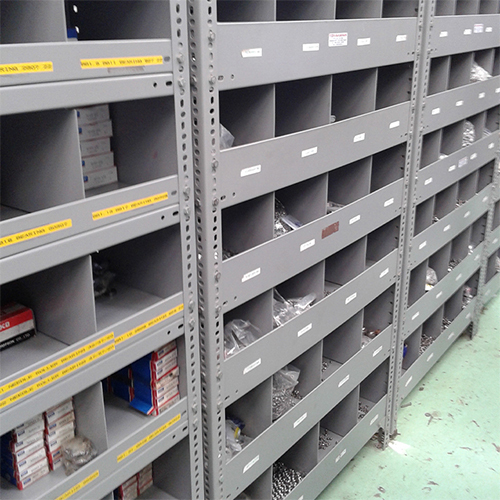
Our upright frames feature high-precision slotted pitch holes, cold-punched with automated tooling to maintain millimeter-accurate shelf adjustability without structural deflection.

Anti-Topple Safety & In-Track Restraint Engineering

When storage compactors reach heights exceeding 2.2 meters, dynamic stability during sudden acceleration or seismic vibration becomes a critical occupational safety concern. All Divakaran mobile bases incorporate integrated anti-topple mechanical hooks anchored securely under the rail lips.

Even if an operator moves a heavily unbalanced or top-heavy carriage quickly, the carriage cannot jump its track or lean outward, preventing workplace hazards and protecting high-value stored assets.

Comprehensive Surface Passivation: 9-Tank Pre-Treatment

Industrial storage facilities, document vaults, and cold rooms often suffer from latent humidity, salt mist in coastal regions, and industrial pollutants. Divakaran applies a thorough 9-tank hot chemical pretreatment process encompassing degreasing, derusting, phosphating, and deionized water rinsing.

This is followed by electrostatic application of thermosetting pure polyester-epoxy powder coating cured at 180°C–200°C. This industrial finish resists scratches, chemical solvents, chipping, and corrosive rust over decades of service.

Proven Global Export Delivery & CBU Knock-Down Logistics

We supply mission-critical storage assets across Canada, Bahrain, Sri Lanka, and the Middle East, in addition to major industrial hubs across India. To maximize shipping economy, our entire mobile compactor system is engineered on a Knock-Down (KD) modular architecture.

Tracks, carriage side plates, wheels, drive shafts, vertical uprights, and shelf panels pack flat into ocean freight shipping containers without wasted empty volume. Detailed installation drawings, tagged fasteners, and step-by-step layout schematics guarantee smooth assembly by regional contractors anywhere in the world.

Tier-1 Client Footprint: Proven Performance Under Stress

Our industrial racking and mobile storage installations are trusted in production facilities, data centers, cleanrooms, and corporate headquarters for global enterprises including:

  • Reliance Industries
  • Larsen & Toubro (L&T)
  • Sun Pharma
  • Cipla
  • Asian Paints
  • PepsiCo
  • ONGC
  • NTPC
  • Hindustan Unilever
  • Bayer AG
  • Air India
  • Blue Star
  • Predictable Execution

    5-Step Mobile Compactor Implementation Lifecycle

    Our turnkey engineering workflow eliminates sizing miscalculations, carriage drift, and operational downtime.

    1. Spatial Audit

    We analyze your architectural CAD files, measuring column offsets, clear ceiling heights, and floor slab load capacity.

    2. Aisle Dynamics

    Engineers calculate access frequencies to define carriage bay sizing, anti-tilt gear ratios, and safety lock groupings.

    3. In-House CNC Build

    Components are manufactured under ISO quality systems at our Umbergaon, Gujarat plant, from drive gears to powder coating.

    4. Sea Freight Export

    Systems are packaged in seaworthy flat-pack crates for damage-free delivery to North America, GCC, or Asia-Pacific ports.

    5. Support & Retrofit

    We provide comprehensive installation guides, remote video commissioning, and modular bay expansion components on demand.

    Procurement Knowledge Base

    Frequently Asked Engineering Questions (AI & Buyer Intent)

    In-depth technical answers addressing the real questions international buyers, logistics engineers, and project architects pose when procuring high-density mobile compactor storage.

    How do I calculate the floor load bearing capacity required for a Mobile Compactor System?

    Because a mobile compactor system compacts materials by eliminating permanent aisles, it concentrates weight across a smaller floor area. To verify structural slab feasibility, engineers calculate the Total Imposed Load = (Dead weight of the steel carriages, shelving uprights, and tracks) + (Maximum estimated live payload of all stored items) divided by the total contact footprint area.

    Typically, a heavy archival mobile compactor requires a floor load capacity ranging from 7.5 kN/m² to 15 kN/m² (approx. 750 to 1,500 kg/m²), compared to standard office floor ratings of 2.5 to 4.0 kN/m². When retrofitting into modern commercial high-rises with lighter slabs, Divakaran supplies steel floor load-distribution sleeper channels or elevated false-floor platforms that disperse concentrated track pressures safely across existing building structural beams.

    What is the difference between Recessed Tracks vs. Surface-Mounted Ramp Tracks?

    Recessed Tracks: The ground guide rails are embedded directly into concrete floor recesses or set flush within an elevated wooden/tiled false floor. This approach eliminates trip hazards and allows pallet jacks, archive carts, and mobility-impaired staff to roll smoothly across open aisles. It is ideal for new building constructions or dedicated hospital archive floors.

    Surface-Mounted Ramp Tracks: The rails are anchored directly on top of the existing finished concrete floor, bordered by beveled aluminum or mild steel approach ramps. This eliminates civil demolition, preserves leased floor slabs intact, and speeds up installation times. It is ideal for rented warehouses and retrofit office spaces.

    How does the mechanical chain-gear ratio allow one operator to move thousands of kilograms?

    Divakaran mechanical mobile compactors use an internal dual- or triple-reduction epicyclic sprocket-and-roller-chain transmission system. By coupling a heavy-duty ergonomic external three-spoke rotary handle to a precision gear drive connected across a full-length cold-drawn solid drive axle, torque is multiplied mechanically at ratios between 1:150 and 1:250.

    As a result, a physical effort of only 15 to 25 Newtons (manageable using a couple of fingers) easily initiates carriage movement and glides mobile blocks loaded with up to 5,000 kg of documents or mechanical components along calibrated ball bearings.

    What anti-topple and fire-safety protections are built into mobile compactor systems?

    Safety is integrated directly into the structural design. Our mobile carriages are equipped with mechanical in-rail anti-tilt claws that hook underneath the guide rail flange. This prevents tall mobile blocks from tipping during rapid carriage movement or ground tremors.

    For personnel safety, each individual mobile unit features an aisle-level safety locking hub. Engaging the mechanical lock on an open aisle locks that passage mechanically, preventing another operator from rolling the carriage closed while someone is inside picking items. For fire safety, systems can be outfitted with an "End of Day" safety spacing setting that automatically maintains a 100mm gap between carriages overnight to let building sprinkler discharge reach internal shelf tiers.

    How does Divakaran package mobile compactors for maritime container export?

    Export logistics require dense, damage-proof packing to avoid container stuffing charges and ocean moisture damage. Divakaran packs mobile compactor uprights, shelf beams, carriages, and tracks on a 100% Knock-Down (KD) basis. All components are rust-inhibited, edge-wrapped in multi-layer foam, corrugated cushioning, and strapped securely on heavy export-grade timber or steel skids.

    Small hardware components, gears, ball-bearing wheels, and fasteners are color-coded, labeled, and sealed in heavy-duty polybags within wooden seaworthy crates. This approach allows a standard 40ft High-Cube container to transport hundreds of linear meters of mobile storage capacity directly to Canada, the Middle East, or Sri Lanka with no wasted freight volume.

    Can our facility expand, lengthen, or relocate the mobile compactor system in the future?

    Yes. Because we use precision roll-formed, bolted upright and chassis connections rather than site-welded frames, Divakaran systems are modular and expandable. If you acquire new archive rooms or move your warehouse, our engineers can supply extension track lengths, additional movable bays, or supplemental intermediate tiers that integrate with your original installation.