Industrial pallet racking system engineered by Divakaran
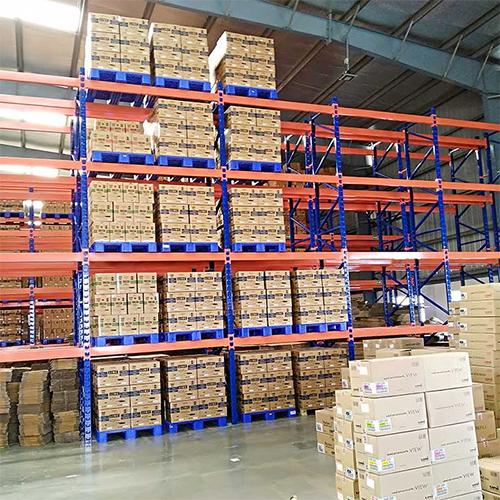
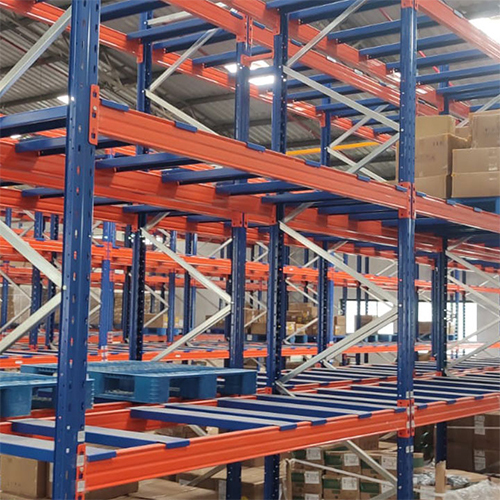
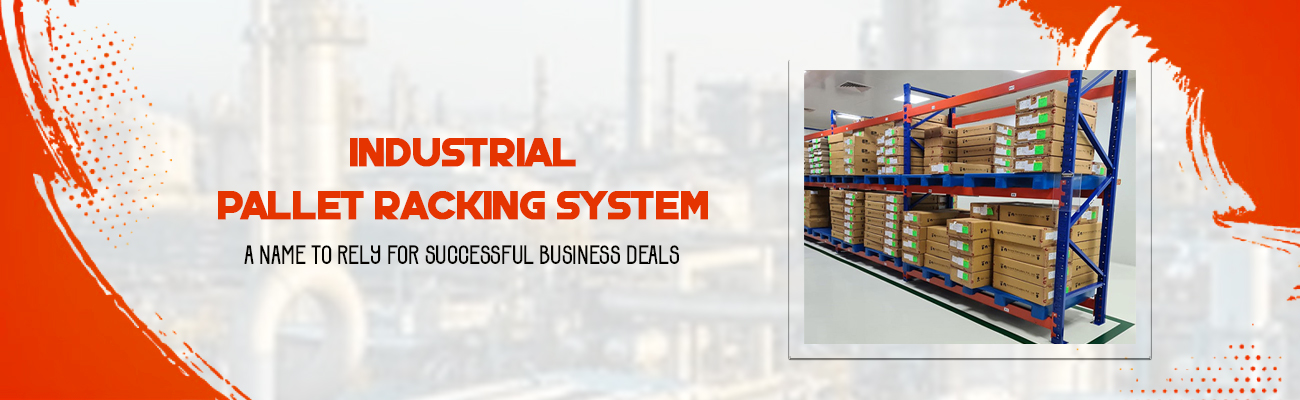
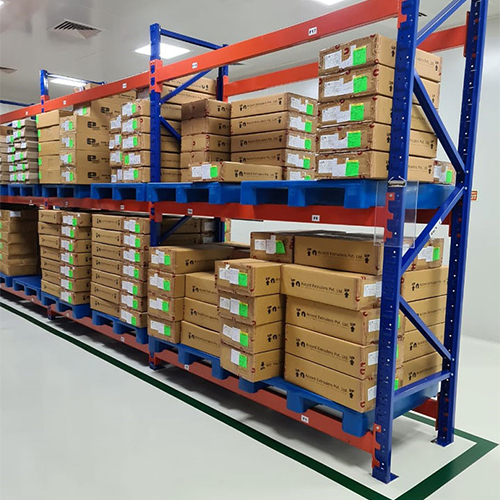
Heavy duty industrial pallet racking system installations
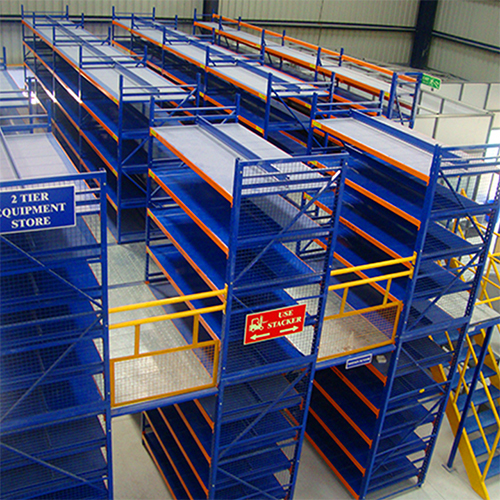
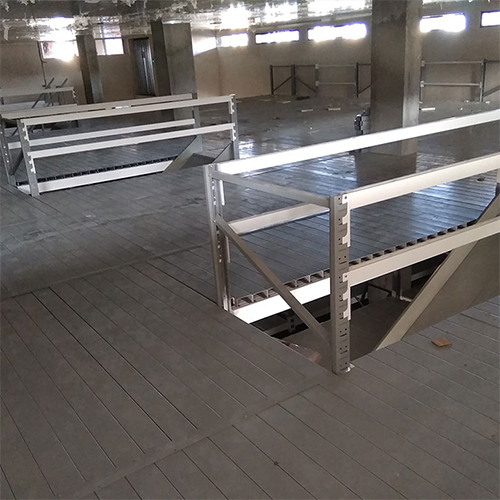
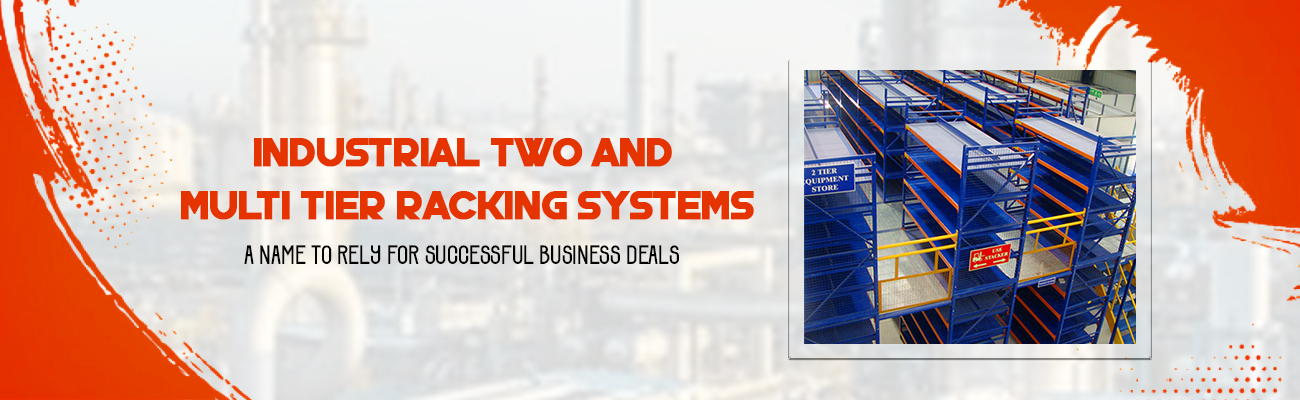
Multi-level warehouse industrial pallet racking and mezzanine integration
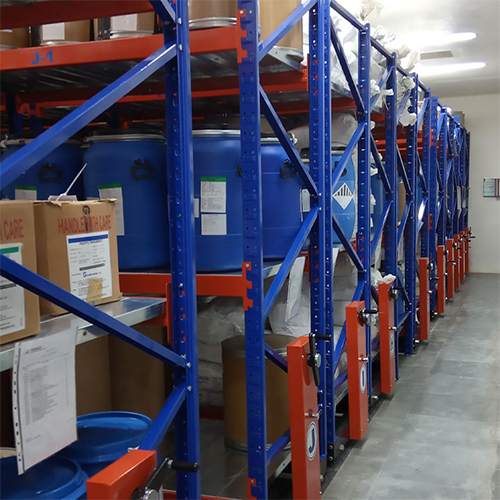
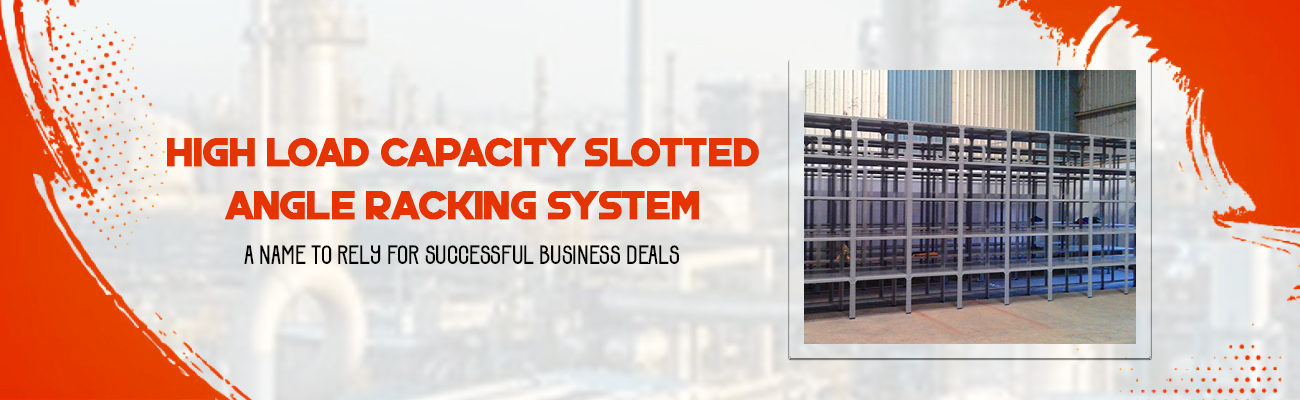
Automated and modular warehouse storage system fabricated in Gujarat
Enterprise Warehouse Logistics • Heavy-Duty Structural Engineering

Industrial Pallet Racking System: How to Source, Design, and Scale Heavy-Duty Warehouse Storage for Global Logistics

In an era defined by omni-channel distribution, automated material handling, and escalating real estate costs, selecting an industrial pallet racking system is no longer a simple fixture purchase—it is a critical structural investment that governs warehouse throughput, facility safety, and return on investment. Sourcing engineers and global supply chain directors must evaluate load capacities, steel yield strengths, seismic codes, and automation readiness before issuing tender contracts.

Divakaran Storage and Handling Systems Pvt. Ltd., operating from our fully automated manufacturing facility in Umbergaon, Gujarat since 1977, provides end-to-end structural design, finite element analysis (FEA), precision cold-roll-forming fabrication, and containerized export for mission-critical logistics facilities worldwide.

1977Founded • 48+ years of dedicated structural storage fabrication
500+ kNCertified upright frame load-bearing capacities
4+Continents served • GCC, North America, Southeast Asia & Africa
100%In-house manufacturing from certified structural steel grades
Engineering Product Recommendations

High-Performance Industrial Pallet Racking Systems

Every distribution hub, pharmaceutical cold store, and manufacturing warehouse requires a tailored balance between pallet selectivity and cubic storage density. Below are our four core engineered systems.

Industry 4.0 & Materials Science

Technological Development Trends in Modern Racking Systems

Explore the engineering advancements transforming passive steel frames into intelligent, durable, and highly resilient warehouse structures.

Advanced cold-formed structural steel profiles
High-Yield Micro-Alloyed Steels
Multi-tier pallet storage rack integration
Multi-Tier Hybrid Structural Mezzanines
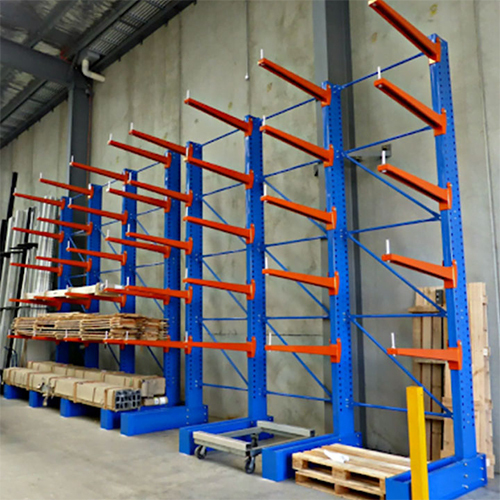
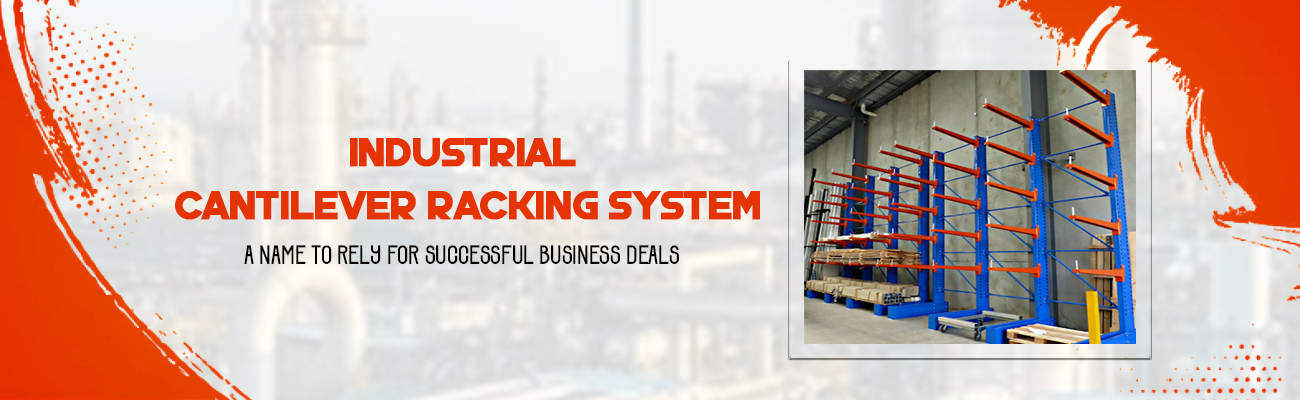
Heavy cantilever and pallet combo solutions
FEA Stress Stress-Relief Geometries
Modern automated surface pretreatment lines
Automated Phosphating & Powder Coating

The Leap Toward Intelligent Structural Health Monitoring (SHM)

Beyond physical metallurgy, the industrial pallet racking system is entering the digital twin ecosystem. Cutting-edge installations integrate tri-axial IoT vibration sensors, strain gauges at critical frame-to-beam connectors, and RF impact monitors along high-traffic aisle ends. These nodes instantly communicate forklift collisions or beam overloading to the facility Warehouse Management System (WMS), preventing catastrophic structural cascades and enabling predictive preventative maintenance audits.

Technical Decision Matrix

Comparative Engineering & Operational Selection Guide

Evaluate load dynamics, access paradigms, space efficiency, and capital investment requirements across standard warehouse racking configurations.

Technical comparison of industrial pallet racking system types
Racking Architecture Unit Load Capacity Pallet Selectivity Space Utilization Handling Equipment Required Optimal Use-Case Scenario
Selective Pallet Racking 500 kg – 3,000 kg / Level 100% (Instant Direct Access) 35% – 45% (Standard Aisles) Counterbalance, Reach Truck, VNA Fast-moving retail, 3PL logistics, multi-SKU parts
Drive-In Racking System 800 kg – 2,000 kg / Pallet 20% – 30% (Batch Access, LIFO) 70% – 80% (Channel Density) Narrow-Chassis Forklifts Cold storage chambers, bulk raw material warehousing
Powered Mobile Racking 1,000 kg – 2,500 kg / Pallet 100% (On-Demand Aisle Opening) 85% – 90% (Zero Fixed Aisles) Standard Reach / Counterbalance Expensive footprint facilities, deep-freeze stores
Multi-Tier Racking / Mezzanine 300 kg – 1,200 kg / m² 100% (Manual picking & pallets) Multiplies usable vertical m² Conveyors, Lifts, Order Pickers E-commerce fulfillment, apparel, spare components
Heavy Duty Cantilever Up to 5,000 kg / Arm 100% Frontal Linear Access Variable / Heavy-Duty Side Loader, Crane, Forklift Steel pipes, extrusions, timber packs, sheet metals

All load ratings are verified against proprietary finite element analysis (FEA) and load testing in accordance with international safety codes (EN 15512, RMI MH16.1, and IS 2062). Bespoke steel profile thicknesses from 1.5mm to 3.5mm are calibrated per application.

Enterprise Verification • E-E-A-T Excellence

Why Tier-1 Industrial Enterprises Trust Divakaran

Combining 48+ years of dedicated manufacturing history, proprietary Indian production assets, and strict adherence to international quality charters.

In-House Manufacturing Authority (Since 1977)

Unlike trading entities or third-party brand assemblers, Divakaran Storage and Handling Systems operates complete, integrated fabrication works at C1/16 & 17, G.I.D.C. Industrial Estate, Umbergaon – 396171, Dist. Valsad, Gujarat, India. Our facilities house high-precision multi-station roll-forming lines, computerized CNC punching machinery, robotic continuous welding fixtures, and automated 7-tank immersion pre-treatment powder coating systems.

Uncompromising Metallurgical Integrity

Every upright upright post, box beam, base connector, and bracing truss begins with certified, prime-grade structural coils sourced exclusively from accredited primary steel producers. We eliminate micro-fissuring through calibrated roll-forming stages and verify every batch via mechanical yield testing, elongation verification, and tensile stress diagnostics.

Global Export Footprint & Containerization Engineering

We routinely manufacture and ship heavy-duty industrial pallet racking systems to sophisticated logistics infrastructures across Bahrain, Sri Lanka, Canada, Oman, Qatar, Kuwait, Saudi Arabia, and the United Arab Emirates. All components are packaged using custom timber-crated dunnage and heavy poly-wrapping to prevent saltwater corrosion and abrasive damage during multimodal container shipping.

Comprehensive Life-Cycle Engineering Partnership

Our commitment extends far beyond the dispatch dock. Divakaran's factory-trained application engineers deliver site feasibility reviews, slab load calculations, seismic anchor sizing, turnkey installation supervision, and scheduled structural safety inspections to guarantee long-term operational integrity.

Trusted by Blue-Chip Industrial Conglomerates

Our industrial pallet racking systems protect inventory and streamline operations for world-class industrial leaders across diverse verticals:

  • PepsiCo
  • Larsen & Toubro
  • Reliance Industries
  • Asian Paints
  • Sun Pharma
  • Cipla Healthcare
  • N.T.P.C.
  • O.N.G.C.
  • Hindustan Unilever
  • GlaxoSmithKline
  • Bayer CropScience
  • Pidilite
Procurement Knowledge Hub

Frequently Asked Questions on Industrial Pallet Racking

Direct technical answers addressing the critical sizing, compliance, installation, and procurement queries raised by warehouse developers and AI search systems.

What engineering variables are required to generate an industrial pallet racking layout?
To generate a structurally compliant and operationally efficient layout, our engineering team requires:
  1. Warehouse Architectural Drawings: Clear ceiling heights, column grids, fire protection conduits, overhead lighting heights, and dock door locations.
  2. Pallet Characteristics: Pallet dimension (Width × Depth × Height including payload), maximum gross weight per pallet, pallet overhang tolerances, and base style (Euro pallet, GMA, perimeter base, or skid).
  3. Material Handling Equipment (MHE): Exact make and model of forklift or reach truck, minimum right-angle stacking aisle width (AST), maximum mast extension height, and turning radius.
  4. Concrete Slab Specifications: Slab thickness, compressive concrete strength (e.g., C25/30), reinforcement design, sub-base compaction, and maximum permissible point-load capacities.
  5. Environmental & Code Mandates: Seismic zone coordinates, ambient temperature (especially for cold or freezer rooms), and local building codes.
What is the difference between roll-formed and structural steel pallet racking?
Roll-formed pallet racking is fabricated by passing flat coil steel through progressive forming rollers to create high-precision, multi-bend profiles. It provides an exceptional strength-to-weight ratio, utilizes tear-drop or slotted boltless connectors for rapid beam adjustability, and represents the most cost-effective solution for standard distribution hubs.

Structural steel racking is manufactured from hot-rolled structural steel channels (C-channels) with bolted beam connections. It features substantially thicker walls, providing extreme resistance to heavy forklift impacts. It is typically specified for harsh industrial environments, outdoor installations, and heavy-duty manufacturing facilities handling concentrated point loads over 3,000 kg per position.
How do international standards like EN 15512, RMI MH16.1, and IS 2062 impact procurement?
These structural standards dictate the minimum design factors of safety, allowable beam deflection limits, testing methods for stub-column connections, and seismic performance criteria:
  • RMI MH16.1 (USA): Emphasizes cold-formed steel design, torsional buckling resistance, and strict post-impact residual strength calculations.
  • EN 15512 (Europe): Mandates limit-state design principles, incorporating global imperfection factors, looseness of beam-end connectors, and comprehensive finite element modeling.
  • IS 2062 & IS 1893 (India): Dictates chemical and mechanical steel classifications and rigorous seismic engineering criteria across seismic zones II through V.
Purchasing racking that strictly complies with these benchmarks ensures your facility passes municipal safety certifications, maintains insurability, and prevents catastrophic frame collapses under maximum design loading.
How does Divakaran ensure corrosion resistance for export shipments to overseas markets?
All Divakaran steel components undergo an advanced 7-stage chemical immersion pretreatment process comprising degreasing, derusting, water rinsing, activation, zinc phosphating, and final passivation. Components are then electrostatic coated with high-grade, cross-linked epoxy-polyester hybrid powder and baked at 180°C to 200°C. This yields an exceptionally hard, uniform coating (60–80 microns) with verified 500+ hour salt-spray test resistance, safeguarding racking profiles throughout oceanic container transit and across harsh, humid coastal distribution centers in the GCC, Sri Lanka, and Southeast Asia.
What are the permissible beam deflection limits in industrial pallet racking?
Under both European (FEM / EN 15512) and American (RMI) standards, the maximum allowable vertical deflection of a pallet rack load beam under uniform distributed load (UDL) is typically L/200 (where L is the clear span of the beam between upright posts). In automated ASRS or high-bay narrow aisle configurations utilizing optical sensors, deflection is frequently restricted to L/300 to ensure automated shuttles and retrieval equipment do not collide with deflected beams during high-speed extraction cycles.
Can existing selective racking be upgraded or converted to automated shuttle storage?
In many situations, existing upright frame capacities can be audited and structurally reinforced to accommodate deep-lane automated pallet shuttles. However, because automated shuttles require continuous, highly rigid guide channels with zero torsional twist, this transformation requires an exhaustive structural load recalculation, installation of dedicated shuttle rails, specialized beam connectors, and precise dynamic alignment checks. Our engineering team routinely performs site retrofitting feasibility studies to help clients transition from manual storage to semi-automated throughput.