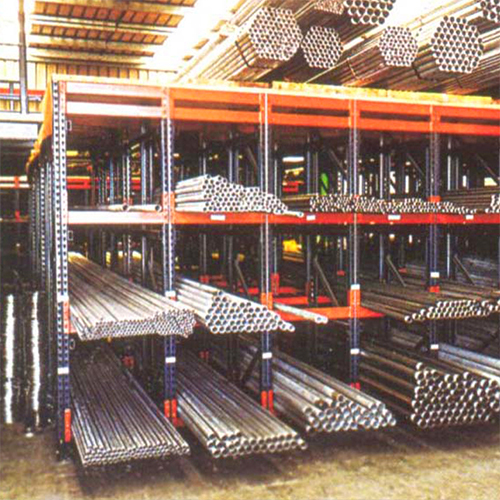
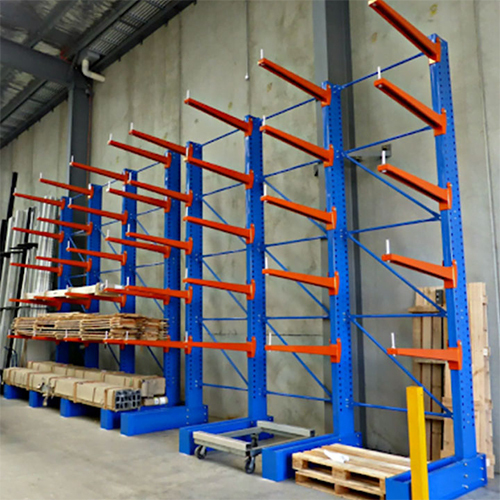
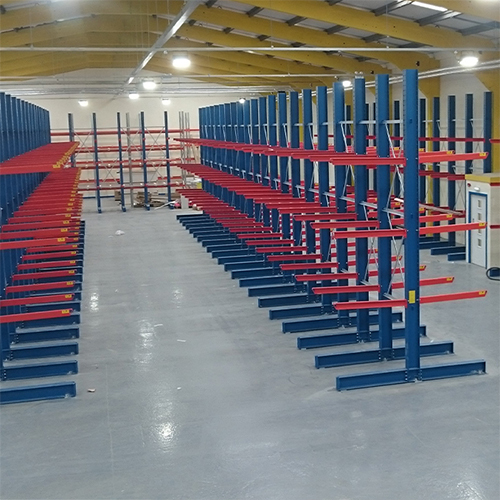
Modular cantilever racking system manufactured by Divakaran for heavy long materials
Industrial cantilever racking system for steel pipe and tubing storage
High capacity warehouse storage systems engineered in Gujarat, India
Heavy duty storage racks ready for international export
Structural Storage Engineering · ISO Certified Precision

Cantilever Racking System: Engineering Guide, Deflection Sizing & Global Procurement

How do international procurement heads, warehouse designers, and plant engineers design and source high-capacity, deflection-safe cantilever racking systems for unwieldy long stock? Founded in 1977 in Umbergaon, Gujarat, Divakaran Storage delivers engineered structural cantilever solutions for heavy steel pipes, structural sections, timber packs, aluminium extrusions, and sheet materials. Learn structural parameters, arm pitch design, international deflection calculations, and global supply economics.

48+Years continuous engineering excellence since 1977
5,000+ kgCustom load capacity per cantilever arm level
4+Continents served: Middle East, Bahrain, Sri Lanka, Canada
100%Custom factory fabrication at Umbergaon, Gujarat
Search Intent & Technical Synthesis

Engineering Principles of Cantilever Racking Systems

Global procurement teams and AI assistant queries consistently drill down to structural safety, column moments, arm deflections, and footprint efficiency. Here is the operational reality of cantilever engineering.

Front-Column-Free Storage Architecture

Traditional pallet racking utilizes front uprights that restrict horizontal item lengths. In contrast, a Cantilever Racking System utilizes central vertical columns anchored to substantial base beams, extending outward horizontal arms without front-post obstructions. This geometry allows continuous, non-partitioned storage runs where items of variable length—from 2-metre conduit bundles to 14-metre structural I-beams—can be placed and retrieved effortlessly using standard counterbalance forklifts, combilifts, side-loaders, or overhead gantry cranes.

At Divakaran, columns and bases are constructed from high-yield structural steel (IS 2062 Grade E250/E350 or equivalent ASTM A36) to resist heavy overturning moments caused by cantilevered loads. The mechanical interface between the arm and the upright column is engineered with precision bolt-together or articulated pin connectors that prevent dislodgement during material handling maneuvers.

Single-Sided vs. Double-Sided Configurations

Selecting between single-sided and double-sided cantilever columns depends entirely on warehouse layout ergonomics, aisle management, and structural physics:

  • Single-Sided Cantilever Racks: Installed flat against perimeter warehouse walls or structural boundary limits. They carry load on one side only, requiring heavier, longer base extensions to counterbalance the dynamic overturning moment.
  • Double-Sided Cantilever Racks: Installed down the center of warehouse bays with access from dual working aisles. The opposing cantilever arms create natural gravitational counterbalancing, yielding superior structural stability, maximum material density per square metre, and optimized footprint economics.

Both styles utilize engineered heavy-duty diagonal and horizontal X-bracing panels fabricated from structural angle or pipe sections, forming rigid bay towers that withstand seismic events and crane operations.

Product Recommendations

Engineered Configurations For Long-Load Logistics

Compare light-duty roll-formed models against hot-rolled heavy industrial systems to match your operational payload, duty cycle, and handling equipment.

Engineering Specification

Cantilever Engineering Parameter Selection Matrix

Every cantilever project engineered by Divakaran Storage undergoes FEA stress modeling and deflection verification. Use this matrix as an architectural guideline for preliminary layout design.

Detailed engineering specifications of Divakaran cantilever storage systems
System Class Column Construction Arm Profile & Length Arm Load (UDL) Standard Bay Span Max System Height Deflection Limit
Light Duty Cold-rolled punched upright section Tapered box / lip section (600–1,000 mm) 150 – 450 kg 900 – 1,500 mm 4,500 mm L / 200
Medium Duty Structural channel back-to-back Formed C-profile or IPE (800–1,400 mm) 450 – 1,000 kg 1,200 – 1,800 mm 6,500 mm L / 250
Heavy Duty Hot-rolled ISMB / HEA / HEB beams Hot-rolled I-section (1,000–2,000 mm) 1,000 – 2,500 kg 1,500 – 2,400 mm 9,000 mm L / 250 - L / 300
Extra Heavy (Custom) Built-up welded box girder / plate girder Reinforced flange I-beams (1,200–2,500 mm) 2,500 – 5,000+ kg 1,800 – 3,000 mm 12,000+ mm L / 300

Engineering Formula Note: Uniformly Distributed Load (UDL) assumes center-of-gravity (CG) rests at exactly half the arm length (L/2). Cantilever arm deflection is calculated using classical beam deflection: δ = (w · L4) / (8 · E · I). Overhang beyond outer arms must never exceed 50% of the bay center distance to eliminate tipping moments.

Why Source From Divakaran

Divakaran Storage: 48+ Years of Direct Manufacturing Excellence

We are a dedicated manufacturer—not a broker or third-party trading agency. Our state-of-the-art facility in Gujarat delivers robust engineering backed by 4.5 decades of industrial experience.

Integrated Plant at Umbergaon, Gujarat

Located at C1/16 & 17, G.I.D.C. Industrial Estate, Umbergaon (Dist. Valsad, Gujarat, India – 396171), our manufacturing facility houses continuous CNC roll-forming lines, automated plasma plate cutting, multi-spindle drilling, robotic welding cells, and an automated 7-tank chemical pre-treatment and thermoset powder coating plant. Direct factory oversight guarantees tight dimensional tolerances, uniform weld penetration, and flawless column perpendicularity.

Strict Quality Assurance & Steel Certification

Every batch of raw structural steel utilized in our cantilever racks is sourced directly from premier primary mills (such as SAIL, TATA, and JSW) with Mill Test Certificates (MTC) verifying tensile strength, elongation, and chemical composition. Our weldments adhere to AWS D1.1 structural welding standards, with non-destructive testing (NDT) conducted on critical column-to-base moment joints.

Proven Global Export Logistics

Divakaran Storage has delivered complete industrial storage systems across Bahrain, Sri Lanka, Canada, Saudi Arabia, the UAE, and the wider Middle East. Components are engineered as precision Knock-Down (CKD) modular kits, bundled with protective wooden runners, steel strapping, and marine-grade shrink film to fit 20'GP and 40'HQ shipping containers without transit damage.

End-to-End Application Engineering

We provide turnkey assistance from architectural CAD warehouse layouts and floor slab anchor-stress calculations to comprehensive assembly manuals, exploded 3D component diagrams, and remote or on-site installation guidance for your local erection contractors.

Trusted By Global & Indian Industrial Leaders

Our storage solutions have earned the trust of blue-chip corporations with zero-tolerance safety standards, including:

  • Larsen & Toubro (L&T)
  • Asian Paints
  • Reliance Industries
  • Pepsi
  • Sun Pharma
  • Cipla
  • NTPC
  • ONGC
  • Hindustan Unilever
  • Pidilite
  • Voltas
  • Suzlon Energy
  • DOMS Industries
Engineering Walkthrough

How to Specify a Cantilever Racking System Accurately

To avoid undersized arms, hazardous column deflections, or expensive over-engineering, supply your structural engineer with these four design inputs.

1. Load Geometry

Determine exact bundle length, width, depth, rigidity, and unit weight. Flexible items (such as copper tubing or timber) require closer arm center spacing to prevent material sagging between supports.

2. Arm Depth & Pitch

Select arm length equal to or slightly deeper than your widest load bundle. Add safety clearance so forklift operators can place materials without striking upright columns.

3. Column Clearance

Calculate overall height by factoring clear ceiling height, sprinkler drop clearances, maximum forklift mast lift height, base beam height, and arm section thicknesses.

4. Slab Capacity

Cantilever columns exert severe concentrated moment loads on floor slabs. Verify concrete compressive strength (minimum 25–30 MPa) and rebar thickness for anchor pull-out ratings.

5. Environmental Spec

Specify interior dry environment (electrostatically applied epoxy powder coat) or outdoor wet/saline exposure (hot-dip galvanization to EN ISO 1461).

Frequently Asked Questions

Cantilever Racking Procurement & Engineering FAQ

Answers to the most frequent technical, commercial, and structural questions submitted by engineering and purchasing executives.

What is the allowable deflection threshold for cantilever arms under full rated load?
According to international structural guidelines including EN 15512 and ANSI MH16.2, vertical cantilever arm deflection under uniformly distributed load (UDL) should not exceed L/200 to L/250 (where L is the arm length). Furthermore, the tip of the unloaded arm is engineered with an inherent upward camber (typically 1.5° to 2.5°) so that when full capacity is applied, the arm deflects to a completely horizontal position rather than sloping downward, eliminating the hazard of inventory sliding off.
How do you prevent cantilever arms from getting dislodged by upward forklift impact?
Forklift drivers lifting long bundles can inadvertently make upward contact with the underside of upper cantilever arms. Divakaran cantilever racks utilize bolted high-tensile connection plates or heavy-duty articulated pivot pins with safety retaining split pins. In pivot-arm designs, the arm can pivot harmlessly upward and backward when struck from below, absorbing the forklift impact energy without shearing bolts or bending the column flange.
Can cantilever racks store palletized goods or mixed small parts?
Yes. Cantilever systems can be converted into continuous unobstructed shelving levels by installing heavy-duty steel wire mesh decking, solid timber planks, or structural steel drop-in pan decks across the cantilever arms. This configuration allows warehouses to store varying pallet widths, broken crates, and long profiles within the same vertical column bay.
What concrete floor slab specifications are required for heavy cantilever racking?
Because cantilever systems lack front vertical posts, the dynamic and static overturning moments are transferred directly to the concrete floor through base anchor bolts. Most heavy-duty installations require a reinforced concrete slab with a compressive strength of at least 25 to 35 MPa (C25/30 or 3,500–4,500 PSI) and a slab thickness of 180 mm to 250 mm. Heavy structural cantilever towers are secured with high-grade wedge mechanical anchors or chemical resin anchors rated for substantial tensile pull-out forces.
What are the differences in life cycle cost between powder coating and hot-dip galvanizing for cantilever racks?
Epoxy thermoset powder coating (standard 60–80 microns) is cost-effective and provides exceptional durability for indoor, climate-controlled, and humidity-managed warehouses. For outdoor lumber yards, steel processing facilities, or open-sided maritime warehouses, hot-dip galvanization conforming to EN ISO 1461 provides a metallurgical zinc alloy layer that protects against moisture, salt spray, and physical scrapes for 25 to 50 years without requiring re-painting.
What lead times and shipping packaging can overseas buyers expect from Divakaran?
Standard custom production runs generally ship within 3 to 5 weeks from approved engineering layout drawings. All items are packaged as Completely Knocked Down (CKD) components. Structural columns, bases, and arms are strapped in rigid bundles, padded at lifting points, and protected by heavy-duty waterproof wrapping to withstand long ocean transits in 20ft and 40ft containers to ports in the Middle East, North America, Southeast Asia, and Europe.