Over 48 continuous years of certified structural engineering and precision metal fabrication.
100%
In-House Manufacturing
State-of-the-art automated cold roll-forming and robotic welding at our Umbergaon facility.
40+
Countries Exported
Trusted supplier across the Middle East, Bahrain, Sri Lanka, Canada, Europe, and the Americas.
1.50+
Safety Design Factor
Rigorous finite element analysis conforming strictly with EN 15512, FEM 10.2.02, and RMI standards.
Industry White Paper · Structural Engineering & Sourcing Strategy
Engineering Agile, High-Density Warehousing Infrastructure: A Definitive Technical Review
Modern warehousing economics is undergoing an aggressive structural inflection point. Surging land acquisition costs, combined with rapid SKU velocity spikes, have transformed warehouse storage from a passive storage utility into an active, high-yield operational asset. International supply chain directors can no longer afford rigid, site-welded steel frameworks that take months to erect, cannot scale dynamically, and become obsolete when inventory topologies shift.
1. Material Science and Load-Bearing Mechanics in Cold-Rolled Structural Steel
The core structural integrity of any industrial modular storage system hinges fundamentally upon cold-formed steel engineering. Unlike hot-rolled structural sections which incur excessive dead-weight penalties, precision cold-rolled micro-alloyed steels (such as high-yield Q235B and Q355B grades conforming to EN 10025 and ASTM A1011) deliver elevated strength-to-weight ratios. Cold-roll continuous profiling induces strain hardening across critical profile radii, increasing the yield point by up to 15% without sacrificing critical ductility.
In selective pallet racking, multi-tier mezzanine floor platforms, and demountable smart box systems, upright section geometry dictates torsional resistance. Advanced omega-profile columns engineered with continuous 50 mm to 75 mm multi-hole pitch perforation allow beam-to-frame connector locks to form a semi-rigid joint. Under FEM 10.2.02 and RMI MH16.1 guidelines, upright column deflection under maximum allowable dynamic working load (DWL) must not exceed 1/200th of the clear column height span. This structural rigidity prevents buckling and catastrophic rack progressive collapse induced by seismic events, reach-truck mast sway, or accidental impact loads.
Structural Steel Chemistry
High-purity carbon structural steels with controlled phosphorus and sulfur limits ensuring superior elongation, seismic energy dissipation, and high weld penetration without micro-cracking.
Finite Element Analysis (FEA)
Every column profile, box beam, and base anchor plate undergoes computational non-linear stress modeling under localized eccentric live loads, uniform distributed loads (UDL), and seismic lateral accelerations.
Industrial Surface Passivation
Automated 9-stage degreasing, zinc phosphatizing, and electrostatic dry-powder curing at 200°C (60-80 micron thickness), or continuous hot-dip galvanization achieving ASTM A123 / ISO 1461 durability.
2. Demountable Modularity: The Engineering Paradigm Overcoming Site-Welded Obsolescence
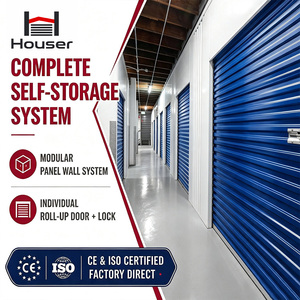
Traditional structural buildings and welded steel storage racks impose substantial hidden lifecycle costs. Site welding introduces heat-affected zone (HAZ) structural embrittlement, eliminates the possibility of vertical reconfiguration, and makes relocation financially unviable. In contrast, engineered demountable modular systems—such as knocked-down flat-pack storage containers, stackable wire mesh containers, and modular self-storage wall partitions—are 100% mechanically assembled using grade 8.8 structural fasteners, precision interlocking tabs, and friction connectors.
In applications such as automotive parts manufacturing workshops, pharmaceutical distribution hubs, and rapid-growth self-storage complexes, spatial agility is decisive. A pre-engineered modular system allows facilities engineers to expand clear spans, insert multi-tier mezzanine floors directly over active picking lanes, or collapse storage boxes at a 4:1 volumetric ratio during seasonal demand contractions. By eliminating site cutting, hot-work welding permits, and painting downtime, facility commissioning cycles contract by up to 65%.
3. Supply Chain Density & Export Cube Factor Optimization
For international supply chain planners and B2B procurement heads sourcing from global manufacturing hubs, ocean freight efficiency represents a primary total-cost-of-ownership (TCO) lever. Inefficient volumetric cargo packaging forces international buyers to ship atmospheric air, drastically increasing freight per SKU capacity.
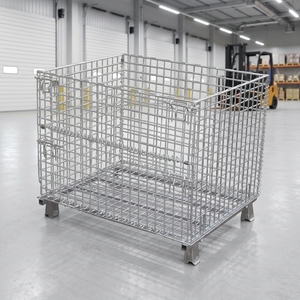
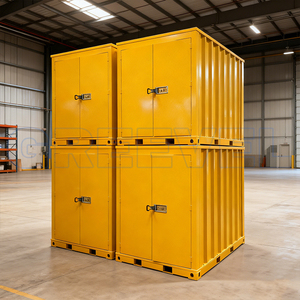
As an experienced global exporter since 1977, our engineering design office calculates the nested geometry of every beam, upright, container wall, and wire mesh grid directly against the internal dimensions of standard 40-foot High Cube (40HC) ocean containers. For example, our demountable Smartbox flat-pack units utilize a custom knock-down frame allowing up to 14 complete independent commercial storage rooms to pack into a single 40HC container. Similarly, our foldable wire mesh warehouse containers collapse flat down to only 150 mm in height, maximizing container loading density and reducing return-logistics empty-haul costs by up to 75%.
Engineering Selection Matrix
Technical Specification & System Selection Framework
Evaluate load capacities, handling equipment compatibility, volumetric spatial efficiency, and seismic performance profiles across our primary modular storage product categories.
Storage System Classification
Maximum Payload Rating
Material Specification
Volumetric Efficiency
Handling Equipment
Primary Industrial Sector
Foldable Wire Mesh Containers
500 kg – 2,000 kg / unit
High-tensile drawn steel wire (Ø5.8–6.4mm)
High (4-Tier Stacking)
Forklift, Pallet Jack, Crane
Automotive, Foundry, Logistics Hubs
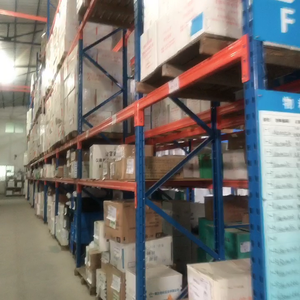
Selective Pallet Racking
1,000 kg – 4,500 kg / beam pair
Cold-rolled Q355B high-tensile steel
Medium (100% Direct Access)
Counterbalance, Reach Truck, VNA
FMCG, 3PL Warehousing, Retail DC
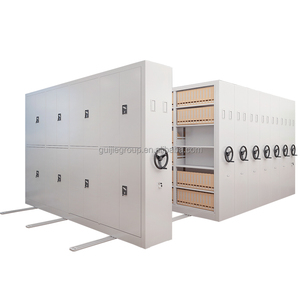
Mobile Compactor Dense Shelving
80 kg – 150 kg / shelf tier
Cold-rolled carbon steel sheet SPCC
Extreme (+75% Floor Space)
Manual Mechanical / PLC Push-Button
Hospitals, Banking, Corporate Archives
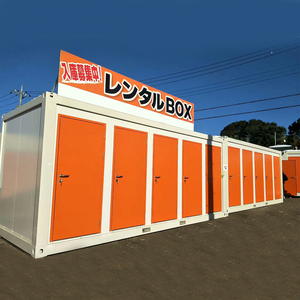
Modular Self-Storage Partition Units
Panel wind/impact load tested
0.5–0.8mm corrugated zinc/alu steel
High Modular Subdivision
Manual Roll-up / Swing Doors
Commercial Self-Storage, Rental Units
Demountable Flat-Pack Containers
Floor live load: 500 kg/m²
Galvanized profiled structural steel
Rapid KD Assembly
Forklift, Overhead Crane Rigging
Construction, Remote Depots, Military
Prefabricated Steel Structures
Designed to custom roof/wind load
Hot-rolled Q355 H-beam / C-Z purlins
Unobstructed Clear Span
Overhead EOT Cranes, Heavy AGVs
Food Manufacturing, Chemical Plants
Strategic Sourcing Intelligence
Future Procurement Trends in Modular Storage Systems
Anticipate supply chain disruptions, regulatory mandates, and automation shifts redefining global warehouse infrastructure procurement across the next decade.
01
Integration with Autonomous Mobile Robots (AMR) & AGVs
Next-generation modular racking mandates floor-level clearance tolerances, tighter structural deflection thresholds, and integrated optical reflector mounting points. Warehouses are shifting from manual forklift handling toward low-profile automated guided vehicles navigating tightly configured modular grid aisles with zero positional deviation.
02
High Cube Knock-Down (CKD) Freight Compression
Escalating maritime spot rates and emission surcharges are penalizing bulky, pre-welded fabrications. Global procurement teams favor complete knock-down (CKD) engineering where standardized modular brackets, interlocking panels, and nestable containers achieve 100% volumetric container utilization, lowering the carbon footprint per ton moved.
03
Stringent Seismic Resistance & European Standards Alignment
Global multi-national warehouse developers are enforcing harmonized structural safety across cross-border locations. Racking procurement contracts universally mandate compliance with EN 15512:2020 limit-state structural design, ANSI/RMI MH16.1 specifications, and verified dynamic base-plate energy absorption for high-seismic zone installations.
Decarbonization mandates (such as CBAM in the European Union) require industrial storage fabricators to document primary scrap recycled content percentages in cold-formed coils, alongside non-toxic, zero-VOC heavy-metal-free thermoset powder coatings that yield 20+ years of maintenance-free service life in corrosive environments.
Enterprise Manufacturing Heritage
Why Tier-1 Global Procurement Teams Partner With Us
Combining over four decades of precision mechanical fabrication with international export compliance, custom engineering, and transparent project execution.
Prime Structural Steel Sourcing
We strictly utilize certified primary structural steel sourced from prime mills. Every batch of coil, sheet, and structural angle undergoes rigorous chemical spectrometry and tensile testing to guarantee verified yield strength, notch toughness, and structural predictability under heavy cyclic loads.
Automated CNC Profiling & Robotic Welding
Our dedicated manufacturing base in Umbergaon, Gujarat, houses multi-station continuous roll-forming lines, automated punching turrets, and high-precision robotic welding arms that ensure uniform weld fillets, laser-accurate pitch consistency, and zero dimensional variation across thousands of bay components.
International Export Knock-Down Packaging
Components are precision strapped with structural dunnage, protective foam cushioning, and moisture-barrier shrink wrapping designed for long-transit maritime voyages. Bundles are systematically coded to enable direct offloading, container staging, and frictionless on-site layout execution.
Procurement Clarity
Frequently Asked Questions by Global Buyers
Detailed engineering, logistical, and commercial answers for warehouse managers, EPC contractors, and procurement professionals.
What specific engineering inputs are required to produce an engineered racking layout?
To deliver an optimized layout proposal and load-rated bill of materials, our engineering design department requires: (1) Architectural CAD floor plans displaying column grids, fire exit egress routes, and minimum clear height under ceiling purlins or sprinkler heads; (2) Detailed palletized load characteristics, including length, width, overall height (including pallet runner), and gross maximum weight; (3) Handling equipment specifications, particularly forklift turning radiuses, mast collapse heights, and aisle requirements (e.g., standard 3,200 mm counterbalance vs. 1,600 mm VNA); (4) Concrete slab specifications, such as compressive strength (e.g., C25/30) and slab thickness; and (5) Local seismic acceleration coefficients (Ss, S1) or regional building code mandates.
How does your factory verify structural safety and beam deflection limits?
All structural designs adhere strictly to EN 15512 (Steel static storage systems – Adjustable pallet racking systems – Principles for structural design) and FEM 10.2.02. We employ finite element analysis (FEA) software to simulate multi-bay load distributions under both dead and dynamic live loads. Beam deflection is strictly capped at L/200 (1/200th of the clear beam span) under maximum design payload, ensuring total structural safety well within the elastic threshold. Furthermore, connection connectors incorporate heavy mechanical safety lock pins capable of resisting an upward dislodgement shear force in excess of 5.0 kN per connector, preventing accidental beam dislodgement during forklift lifting maneuvers.
Can you manufacture bespoke sizes and support OEM / ODM requirements?
Yes. Approximately 60% of our global export shipments are customized to project-specific architectural constraints or OEM brand specifications. Our manufacturing plant operates flexible roll-forming tooling, programmable CNC turret punches, and laser cutting equipment. We routinely engineer bespoke column profiles, non-standard paint RAL colourways, specialized drop-over wire decking grids, and tailored partition bracketry. For distribution partners and system integrators in Europe, North America, and the Middle East, we provide complete private-label OEM packaging, custom stamping, and tailored installation documentation.
What surface protection systems are available for outdoor or coastal environments?
Depending on the operating environment’s corrosivity category (ISO 12944 classification from C1 indoor climate-controlled to C5-M extreme marine coastal): (1) For standard indoor warehousing, we apply an automated 9-stage alkaline wash, zinc-iron phosphatizing, and electrostatic pure polyester powder coat cured at 200°C (60–80 microns), delivering high impact and scratch resistance; (2) For cold stores, outdoor self-storage units, and humid coastal distribution yards, we provide continuous hot-dip galvanization conforming to ASTM A123 / ISO 1461, yielding an ultra-durable zinc barrier of 65 to 85 microns (>500 g/m²) that prevents structural rust for decades.
What are your international freight packing standards and typical lead times?
All export products are prepared in accordance with rigorous ISPM-15 export packing protocols. Racking uprights and long beams are bundled on customized heavy structural steel skids with polymer edge protectors and high-tensile steel strapping. Smaller components, fasteners, baseplates, and hardware are crated in export-grade wooden cases or heavy steel cages. Standard project production lead times range between 18 to 28 calendar days from approved structural shop drawings, depending on overall tonnage and customization requirements. Our proximity to major international deep-water seaports ensures rapid transit dispatch.
Do you supply on-site installation supervision and international engineering sign-off?
Yes. For major international logistics hub developments, we deploy senior project installation supervisors to oversee local erection teams, verify vertical plumb alignment with high-precision optical laser levels, inspect baseplate chemical torque anchors, and validate beam level pin engagements. For projects utilizing internal contractor teams, we provide comprehensive 3D isometric assembly manuals, exploded component diagrams, step-by-step video guides, and live video engineering consultations to guarantee flawless execution.
Optimize Your Warehouse Storage Density & CapEx Today
Connect directly with our senior application engineering team to receive a free structural layout consultation, load-deflection verification calculation, and container-optimized export quotation.