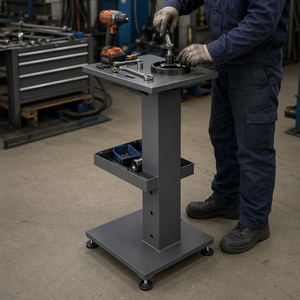
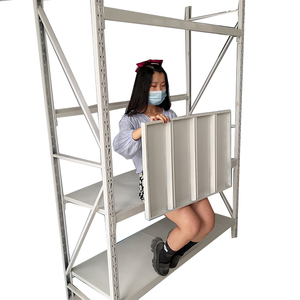
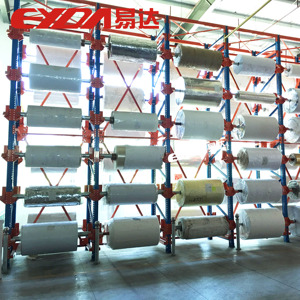
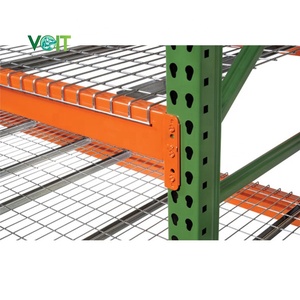
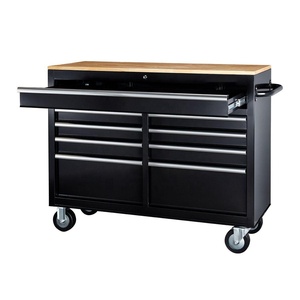
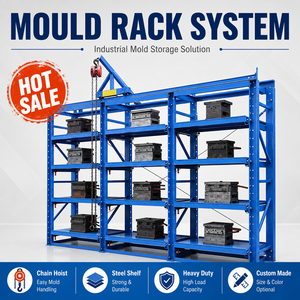
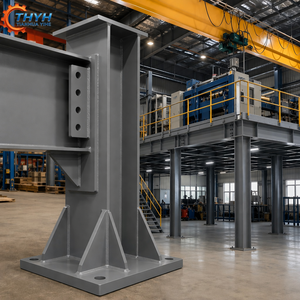
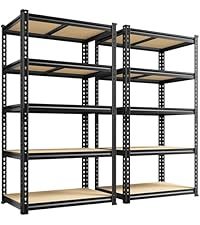
Explore our flagship heavy-duty storage configurations, tool frames, mould handling drawers, and high-density industrial decking manufactured for seamless integration with vertical carousel workflows.
Authored by Senior Intralogistics Engineering Group • Mechanical Structural Compliance & Automated Storage Retrieval Systems (ASRS)
Industrial supply chains face unprecedented pressure on cubic warehouse utilisation, picking throughput velocity, and ergonomic workplace safety. Vertical Storage Carousels (VSC)—often termed Vertical Carousel Modules (VCM)—stand at the forefront of modern automated warehouse logistics. Unlike static racking where operators walk endless warehouse aisles, vertical carousels utilize the "Goods-to-Person" (G2P) principle, rotating vertically chained carriers to present requested inventory directly at an ergonomically positioned access port.
From an engineering physics standpoint, vertical carousels utilize closed-loop, motor-driven dual chain tracks. Carrier shelves are suspended between two heavy-duty industrial roller chains driven by high-torque gearmotors. By transforming underutilized vertical ceiling height (from 3 meters up to 15 meters) into high-density storage space, enterprise facilities reclaim up to 85% of their horizontal floor footprint. This enables plant managers to repurpose valuable ground space for revenue-generating manufacturing lines, precision assembly stations, or cleanrooms.
As a leading Chinese supplier and manufacturing partner, our manufacturing ecosystem combines heavy metallurgical fabrication pedigree established since 1977 with cutting-edge micro-PLC automation. Our vertical carousels and companion heavy-duty structural racks are engineered using structural-grade Q345 and Q355 steel plates. Every welded upright, cantilever arm, and rolling cabinet undergoes rigorous surface preparation, including automatic centrifugal shot blasting, iron phosphate rust conversion, and high-adhesion electrostatic thermoset powder coating.
Whether deployed in aerospace tool cribs, automotive spare parts depots, pharmaceutical buffer stores, or electronics surface-mount component warehouses, vertical storage carousels eliminate picking transit times by up to 65%. Operators no longer climb ladders, operate high-reach trucks in narrow aisles, or search through unindexed shelving bins. Integrating optical pick-to-light arrays, magnetic RFID validation, and real-time inventory management software bridges the physical storage node directly to corporate ERP systems such as SAP, Oracle, and Microsoft Dynamics.
| Evaluation Parameter | Vertical Storage Carousels (VCM) | Vertical Lift Modules (VLM) | Heavy Mezzanine Floor Structures | Conventional Static Pallet Racking |
|---|---|---|---|---|
| Footprint Reduction | 75% – 85% Recovery | 80% – 90% Recovery | 50% – 100% Increase (Tiered) | Baseline (Requires 3m aisles) |
| Retrieval Cycle Time | Fastest (Direct rotational path) | Medium-Fast (Extractor vertical/horizontal) | Manual walking time required | Slow (Forklift transit dependent) |
| Load Profiling | Uniform / Standardized bins & tooling | Variable heights automatically scanned | Bulk, mixed pallets & workbenches | Standardized pallets (EUR/US) |
| Structural Metallurgy | Precision cold-rolled & Q345 chassis | Dual-column structural framework | Heavy Q345/Q355 welded H-Beams | Cold-formed steel uprights & beams |
| Safety & Ergonomics | Golden-zone access (Waist height) | Automated delivery port shutter | Handrails, kickplates & stair towers | Risk of falls, requires lift trucks |
| System Integration | WMS / MES / Pick-to-Light ready | WMS / ERP / Dynamic weight sensing | Physical logistics & cargo lifts | Barcode labels & RF gun scans |
Strategic supply chain analysis for international enterprise procurement officers, warehouse directors, and factory automation planners.
Procurement teams are moving away from monolithic, non-modifiable warehouse automation systems. Modern buyers mandate modular bolt-together structural frames that allow carousel height expansions or relocation without tearing down facility structural roofs. Standardized containerized packaging enables global export with zero transit distortion.
Black-box proprietary controllers are rejected by Tier-1 procurement engineers. International tenders now demand open communication protocols (OPC UA, MQTT, RESTful APIs) allowing carousel control units to interface directly with cloud WMS platforms, AGVs (Automated Guided Vehicles), and robotic sorting arms without expensive third-party middleware.
Occupational safety regulations across North America, Europe, and the Middle East have elevated expectations. Procured systems must feature dual light curtains, emergency stop circuit redundancy, carrier over-travel physical interlocks, and weight-deflection sensors certified under EN ISO 13849-1 Performance Level d/e to ensure zero operator crush injuries.
How advanced materials science, artificial intelligence, and regenerative mechatronics are reshaping vertical industrial storage.
Legacy carousels suffered mechanical stress when heavy dies or tooling were concentrated on one side of the chain loop. Modern controllers utilize internal strain gauges and AI slotting algorithms that recommend optimal shelf allocation, actively preserving mechanical balance, reducing chain wear by 40%, and minimizing motor thermal strain.
Integrating permanent magnet synchronous motors (PMSM) alongside regenerative variable frequency drives (VFD) captures kinetic energy during descending payload cycles. This recaptured electrical energy is fed back into the facility busbar, cutting peak electrical draw by up to 28% and supporting corporate ESG carbon-reduction mandates.
Next-generation access openings are integrated with multi-point 3D LiDAR and infrared matrix curtains. When an operator inserts irregular machine components or heavy injection dies, the system instantly validates dimensional clearance and center of gravity, blocking carousel motion if any part extends beyond certified safety thresholds.
Decades of continuous metallurgical innovation, in-house roll-forming production lines, and world-class quality verification protocols delivering uncompromising structural reliability.
Over four decades of dedicated structural engineering, specializing in load-rated storage systems, heavy mezzanine floors, cantilever racks, and automated vertical handling installations.
We source prime-grade heavy steel plate and high-tensile cold-rolled coils, completely eliminating structural deformities, micro-cracks, and dynamic fatigue failures under full load.
Automated shot blasting cleans steel substrates to Sa 2.5 cleanliness, followed by rust-inhibiting zinc primers and heavy thermosetting epoxy powder finishes resistant to aggressive chemicals.
Multi-axis laser cutting, robotic welding cells, and automated punching stations maintain hole-pitch tolerances within ±0.1mm, ensuring effortless overseas bolt-together erection.
Successfully delivering containerized knock-down storage infrastructures across North America, Europe, Bahrain, Sri Lanka, Canada, and the Middle East with comprehensive export crating.
Our turnkey engineering engagement includes initial CAD/BIM site layout, Finite Element Analysis (FEA), pre-shipment FAT testing, remote installation supervision, and lifetime spares availability.
Engineered responses addressing technical inquiries, floor loading, safety compliance, and overseas logistics from international plant engineers.
Send our structural and automation engineers your facility dimensions, payload profiles, and throughput targets. We deliver detailed 2D/3D CAD layouts and comprehensive load rating documentation within 24 hours.