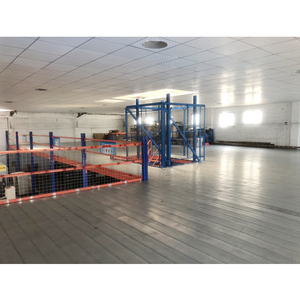
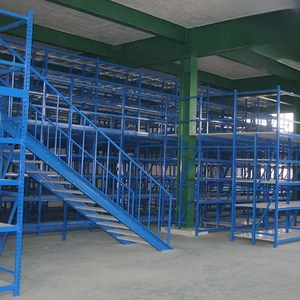
Explore heavy-load storage racking, modular picking mezzanine platforms, wire partition security systems, and high-density material handling components engineered for contemporary industrial logistics.
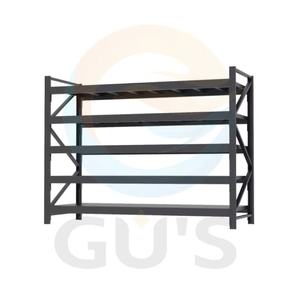
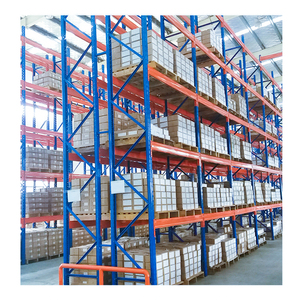
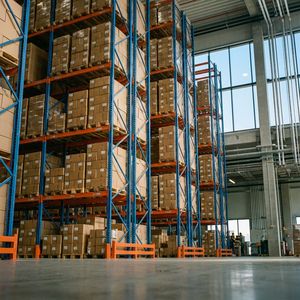
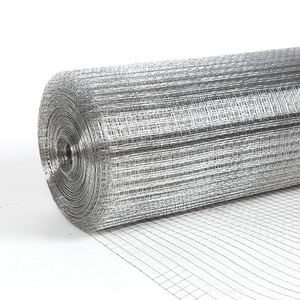
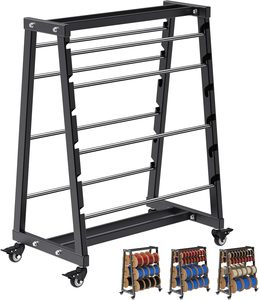
A comprehensive examination of how precision cold-formed steel profiles interact with intelligent radio shuttle robotics to deliver unrivaled volumetric density, reduced operating cycle times, and fail-safe warehouse safety.
The structural backbone of high-density shuttle racking relies on customized galvanized guide rails engineered with asymmetric cross-sections. These rails serve dual roles: bearing the cyclic point-loads exerted by the shuttle carriage and supporting static pallet tonnages up to 2,000 kg per position. Made from high-yield Q355B structural steel, the guide rail channels incorporate precision lead-in chamfers and mechanical crash-stops to mitigate positioning shock during high-velocity forklift placement.
Modern radio shuttle carts utilize industrial-grade Lithium Iron Phosphate (LiFePO4) power cells delivering steady 24V/48V direct current to internal brushless DC (BLDC) motors. Integrated thermal protection and internal cell balancing guarantee uninterrupted continuous run times exceeding 8 to 10 operational hours under full payload. When combined with fast-charging docking bays, carts achieve an 80% state-of-charge within 120 minutes, minimizing downtime across multi-shift distribution facilities.
Navigating long racking tunnels up to 60 meters deep requires millimeter-grade precision. Shuttle carts employ arrayed photoelectric sensors, laser rangefinders, and RFID tag decoders along the runner channel. Wireless frequency-hopping radio transmitters (433 MHz / 2.4 GHz) maintain real-time bi-directional telemetry with tablet controllers or centralized Warehouse Control Systems (WCS), automatically registering empty-pallet spaces, SKU counts, and dynamic FIFO/LIFO sequences.
Procurement directors must balance space utilization, operational selectivity, equipment wear, and capital expenditure. The table below illustrates the measurable engineering trade-offs between standard industrial storage architectures.
| Racking Topology | Space Utilization | Pallet Selectivity | Throughput Velocity | Forklift Collision Risk | Relative CAPEX Index |
|---|---|---|---|---|---|
| Radio Shuttle Racking | Ultra-High (80-85%) | Medium (Channel-Based) | High (Automated Runner) | Negligible (External Forking) | Medium-High (High ROI) |
| Selective Pallet Racking | Low-Medium (40-45%) | 100% Direct Access | Medium (Manual Forklift Aisle) | High (Constant Aisle Travel) | Low (Baseline) |
| Drive-In Pallet Racking | High (65-75%) | Very Low (Strict LIFO) | Low (Forklift Drives Deep) | Severe (High Upright Impacts) | Low-Medium |
| Push-Back Trolley Racking | Medium-High (60-70%) | Low (2-6 Pallets Deep) | Medium (Gravity-Assisted) | Moderate (Face-Loading) | Medium |
| Fully Automated ASRS (Crane) | Maximum (85-95%) | 100% Computerized | Ultra-High (Unmanned Cranes) | Zero (Fully Enclosed Cell) | Very High (Capital Intensive) |
As global supply chains navigate labor scarcity, skyrocketing industrial land costs, and net-zero sustainability mandates, industrial racking procurement is transitioning toward smarter, modular, and deep-freeze automated frameworks.
Traditional two-way shuttles operate strictly along longitudinal guide rails, requiring forklifts or vertical transfer units to reposition between levels. The market is aggressively shifting toward four-way multi-directional shuttles capable of traversing both lane rails and transverse distribution tracks, transforming storage blocks into fully automated three-dimensional robotic matrices.
With global cold-chain logistics expanding across pharmaceuticals and fresh consumables, radio shuttle units engineered for extreme sub-zero operation (-25°C to -30°C) are in immense demand. Advanced procurement specifications demand IP65 hermetic component sealing, heated circuit motherboards to counteract condensation dew-points, and cryogenic lithium cell chemistries.
Supply chain architects increasingly combine dense bulk radio shuttle reserves with multi-tier mezzanine floors directly adjacent to picking tunnels. This hybrid topology utilizes radio shuttles for back-end bulk pallet buffers while automatically feeding gravity roller chutes or pick-to-belt stations on the mezzanine platform, radically compressing order fulfillment cycles.
ESG procurement standards are driving international enterprise buyers to scrutinize structural steel provenance. Leading Chinese manufacturers are responding by switching to micro-alloyed, continuous hot-rolled Q355B coils produced via electric arc furnaces (EAF). This delivers higher yield strengths with reduced sectional steel mass, diminishing shipping freight volumes and project carbon footprints.
Next-generation pallet shuttles incorporate onboard vibration monitors, drive-wheel odometer tracking, and motor thermal sensors. This telemetry streams real-time health data to warehouse maintenance platforms via MQTT protocols, predicting bearing wear, rail deformation, or battery degradation weeks prior to operational failure, eliminating catastrophic bottleneck disruptions.
High overseas shipping tariffs and localized installation labor costs have elevated the importance of precision knock-down modular engineering. Cross-border buyers prioritize uprights and rail supports that nest tightly inside standard 40ft High Cube sea containers without wasted cubic volume, utilizing standardized bolt-together splice plates to avoid on-site hot work.
With an industrial legacy spanning over four decades since 1977, our manufacturing plant combines automated continuous roll-forming lines, laser profiling, and rigorous mechanical quality control to serve tier-one enterprises worldwide.
We source prime, mill-certified high-tensile structural steel coils. Every batch undergoes tensile, elongation, and yield strength testing to ensure complete structural compliance under peak seismic and dynamic operational loads.
Our continuous automated roll-forming and CNC laser punching lines maintain an upright hole-pitch accuracy within ±0.5 mm across a 12-meter span, guaranteeing effortless on-site beam engagement and true vertical plumbness.
A multi-stage chemical pre-treatment and electrostatic thermosetting epoxy-polyester powder coating process ensures an even dry-film thickness of 80–120 μm, delivering high scratch resistance and decades of corrosion protection.
We have shipped thousands of metric tons of knocked-down modular storage racking to Canada, Bahrain, Sri Lanka, the Middle East, Europe, and the Americas, engineered for space-efficient container stuffing and simple field assembly.
Direct, engineering-backed answers to the most common structural, mechanical, and logistical questions raised by global supply chain managers and project engineers.
Unlike standard selective racking which tolerates broad slab variances, radio shuttle racking requires compliance with DIN 18202 (Table 3, Group 4) or VDMA floor flatness classifications. Floor slab deflection under maximum concentrated upright footplate loading must not exceed 1/500 to prevent rail misalignment. Sub-floor soil settlement must be stabilized prior to anchor installation using heavy chemical or wedge anchors rated for cyclic dynamic shear loads.
Standard lithium-ion chemistries experience rapid discharge degradation and electrolytic impedance below zero. For cold store installations down to -30°C, we configure shuttle carts with specialized low-temperature Lithium Iron Phosphate (LiFePO4) cells equipped with internal heating elements and insulated enclosures. Charging is strictly carried out in an exterior charging room maintained at +5°C to +15°C to avoid cathode lithium plating.
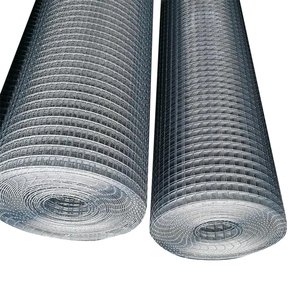
Radio shuttles require consistent pallet base integrity because the shuttle wheels travel directly underneath the pallet bottom runners. Severe bottom-board cracking or bottom-skid displacement can cause cart sensor trip-outs. We recommend standardized Euro (800×1200 mm), ISO (1000×1200 mm), or GMA (40×48 in) pallets with unbroken bottom skids. Alternatively, our engineering team can provide heavy-duty bottom slave trays or wire mesh deck reinforcements.
In drive-in racking, forklift operators spend 70% of cycle time navigating slowly inside narrow racking tunnels, resulting in elevated pallet cycle times (up to 4-5 minutes per pallet) and frequent upright frame impacts. In contrast, radio shuttle racking keeps forklifts stationed safely at the lane face. The automated cart shuttles pallets at speeds up to 1.2 m/s, dropping pallet retrieval times to under 90 seconds while eliminating racking impact damage.
Our structural design calculations and cold-formed sections adhere rigorously to international design standards, including the European FEM 10.2.02 and EN 15512 codes, the American Rack Manufacturers Institute (RMI MH16.1) specification, and the Australian AS 4084-2012 standard. Full Finite Element Analysis (FEA) computer simulations are conducted for every project to verify beam deflection, column buckling, and seismic base shear resistance.
All upright frames and beams are nested on custom timber cradles banded with high-tensile steel strapping and protected by heavy corrugated corner protectors and PE stretch shrink-wrap. Upright column feet and critical rail ends are sleeved in anti-abrasive cushioning. For moisture protection during ocean freight voyages, container desiccant packs are distributed throughout the load to prevent maritime condensation.
Submit your warehouse CAD layout, pallet dimensions, and operational throughput targets. Our senior logistics engineers will provide a customized system design, structural calculation report, and a detailed project quotation within 24 hours.