Our heavy-duty steel warehouse systems undergo robotic continuous roll-forming, CNC automated hole punching, and multi-stage electrostatic powder coating to ensure uncompromising load distribution and seismic resilience.
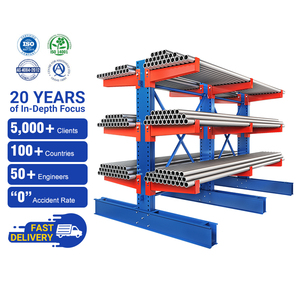
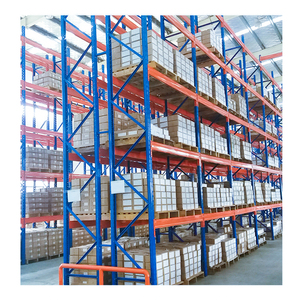
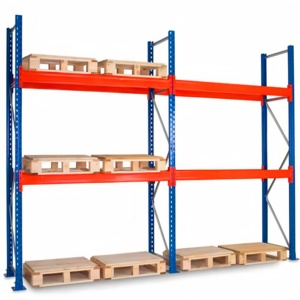
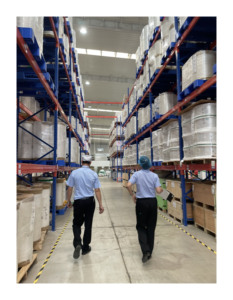
Operating from our modern industrial manufacturing plant in Umbergaon, GIDC, Gujarat, India, Divakaran Storage and Handling Systems Pvt. Ltd. represents nearly five decades of specialized cold-formed steel manufacturing, automated metal fabrication, and turnkey storage system engineering.
Our dedicated facility in Umbergaon (Valsad, Gujarat) integrates multi-station continuous roll-forming lines, automated punching presses, high-precision shearing, and multi-tier robotic MIG/TIG welding cells for zero-defect production.
Every upright, beam, and connector is manufactured using certified primary structural steels (Q235B, Q355B, IS 2062, ASTM A1011). Material test certificates (MTCs) with verified chemical and tensile parameters accompany every production lot.
Exporting across the Middle East, Bahrain, Sri Lanka, and Canada. Components are packed in fully knock-down (CKD) modular bundles, maximizing container cube density and slashing international ocean freight overhead by up to 35%.
In high-density industrial logistics, storage racks are load-bearing skeletal structures subject to static dead loads, dynamic forklift impacts, frame shear stresses, and seismic oscillations. Selecting the right OEM steel warehouse shelving manufacturer requires deep scrutiny of cold-roll profiling precision and metallurgical yield behavior.
At our Umbergaon factory, upright frames are profiled from cold-rolled structural sheet steel utilizing continuous 18-to-24 pass roll-forming mills. Unlike hot-rolled structural channels that carry dead weight with irregular dimensional tolerances, cold-roll forming induces strain hardening (work hardening), elevating the material's yield strength ($f_y$) across the profile corners. We engineer profiles with return-flange stiffeners that significantly mitigate local buckling and torsional-flexural distortion under eccentric axial loading.
Box beams and step beams are formed by robotically welding twin C-sections or roll-forming closed-tube configurations with integrated safety tabs. The connector brackets (lugs) feature 3-to-5 claw hooks that create an interference fit against the teardrop or diamond upright slots. This mechanical lock provides substantial rotational stiffness ($k_i$), transforming the beam-to-column node into a semi-rigid joint capable of dissipating lateral sway moments without catastrophic structural uncoupling.
| Racking Component | Material Specification | Yield Strength ($R_{eH}$) | Tensile Strength ($R_m$) | Standard Manufacturing Tolerances | Corrosion Protection Finish |
|---|---|---|---|---|---|
| Cold-Formed Uprights | Q355B / SS400 | ≥ 355 MPa | 470 – 630 MPa | Linear pitch: ±0.2mm; Camber: ≤1/1000 | 7-Stage Epoxy-Polyester 60–80μm |
| Box / Step Beams | Q235B / ASTM A36 | ≥ 235 MPa | 370 – 500 MPa | Length: ±0.5mm; Deflection limit: L/200 | High-Visibility Safety Orange (RAL 2004) |
| Cantilever Arms | IS 2062 Gr. A/B | ≥ 250 – 350 MPa | 410 – 540 MPa | Tapered design; ±1.0mm deflection align | Powder Coated / Hot-Dip Galvanized |
| Diagonal / Horizontal Bracing | Structural C-Profile | ≥ 235 MPa | 370 – 500 MPa | Center hole pitch: ±0.25mm | Pre-Galvanized or Powder Coated |
| Heavy-Duty Baseplates | Hot Rolled Plate | ≥ 235 MPa | 400 – 520 MPa | Plate thickness: 6.0mm – 16.0mm | Zinc Passivated / Thermal Spray Zinc |
Under international building codes (IBC, Eurocode 3, AS 4084), custom OEM warehouse racking cannot be fabricated on guesswork. Racks must satisfy both Ultimate Limit State (ULS) against collapse and Serviceability Limit State (SLS) against excessive deflection.
Our engineering design department deploys ANSYS and STAAD.Pro finite element modeling to simulate second-order $P-\Delta$ and $P-\delta$ geometric non-linear effects. Under maximum allowable beam deflection standards (governed at $L/200$ under full static working loads per EN 15512:2020), our assemblies maintain a mandatory minimum safety factor of 1.65 to 1.95 against structural yield. In seismic regions—such as Zone IV/V in India or equivalent international seismic active belts—racking bases incorporate seismically qualified anchor bolts and enlarged baseplates designed to withstand shear pull-out forces induced by peak ground acceleration (PGA).
Corrosion is the primary invisible destroyer of load ratings in warehousing environments containing ambient humidity, fluctuating refrigeration condensation, or airborne industrial particulates. Our automated surface finishing line incorporates an industrial 7-stage pre-treatment cycle:
Components undergo hot alkaline degreasing, twin cascading demineralized water rinses, zinc/iron phosphating for micro-crystalline etch adhesion, passivation, and dry-off drying ovens at 140°C. Electrostatic applicators then apply premium hybrid epoxy-polyester powder formulations at 60 to 90 microns thickness, cured in convection baking tunnels at 190°C – 200°C for 20 minutes. The resulting cross-linked polymer coating delivers superior scratch resistance, passes 500-hour ASTM B117 salt spray tests, and guarantees chemical resistance against warehouse cleaning sanitizers and battery acid vapors.
As global supply chains pivot toward omnichannel distribution, automated fulfillment, and carbon transparency, industrial procurement managers and 3PL warehouse directors must adapt their purchasing models beyond simple spot-market steel pricing.
Modern procurement prioritizes racking tolerances compatible with automated shuttle systems, Autonomous Mobile Robots (AMRs), and mini-load stacker cranes. Tight plumb and level tolerances (≤ 1:1000) are engineered directly into column hole punches to avoid automated gripper collisions.
Global EPC contractors and European/North American logistics developers increasingly audit Scope 3 carbon emissions. Sourcing from manufacturers utilizing EAF (Electric Arc Furnace) scrap-recycled steel and heavy-metal-free thermoset powder coats is transitioning from a CSR preference to a mandatory tender prerequisite.
Sophisticated buyers analyze lifecycle metrics over a 15-year horizon rather than initial ex-works cost. Factoring in rack upright protector integration, anti-roll safety lock bars, modular reconfigurability, and structural repair sleeve availability eliminates expensive downtime and replacement capex.
While domestic warehousing expansions in North America and Western Europe face soaring domestic steel fabrication overhead, complete reliance on single-country suppliers exposes enterprises to geopolitical tariffs and freight volatility. Established industrial centers like Gujarat, India—backed by deep seaport proximity, indigenous steel manufacturing conglomerates (Tata Steel, JSW, SAIL), and specialized logistics infrastructure—offer the ideal middle ground for B2B rack procurement.
By establishing long-term OEM contracts with an established manufacturer such as Divakaran Storage, global distributors acquire custom-branded, fully modular knocking-down racking systems produced to European/American load codes at significant structural manufacturing arbitrage. Furthermore, containerization engineering allows mixed SKU packaging: heavy upright frames nested together with slotted angles, pigeon-hole units, and cantilever arm assemblies in optimal center-of-gravity 40ft High Cube containers.
The convergence of real-time inventory management, cold-chain expansion, and urban micro-fulfillment centers has accelerated several fundamental advancements in structural warehouse storage systems.
Where real estate valuations are premium—such as pharmaceutical cleanrooms, financial archives, and urban distribution hubs—mobile racking systems mount superstructure frames onto heavy-duty gear-driven motorized bases. Eliminating static gangways shrinks floor utilization by 50% while offering 100% selective SKU retrieval on demand.
Standard commercial carbon steel suffers low-temperature brittle transition (ductile-to-brittle transformation) below −15°C. Our OEM cold-chain racks utilize micro-alloyed killed steels with verified Charpy V-notch impact toughness tested down to −30°C, preventing catastrophic stress-fractures in blast freezers and refrigerated distribution centers.
Next-generation heavy-duty selective racks are increasingly specified with provisions for low-power strain-gauge sensors and accelerometer telemetry at critical ground-level upright nodes. These devices instantly alert facility managers to severe forklift impacts that exceed allowable plastic deformation thresholds.
Authoritative technical counsel addressing international structural safety certifications, container packaging optimization, OEM tooling capabilities, and custom project execution.
Our custom warehouse shelving and pallet racking systems are engineered in strict compliance with international structural design codes. For European and Middle Eastern export contracts, our calculations conform to EN 15512:2020 (Steel static storage systems – Adjustable pallet racking systems – Principles for structural design) and FEM 10.2.02. For North American export agreements, components align with the Rack Manufacturers Institute (RMI) MH16.1 specification and AISI S100 (North American Specification for the Design of Cold-Formed Steel Structural Members).
Every configuration is engineered with explicit safety factors for static loads (≥ 1.65), beam deflection limits ($L/200$), and dynamic frame sway. Finite Element Analysis (FEA) reports detailing stress distribution, buckling eigenvalues, and connection moment-rotation curves are generated for custom EPC tenders upon request.
Divakaran Storage maintains in-house tooling, die-making, and CNC roll-forming capabilities at our Umbergaon manufacturing plant. We can manufacture upright columns in web widths from 80mm to 140mm, flange depths from 50mm to 100mm, and raw material gauges from 1.5mm to 3.2mm.
We accommodate customized punching patterns—including standard 50mm, 75mm, and 76.2mm (3-inch) pitch centers—utilizing high-speed CNC progressive mechanical punch presses. Whether you require compatibility with existing teardrop, hexagonal, or diamond keyhole systems for aftermarket expansion, our engineering team can fabricate custom OEM components that maintain dimensional and load interchangeability.
To produce certified structural engineering calculations and CAD approval drawings, our engineering team requires:
1. Pallet & Unit Load Profile: Maximum pallet dimensions (Width × Depth × Height), gross weight per pallet, pallet overhang, and load type (wooden EUR/US pallet, plastic, steel skid, wire container).
2. Facility Layout & Clear Height: Building architectural drawings showing unobstructed clear height to underside of trusses, sprinkler clearances, column grid locations, and dock leveller positions.
3. Material Handling Equipment (MHE): Forklift mast reach, mast collapsed height, minimum right-angle stacking aisle width requirement, and turning radius.
4. Geotechnical & Seismic Criteria: Concrete slab thickness (typically ≥ 150mm – 200mm), concrete compressive strength ($f'_c \ge 25\text{ MPa}$), soil classification, and project location seismic acceleration zone parameters ($S_s, S_1$).
Industrial racking is inherently bulky; unoptimized shipments result in "shipping air," dramatically driving up landed unit costs. Our factory engineers customized Completely Knocked Down (CKD) nesting frameworks. Upright frames are delivered with columns, diagonal braces, horizontal channels, and footplates pre-bundled in high-density nested packs separated by protective timber battens and poly-strapping.
Beams are bundled with alternating end-connectors to form dense, interlocking steel cubes. This packaging methodology allows our logistics department to utilize 95% or higher of both the weight limit (payload) and cubic volume (CBM) of standard 20ft and 40ft High Cube containers. For our international clients across Bahrain, Canada, and the GCC, this reduces transoceanic logistics costs by 25% to 35% per pallet position stored.
For standard ambient indoor distribution warehousing, our 7-stage electrostatic hybrid epoxy-polyester powder coating (60–80 microns) provides outstanding scratch resistance, aesthetic contrast, and long-term durability. However, for specialized harsh operating conditions, alternative metallurgical finishes are engineered:
For Cold Storage & Blast Freezers (−30°C): We formulate low-cure flexible polyester powder coatings that prevent micro-cracking during sub-zero thermal contractions, or specify continuous pre-galvanized sheet coil with a high zinc mass coating (Z275).
For Fertilizer, Chemical, or Coastal Outdoor Marine Installations: We offer Hot-Dip Galvanizing (HDG) in accordance with ISO 1461 / ASTM A123. Uprights and components are dipped in molten zinc baths at 450°C, creating an alloyed metallurgical zinc-iron layer with a minimum coating thickness of 70–100 microns that guarantees 20+ years of rust prevention in aggressive C4/C5 atmospheric classifications.
Every production run passes through strict quality gating certified under our ISO 9001 quality management framework:
1. Raw Material Inflow: Verification of Mill Test Certificates (MTCs), ultrasonic thickness gauging, and optical emission spectrometer tests for carbon, manganese, phosphorus, and sulfur content.
2. In-Process Dimensional Inspection: Continuous optical verification of roll-formed camber, bow, twist, and hole-center pitch tolerances (±0.2mm tolerance window).
3. Weld Joint Integrity: Visual inspection and periodic destructive weld shear testing on automated MIG robot seam welds connecting beam end connectors.
4. Coating Performance: Cross-hatch adhesion testing (ASTM D3359 Class 5B), dry film thickness (DFT) magnetic probe verification, and gloss/impact resistance testing.
5. Pre-Dispatch Container Loading Audit: Comprehensive piece-count verification, photograph documentation of container bracing, and center-of-gravity stabilization.
Yes. Automation integration requires significantly tighter structural fabrication and deflection controls than conventional forklift operations. When engineering racking for AGVs, pallet shuttles, or AMR under-ride systems, our factory enforces:
• Plumbness and Elevation: Erected column plumbness within 1:1000 of total frame height to ensure optical clearance for AGV LiDAR navigation.
• Deflection Control: Stiffened beam profiles maintaining strict deflection thresholds (≤ $L/300$ or $L/400$) to guarantee predictable pallet presentation heights for robotic forks.
• Ground Interface Clearances: Floor-level horizontal bracing is raised or inverted to accommodate AMR drive paths, while heavy-gauge wrap-around column protectors prevent sensor blind-spot damage.
For overseas projects across Canada, the GCC, Africa, and Southeast Asia, we provide a complete engineering package that simplifies local erection. Every bay and component is marked with laser-etched or alphanumeric weather-resistant part tags corresponding to color-coded CAD installation layout plans and 3D exploded view isometric drawings.
We supply comprehensive step-by-step Installation Operation & Maintenance Manuals (IOMMs), torque specification charts for high-tensile anchor hardware, and remote video commissioning advisory with our senior structural engineers. For large-scale multi-tier mezzanine or complex drive-in projects, we can deploy factory-trained installation supervisors on-site to oversee local mechanical installation teams and conduct final structural handover certification.
Our turnkey project execution methodology ensures transparent timelines, documented engineering accountability, and zero installation surprises on the job site.
We analyze facility DWG floor plans, SKU rotation velocity (FIFO vs LIFO), floor slab load-bearing capacities, and material handling fleet specifications to formulate optimal bay configurations.
Our structural engineering division creates precise 3D BIM/CAD layouts and verifies structural safety via finite element stress calculations, optimizing steel gauges for cost and capacity.
Production commences at our Umbergaon factory across automated profiling lines. Components are degreased, phosphated, and coated with 60-80μm thermoset powder before QA sign-off.
Components are bundled with corner protection, timber dunnage, and moisture-barrier shrink wrap for ocean containerization, ensuring damage-free transit to global seaports.
We provide full structural documentation, bolt-torque verification checklists, installation supervision, and modular add-on support for future warehouse extensions.