Industrial Storage Whitepaper & Strategic Sourcing Guide

China Top Double Deep Racking Manufacturer & Supplier

Engineered Structural Mechanics, Cold-Rolled Q235B/Q355B Steel Fabrication, and Turnkey Logistics Density Solutions Compliant with FEM 10.2.02 and RMI Standards.

60%+
Volumetric Density Gain
45+ Yrs
Engineering Heritage Since 1977
5,000kg
Maximum Bay Level Payload
ISO9001
FEM 10.2.02 / CE Certified
Factory Direct Catalog

Engineered Heavy-Duty Racking & Warehouse Systems

Explore our flagship heavy-duty storage configurations, factory equipment workbenches, wire decking, and modular storage containers precision-manufactured for high-throughput logistics facilities.
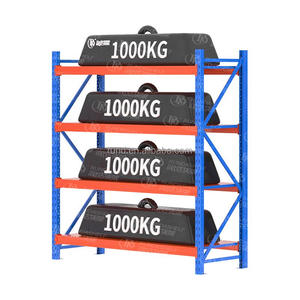
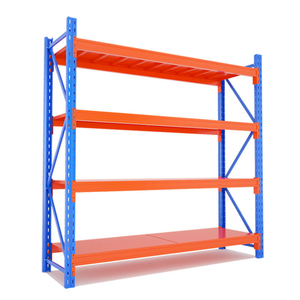
Stackable Foldable Steel Wire Shelving Warehouse Storage Racks

Factory Price Wire Shelving & Display Rack Units Foldable 200kg-500kg Stacking Racks

  • Load Capacity: 200 - 500 kg / Tier
  • Structure: Foldable Carbon Steel
  • Corrosion Class: Zinc / Powder Coat
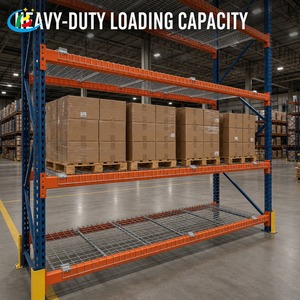
Heavy Deck Galvanized Pallet Rack Wire Mesh Decking

Factory Direct Galvanized Heavy Duty Wire Grating Decking Pallet Rack Wire Deck

  • Mesh Grid: 50x50 / 50x100 mm
  • Channel Support: Flanged / Step Channel
  • Standard: NFPA Fire Safety Compliant
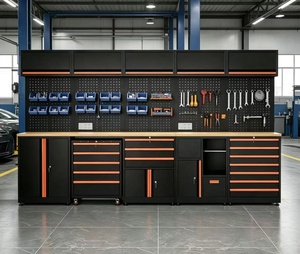
Workshop Garage Storage Tool Cabinet Workbench

CYD Heavy-Duty Garage Storage Combination Tool Cabinet Stainless Steel Workbench

  • Worktop: Solid Timber / SUS304
  • Slide Rating: Ball-Bearing 45kg/drawer
  • Lock System: Central Key Interlock
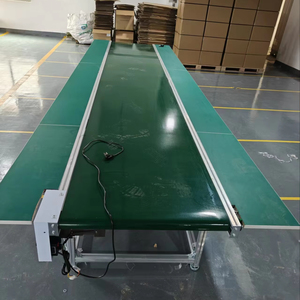
Automation Custom Assembly Line Conveyor Belt Workbench

YiBao Custom Industrial Conveyor Belt Workbench For Electronics Assembly Plants

  • Speed Control: 0.5 - 12 m/min Stepless
  • Frame Profile: Anodized Extruded Alum
  • Integration: ESD Work Surface Ready
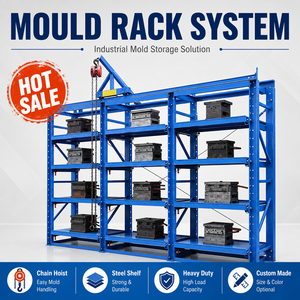
Tooling Sliding Drawer Mould Storage Rack

Industrial Sliding Drawer Mould Rack 3-Ton Heavy Duty Die Storage Racking System

  • Payload: Up to 3,000 kg / Drawer
  • Extraction: 65% - 100% Roll-Out
  • Safety: Mechanical Self-Locking
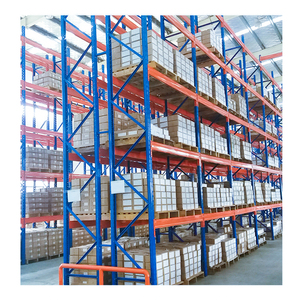
Pallet Rack Heavy Duty Industrial Selective Pallet Racking

Heavy Duty Industrial Warehouse Pallet Racking Selective Steel Storage System

  • Bay Height: Up to 14,000 mm
  • Beam Sections: 80 - 160 mm Box Beams
  • Pitch: 50mm / 75mm Adjustable
Steel Shelving Durable Steel Wire Shelving Warehouse Storage

Factory Price Modular Steel Wire Shelving & Heavy Display Racks 200-500kg

  • Assembly: Boltless Slip-Sleeve
  • Surface: Chrome / Epoxy Powder
  • Application: Pharma, Cold Room, Stores
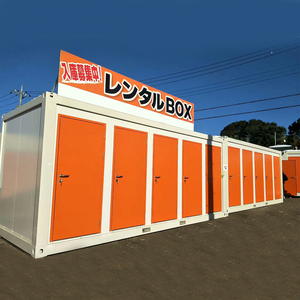
Modular Unit Portable Outdoor Self Storage Container

Customized Modular Portable Outdoor Self Storage Container Mobile Warehouse

  • Wall Panels: Corrugated Corten / Galv
  • Door Style: Multi-Roller Shutter
  • Portability: Forklift Pockets & Crane Lugs

Double Deep Racking Architecture: Volumetric Density vs. Selectivity Kinetics

In the logistics engineering continuum, single-selective pallet racking represents absolute 100% SKU accessibility at the expense of footprint efficiency, demanding up to 65% of warehouse floor area solely for forklift transit aisles. Conversely, deep-storage configurations such as Drive-In or Gravity Flow racks compress footprint dramatically but incur severe honeycombing losses, SKU exclusivity per channel, and strict FIFO/LIFO penalties.

Double Deep Racking (2-Deep Pallet Stacking) operates as the golden mathematical ratio for high-throughput distribution hubs. By storing pallets two-deep in back-to-back rows, double deep systems eradicate two operating aisles for every four storage runs. This structural geometry directly increases pallet storage density by 50% to 60% compared with standard selective systems, while sustaining 50% immediate pallet selectivity on active front-facing positions. It remains the global industry standard for fast-moving consumer goods (FMCG), temperature-controlled cold chains, high-volume pharmaceutical buffers, and raw material batch storage.

Mechanical Engineering: Mast Deflection, Pantographs, and Guide-Rail Physics

Double deep racking imposes severe physical demands on structural steel engineering. Because forklifts must employ either a pantograph reach mechanism or telescopic double-deep forks, dynamic eccentricity occurs at high elevations. When a 1,200 kg pallet is extended 1,350 mm into the second bay depth at a lift height of 9 to 11 meters, bending moment forces ($M_b$) exerted on the rack uprights and floor anchors amplify exponentially.

Storage Typology Floor Footprint Utilization Direct SKU Accessibility Typical Aisle Width (AST) Handling Equipment Class Relative CAPEX per Position
Standard Selective Racking 35% - 42% 100% (Instant FIFO) 3,000 - 3,400 mm Counterbalance / Standard Reach Baseline ($)
Double Deep Racking 58% - 68% 50% (Batch FIFO / LIFO) 3,100 - 3,400 mm Double-Reach Pantograph Truck Moderate ($$ - 1.18x)
Drive-In / Drive-Through 65% - 75% < 15% (Strict LIFO) Lane Dependent Specialized Narrow Counterbalance Medium ($$$ - 1.45x)
Very Narrow Aisle (VNA) 55% - 62% 100% (Instant FIFO) 1,650 - 1,850 mm VNA Turret Truck / Man-Up Stacker High ($$$$ - 2.1x with Truck)
Four-Way Radio Shuttle 75% - 85% Automated Batch Matrix Transfer Aisle Only Automated Shuttle Cart + Host Crane Premium ($$$$$ - 3.8x)

To withstand these concentrated torsional loads, our upright frames are roll-formed exclusively from high-tensile Q235B and Q355B cold-rolled structural steel coils. We utilize complex, multi-flanged Omega ($\Omega$) post geometries featuring 10 to 12 cold-roll bends. This configuration maximizes the section modulus ($Z_x, Z_y$) and radius of gyration ($r$), completely eliminating torsional buckling modes under combined axial and eccentric horizontal brake loading.

Our Industrial Manufacturing Powerhouse: Heritage Since 1977

As one of Asia's premier heavy industrial racking manufacturers and global suppliers with a lineage dating back to 1977, our modern manufacturing facilities span over 50,000 square meters of specialized roll-forming and robotic welding capacity. Unlike trading brokers or assembly intermediaries, we retain complete metallurgical, structural, and quality-control sovereignty over every component manufactured.

Certified Structural Integrity

Calculated in strict compliance with the European Federation of Materials Handling FEM 10.2.02 (Static Steel Racking Design), American Rack Manufacturers Institute RMI ANSI MH16.1, and Australian AS 4084 standards.

Automated Continuous Roll-Forming

High-precision 24-station rolling lines maintain structural hole pitch accuracy within ±0.1 mm across 14-meter continuous upright posts, assuring stress-free modular assembly on site.

Electrostatic Powder Polymerization

Fully enclosed 9-stage pre-treatment, nano-zirconium washing, and thermosetting epoxy-polyester powder coating cured at 200°C deliver >500 hours salt-spray resistance for heavy logistics environments.

Our engineered solutions are exported across four continents, serving major multi-national manufacturing conglomerates, third-party logistics (3PL) providers, and regional cold-storage centers in the United States, Canada, the Middle East (Saudi Arabia, UAE, Bahrain), Sri Lanka, Australia, and Western Europe. Knock-down modular packaging is optimized specifically for 40ft High-Cube container transit, delivering maximum volumetric container cube-out with zero transit deformation.

Strategic Sourcing & Procurement Trends: 2025–2030 Industry Outlook

Procurement directors and warehouse supply chain architects are shifting away from fragmented equipment purchasing toward holistic lifecycle costing (Total Cost of Ownership - TCO). As commercial real estate premiums escalate across global urban fringe distribution corridors, strategic racking procurement revolves around four pivotal technological imperatives:

1. Cold-Chain Energy Density Optimization

In refrigerated and frozen warehousing (-25°C to -30°C), refrigeration kilowatt-hours represent over 40% of facility operating expenditure. Operating standard single-selective racking in frozen zones is financially unsustainable. Double deep racking drastically contracts the refrigerated air envelope required per pallet location. Procurement teams are specifying specialized low-temperature, micro-alloyed structural steels (such as Q355D/E) featuring high Charpy V-notch impact toughness at sub-zero temperatures to eliminate cold-induced brittle fracture risks.

2. AGV and Autonomous Reach Truck (AMR) Interoperability

The rapid deployment of automated guided vehicles equipped with pantograph deep-reach masts demands millimeter-grade racking tolerances. Traditional manual fork placement allowances (±25 mm) are obsolete. Next-generation double deep frameworks require:

  • Laser-aligned structural base plates anchored via dual chemical expansion studs.
  • Continuous steel floor-mounted angle guidance rails ($100 \times 75 \times 8\text{ mm}$ or heavy tubular profiles) to mitigate pantograph truck track wandering.
  • Retroreflective barcode target brackets integrated into the rack face for autonomous 3D LiDAR vision localization.

3. High-Strength Thin-Wall Steel Chemistry (Decarbonization & Freight Optimization)

Driven by global carbon border adjustment mechanisms (CBAM) and escalating ocean container freight tariffs, engineers are replacing heavier low-yield steel plates with cold-formed, ultra-high-strength steel alloys. By increasing steel yield strength from 235 MPa to 355–420 MPa, structural engineers achieve a 15% to 22% reduction in overall deadweight while elevating buckling safety factors. This directly reduces shipping freight expenditure per pallet location and lowers the embodied carbon footprint of the facility.

Industrial Double Deep Racking: Engineering & Procurement FAQ

Direct, unvarnished technical answers to the most common engineering and procurement challenges faced by international plant managers, supply chain consultants, and EPC contractors.

How does Double Deep Racking mitigate the "Honeycombing" operational penalty?
"Honeycombing" occurs when the front pallet is removed while the rear position remains occupied by an identical or differing SKU, generating inaccessible air pockets. In double deep engineering, this is resolved operationally through strict Warehouse Management System (WMS) batch zoning. SKUs with identical production batches, high turnover velocity, or 2 to 4 pallet quantities per dispatch cycle are assigned to matched paired bays. When designed correctly, honeycombing losses remain below 8%, while volumetric footprint gains exceed 50%.
What specific forklift capabilities are required for Double Deep systems?
Double deep racking requires either a Pantograph Double-Reach Truck (scissor-action extension) or a Telescopic Fork Reach Truck. At heights exceeding 8 meters, the forklift mast must be specified with heavy mast cross-bracing and a fork tilt carriage to prevent forward mast deflection. Forklift manufacturers must de-rate the truck's lifting capacity significantly at full pantograph extension; a standard 2,000 kg reach truck typically handles only 1,000 kg to 1,200 kg at second-depth elevation.
What concrete slab specifications (TR34 / DIN 18202) are mandated?
Under the UK Concrete Society's Technical Report 34 (TR34), double deep systems with lift heights up to 10 meters typically operate under Free Movement specification FM2 or FM3. The floor slab must support point load punch forces ($N_{sd}$) from rack base plates ranging from 50 kN to 160 kN, with concrete compressive strength minimum $f_{ck} \ge 25\text{ N/mm}^2$ (C25/30 or C30/37). Floor flatness is paramount: excessive slab curvature at second-depth placement induces catastrophic mast sway.
Why are pallet support bars or wire mesh decking critical in double deep bays?
In the rear bay position (depth 2), forklift operators have diminished line-of-sight visual feedback when centering pallets across the load beams. Pallet support bars (flanged top hat sections) or heavy-duty galvanized wire mesh decks prevent undersized, misaligned, or fractured wooden GMA/Euro pallets from falling through the beam span. Wire mesh decks also satisfy local NFPA fire safety standards by allowing automated ceiling sprinkler water penetration down to lower tiers.
How are seismic horizontal loads calculated in high-risk zones?
For projects in Seismic Zones 3 and 4 (such as parts of California, New Zealand, Japan, and the Middle East), racks are engineered according to EN 16681 or RMI MH16.1. We introduce horizontal cross-braced portal ties across the double-deep flue space, heavy-duty floor seismic base plates with four chemical anchors per foot, and increased wall thickness on bottom upright segments to absorb ground acceleration without plastic deformation.
What is the typical fabrication lead time and export container packaging?
Standard fabrication time for an average 3,000-to-10,000 pallet position project is 25 to 35 calendar days. Upright frames are packaged as knock-down (KD) bundles with heavy protective polymer edge guards, and beams are stacked in rigid wooden-cradled metal frames for straightforward dock destuffing via forklift. Every shipment includes certified mill test certificates (MTC), structural CAD schematics, and bilingual installation manuals.

Request an Engineered Layout & Seismic Calculation Blueprint

Supply your facility CAD drawings, slab specifications, pallet metrics, and forklift model. Our senior structural logistics engineering team will deliver a comprehensive 3D layout, load-capacity matrix, and factory-direct quotation within 24 business hours.