Purpose-built for cylindrical rolls, heavy press tooling, workshop equipment, and high-density industrial storage. Direct factory export with complete OEM/ODM engineering integration.
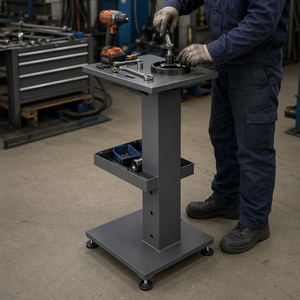
Grade 304/316 stainless structural frame with inert-gas seam welding. Engineered for washdown resistance and heavy assembly staging.
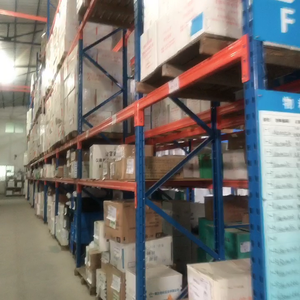
Full-scale turnkey logistics racking, including selective beam, drive-in bays, and high-density roll cradle configurations conforming to FEM standards.
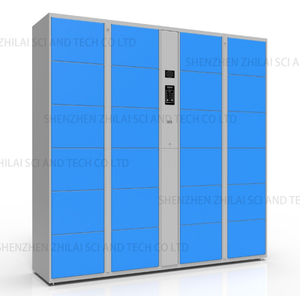
Cold-rolled steel locker units with barcode and RFID microcontrollers. Anti-pry concealed hinges for personnel, gym, and staff shifting areas.
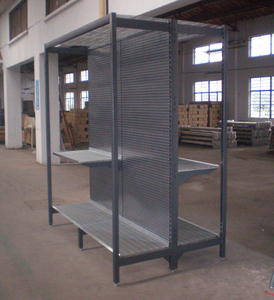
Heavy-gauge welded chrome wire and 4-post uprights. Modular slot spacing for high retail and light packaging storage flexibility.
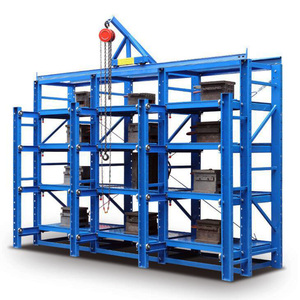
Slide-out drawer decks engineered with self-locking safety stops. Capacity up to 2,000 kg per tier for heavy tooling, dies, and roll fixtures.
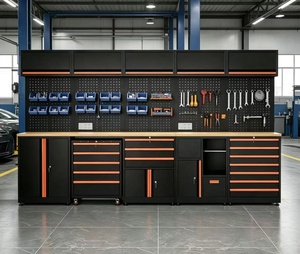
Reinforced steel chassis, ball-bearing drawer guides, and solid hardwood or stainless tops for rigorous workshop maintenance routines.
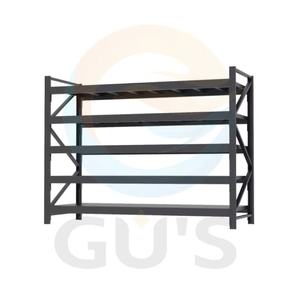
Thermoset electrostatic epoxy finish over phosphated Q235B cold-formed structural steel. High resilience against moisture and chemical fumes.
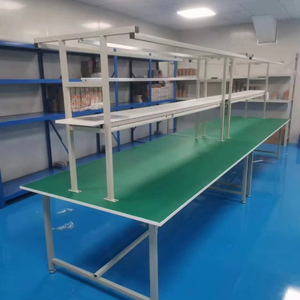
Ergonomic industrial assembly station with overhead illumination channels, power busways, and tool suspension rails for continuous production.
A comprehensive analysis of load-bearing mechanics, deflection tolerances, and safety factors when storing cylindrical payloads in high-bay logistics facilities.
Storing cylindrical payloads—such as master paper reels, technical textile fabrics, high-tensile wire spools, film laminates, and sheet steel master coils—presents unique mechanical challenges absent in standard pallet warehousing. Standard selective pallet racking depends on a planar, uniformly distributed load (UDL) that transfers force squarely through deck cross-beams into upright columns. In contrast, rolls produce extreme line-contact stresses and tangential outward forces.
Without engineered cradles or mandrel suspension rods, cylindrical stock exerts an unconstrained lateral wedging force. Under static conditions, an unrestrained cylindrical object situated between two parallel beams exerts outward thrust proportional to its gross weight and the contact angle. If the beam deflects under load, this lateral vector increases, precipitating cataclysmic beam spreading, deflection yielding, and rack collapse. As a premier Chinese manufacturer and global exporter, our engineering methodology integrates custom-stamped saddle cradles, V-shaped beam adapters, and axial mandrel lock systems calibrated to neutralize tangential vectors and direct all force vertically into the cold-formed column web.
L/200 for manual crane access and L/300 for Automated Storage and Retrieval Systems (ASRS) integration.
Selecting the optimal roll rack architecture depends heavily on unit roll diameter, inner core composition (cardboard core, steel sleeve, or coreless), gross weight per coil, picking frequency, and intralogistics handling gear (boom poles, overhead gantry cranes, C-hooks, or specialized roll-clamp forklifts). The technical parameters below illustrate standard structural classifications:
| System Typology | Standard Load Rating | Core Retention Mode | Access / Rotation Mode | Ideal Material Application |
|---|---|---|---|---|
| Fixed Saddle / Cradle Beam Racks | 1,000 kg – 5,000 kg / Tier | Dual V-notched heavy steel saddles with protective polymer liners | Direct 100% Selective (Forklift / Boom) | Textile rolls, non-woven fabric, printing paper reels, rubber membranes |
| Spindle / Axle Mandrel Cantilever | 500 kg – 3,500 kg / Spindle | Solid cold-drawn steel shafts with secondary anti-roll lock pins | Selective FIFO via overhead bridge crane or side-loader | Cable drums, wire coils, copper tubing, flexible hose spools |
| Heavy Structural Steel Coil Cradles | 5,000 kg – 35,000 kg / Bay | Hot-rolled structural channel (H-beam) welded containment v-blocks | Top-loading bridge crane with C-hook or coil lifter | Cold/Hot-rolled carbon steel coils, aluminum slit coils, copper strip |
| Dynamic Gravity Flow Roll Racks | 200 kg – 1,200 kg / Lane | Continuous split-roller beds with integrated centrifugal speed retarders | Strict FIFO Lane Rotation (Gravity-assisted downstream feed) | High-turnover packaging films, corrugated rolls, label converters |
| Automated Roll ASRS Racking | 800 kg – 6,000 kg / Cell | Laser-guided contour-nest cradles integrated with SRV shuttle carriages | Automated High-Bay Computer Control (WMS/WCS) | Mega paper mills, high-capacity film converters, automotive body plants |
A frequent failure mode in roll storage is irreversible flat-spotting or internal core crushing caused by localized Hertzian contact stresses. When a heavy elastomeric, paper, or high-gloss polymeric roll sits across narrow structural beams, its self-weight crushes the contact tangent, resulting in material scrap worth thousands of dollars per coil. Our manufacturing engineering solves this through three custom methodologies:
First, we fabricate radiused support cradles cold-formed to match the precise arc of the roll diameter, expanding the load dispersion area by up to 600% compared to standard sharp-edged structural angles. Second, where high-gloss or pressure-sensitive media are stored, we bolt or vulcanize high-density ultra-high-molecular-weight polyethylene (UHMW-PE) or 90 Shore A polyurethane liners directly to the steel saddles. Third, for axle-suspended systems, spindle diameters are engineered to maintain cross-sectional core contact without exceeding the inner core's compressive hoop yield strength.
Combining four decades of fabrication heritage with computerized automation, certified metallurgical integrity, and full-lifecycle export logistics support.
We source prime, certified structural steel directly from state-owned tier-1 mills. Uprights and heavy roll cradles utilize certified Q235B and Q355B structural grades with guaranteed carbon equivalents, tested tensile yield strength (≥355 MPa), and elongation capacity for high-seismic loading applications.
Our workshop floor features multi-stage continuous roll-forming production lines with in-line CNC punching. Column hole-pitch tolerances are maintained strictly within ±0.2 mm across a 12-meter single-section upright, ensuring modular interchangeability, rapid on-site bolt connection, and structural squareness.
Components undergo an automated 12-stage chemical wash, hot alkaline degreasing, zinc-iron phosphate passivation, and high-purity water rinses prior to thermoset electrostatic powder application. Cured at 200°C, our 70–90μm epoxy-polyester coatings exceed ASTM B117 salt spray ratings for harsh industrial environments.
Exporting structural steel globally requires ruthless container cube optimization. Our systems feature engineered bolt-together knock-down (KD) configurations. Heavy saddle brackets, structural bracings, and modular upright frames are steel-banded and timber-dunnaged to maximize container tonnage without cargo shifting during sea transport.
Every non-standard roll rack profile undergoes physical static proof testing on our calibrated hydraulic load benches. Welds are inspected using non-destructive ultrasonic and magnetic particle testing to ensure joint integrity before raw parts proceed to surface blast cleaning and shipping packaging.
We supply international project planners and EPC contractors with complete AutoCAD floor layouts, 3D Revit models, and finite element analysis (FEA) deflection simulations. We ensure clear integration with building column footprints, fire sprinkler heads, overhead crane runs, and forklift turning radius profiles.
How automation, carbon compliance, and dynamic warehousing dynamics are transforming how global procurement leaders purchase roll and coil racking systems.
Industrial roll storage is moving rapidly away from manual counterbalanced forklift operations toward driverless Autonomous Mobile Robots (AMRs) and Automated Guided Vehicles (AGVs) equipped with hydraulic roll-clamp attachments. This operational shift fundamentally alters racking structural requirements. Manual operators tolerate forgiving clearance margins; automated systems demand laser-aligned positioning targets, precision saddle centering notches, and photo-electric sensor pockets built directly into the rack frames.
In modern procurement contracts, overseas buyers increasingly specify millimeter-grade cradle tolerance limits (±1.5 mm across bay spans) alongside integrated retroreflective optical targets. As a forward-thinking Chinese manufacturer, we design AGV-ready roll racks featuring reinforced lead-in guide angles, optical sensor cutouts, and robotic pick-and-place cradles that facilitate smooth autonomous transitions without human intervention.
Global supply chain executives operating under EU CBAM (Carbon Border Adjustment Mechanism) or North American ESG frameworks now audit the embodied carbon of their logistics infrastructure. Conventional steel production relies heavily on coal-fired blast furnaces, leaving a high carbon footprint. Modern procurement specifications prioritize racking suppliers utilizing scrap-fed Electric Arc Furnace (EAF) processing, zero-VOC solventless powder coatings, and minimized manufacturing waste.
Our manufacturing complex is situated along an integrated supply corridor with direct access to low-emission domestic mills, providing verifiable Mill Test Certificates (MTCs), product lifecycle assessments (LCA), and ISO 14001 environmental compliance documentation. This positions our clients to achieve aggressive Scope 3 decarbonization benchmarks without sacrificing structural safety or paying exorbitant price premiums.
Managing inventory across thousands of master rolls—where paper grades, textile batches, plastic film densities, or steel metallurgical heats vary subtly—frequently causes expensive picking mistakes. Future-proof roll racking incorporates passive UHF RFID transponders and load-sensing piezoelectric load cells directly underneath each roll cradle saddle. When a master coil is placed into bay 04-tier-03, the rack automatically verifies load presence, transmits weight data to the enterprise warehouse management software (WMS), and flags misallocated inventory instantly. Specifying intelligent, sensor-ready rack framing during the initial CapEx phase protects your warehouse investment against rapid obsolescence.
Cubic warehouse optimization is pushing roll storage upward. Combining roll rack frames with heavy structural steel multi-tier mezzanine floors increases usable facility cubic density by up to 300% without expanding the physical site footprint.
Delicate film webs, aerospace composites, and printed textiles demand pristine finishes. Next-generation cradle assemblies incorporate snap-in elastomer and polyurethane saddle inserts, eliminating raw steel-to-roll contact and scrap rates.
High international installation labor costs have driven structural redesigns. Our latest bolt-together frame bracing and snap-in beam pins reduce jobsite assembly hours by over 35% compared to legacy fully welded field assemblies.
Crucial technical, operational, and commercial answers for warehouse managers, civil engineers, and supply chain directors sourcing roll storage racks from China.
Our structural team requires: minimum and maximum roll outer diameter (OD), inner core diameter (ID), core material (cardboard, PVC, steel), roll face length, maximum unit gross weight, facility clear ceiling height under obstructions, slab compressive strength (e.g., 25–35 MPa), slab rebar mesh depth, and the type of material handling equipment utilized (e.g., forklift boom, reach truck, crane with C-hook).
Our seismic engineering incorporates deep-recess saddle geometries (≥120° arc enclosure), secondary gravity-lock anti-roll pins, and heavy-duty front cradle retainers. For spindle cantilever systems, safety cotter pins and capture flanges prevent axle walk. Full bay dynamic analysis is verified against international seismic zoning standards (Zone 1 through Zone 4).
Yes. We engineer modular, bolt-on saddle brackets that connect to pre-punched structural beam flanges on 50 mm or 75 mm pitch centers. If your production shifts from 800 mm rolls to 1,200 mm reels, your maintenance crew can reposition the cradle saddles without on-site cutting or welding.
For standard interior logistics, our 80μm thermoset epoxy powder coating provides superior scratch and impact resistance. For coastal regions, unheated warehouses, or chemical storage atmospheres, we provide hot-dip galvanizing conforming to ISO 1461 (minimum 65–85μm zinc layer thickness) or dual-layer zinc-rich primer with powder topcoat.
Uprights are nested and secured with heavy polyester strapping over heavy-duty timber dunnage. Beams and saddles are bundled with corner edge protectors and moisture-barrier stretch wrap. Heavy hardware, footplates, and shims are packed in reinforced wooden crates. All packaging complies with ISPM-15 phytosanitary wood treatment regulations.
Every commercial export order includes 3.1 Material Test Reports (MTRs) certifying chemical composition and mechanical tensile properties, third-party weld inspection records, dry film thickness (DFT) paint reports, installation structural layout drawings, and CE/ISO 9001:2015 certificates of conformity.
Concentrated loads from high-density roll racks can punch through standard floor slabs. We calculate the footing pressure ($P/A$) and design oversized heavy-gauge baseplates (up to 20 mm thickness) with multiple anchor bolt holes to distribute column axial force safely across slab joints, preventing floor cracking.
Standard engineering approval drawings are completed within 3 to 5 business days. Manufacturing lead time for standard container shipments (2–5 units 40'HQ) typically spans 20 to 30 calendar days from formal design sign-off, ensuring dependable project delivery schedules for international contractors.
Connect directly with our engineering specialists. Receive structural bay calculations, custom 3D layout proposals, and factory-direct export quotations tailored to your operational specifications.