Precision-manufactured load-tested wire mesh decking panels designed for seamless integration with Japanese racking standards (JIS T11) and international selective pallet racks across Osaka warehouses.
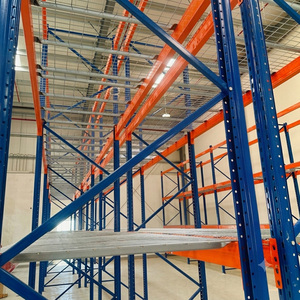
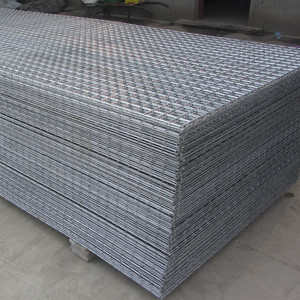
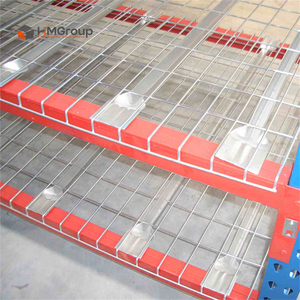
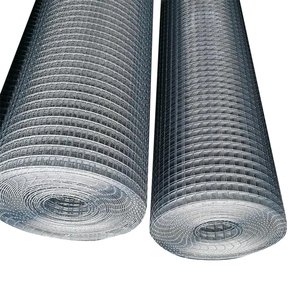
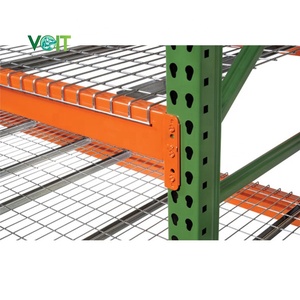
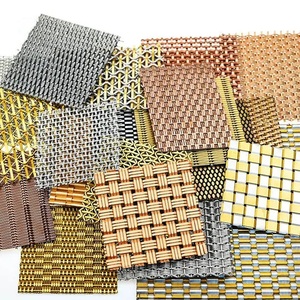
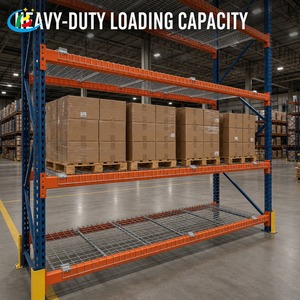
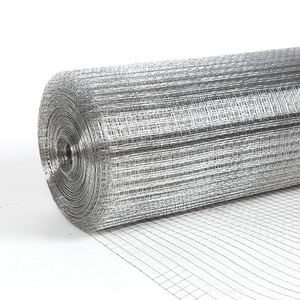
As Greater Osaka solidifies its position as East Asia's premier maritime and air logistics hub—anchored by the Port of Osaka (Nanko District) and Kansai International Airport (KIX)—warehousing operators are facing unprecedented structural challenges. Land scarcity, stringent fire protection mandates enforced by local city fire departments, and intense seismic safety regulations require a fundamental shift from traditional solid wooden or steel decking to high-capacity galvanized wire mesh decking.
Modern automated distribution centers across Ibaraki, Sakai, Higashiosaka, and Suminoe Bay require storage components that not only support extreme structural loads but also actively contribute to workplace safety, inventory visibility, and automated material handling integration (such as AGVs and Autonomous Mobile Robots).
Information Gain Benchmark: Unlike standard solid decking that blocks ceiling fire suppression systems, open-wire mesh decking engineered for the Osaka market provides over 70% water penetration clearance. This allows overhead fire sprinklers to reach lower rack tiers instantly, satisfying strict Japanese Fire Services Act standards while qualifying operators for lower industrial insurance premiums.
Our manufacturing complex combines 45+ years of structural steel engineering heritage (established 1977) with precision automated mesh welding lines. We deliver customized, high-density wire mesh decking directly to Osaka-based logistics contractors, Japanese third-party logistics (3PL) providers, and pharmaceutical distribution networks, offering unmatched structural stability, salt-spray corrosion resistance, and compliance with Japanese Industrial Standards (JIS T11 pallet dimensions).
Selecting the appropriate deck geometry, channel profile, and surface treatment for Kansai industrial applications.
| Decking Configuration | Structural Channel Profile | JIS / ANSI Load Rating | Primary Osaka Industry Application | Corrosion Protection Rating |
|---|---|---|---|---|
| Standard Outside Waterfall | Universal Step Channel (Q235 Steel) | 1,000 kg - 1,500 kg UDL | General 3PL, FMCG Warehousing in Nanko Hub | Electro-Galvanized |
| Inverted Step Deck | Inverted U-Channel (Dust-Free) | 800 kg - 1,200 kg UDL | Pharmaceuticals & Food Storage (Kadoma/Ibaraki) | Powder Coated / 304 Stainless |
| Flush Fit Decking | Flat Flange Channel | 500 kg - 1,000 kg UDL | Hand-Picked E-commerce Bins & Cartons (Sakai) | Electro-Galvanized |
| Heavy Duty Flare Deck | Heavy Gauge Flare Channel | 1,500 kg - 2,500 kg UDL | Automotive Parts & Industrial Machinery (Higashiosaka) | Hot-Dip Galvanized (HDG) |
How custom-engineered wire mesh decking solves operational bottlenecks across Osaka’s major industrial corridors.
In coastal logistics clusters like Suminoe and Sakishima, humidity and sub-zero temperatures accelerate steel oxidation. Our Hot-Dip Galvanized (HDG) wire mesh decking undergoes rigorous salt-spray anti-corrosion treatment (ISO 9227 tested), preventing rust formation and structural weakness in high-humidity cold-chain facilities.
Japan's strict building codes require rack accessories to maintain structural integrity during earthquake shocks. Our decking features waterfall edges that securely wrap over beam profiles, preventing deck displacement and pallet drop accidents during seismic movement in the Nankai Trough region.
Modern fulfillment centers operating near the Meishin Expressway utilize fine-mesh configurations (e.g., 50x100mm grid) to support irregular carton sizes and hand-picked items. The smooth wire finish prevents damage to polybags and cardboard packaging handled by high-speed sorting conveyors.
Exporting heavy structural components to Japan requires strict adherence to dimensional tolerances, steel grade certifications, and container loading efficiency. Backed by over four decades of manufacturing expertise (since 1977), our export facility serves as an OEM/ODM supplier for major international warehouse outfitters.
We source strictly cold-drawn carbon steel wire rod. Each wire batch undergoes tensile strength testing (minimum 550 MPa) to ensure zero permanent deflection under maximum rated Uniformly Distributed Load (UDL).
Automated multi-point welding mesh machines ensure 100% fusion depth at every wire intersection. This eliminates weak joints and guarantees uniform weight distribution across all channel supports.
Custom knock-down steel pallet bundling allows up to 1,400 decking panels per 40ft HQ container, lowering ocean freight charges per unit to Osaka Port or Kobe Port while speeding up site unloading.
Strategic developments driving wire mesh decking procurement decisions in West Japan.
Japan’s logistics industry is rapidly adopting the standard 1,100mm × 1,100mm (JIS T11) pallet footprint to optimize truck loading efficiency nationwide. Our factory supplies custom-sized 1050mm depth mesh decks engineered specifically to support JIS T11 pallets without overhang or stability loss.
Osaka municipal fire authorities have increased scrutiny on warehouse storage density. Traditional solid wood decks are being phased out in favor of open mesh decks, which allow uninhibited light penetration and unrestricted sprinkler water flow across multi-level racking systems.
Everything you need to know about importing, customizing, and installing wire mesh decking in Japan.
Yes. While 46"x42" is standard in North America, we frequently fabricate specialized mesh decking for Japanese beam profiles (including step beams and box beams) engineered specifically for JIS T11 (1100mm x 1100mm) pallets. We provide customized depth, width, and wire gauge variations according to your exact layout drawings.
Manufacturing standard orders typically takes 14 to 21 days. Transit time via direct ocean container shipping to Osaka Port (Nanko) or Kobe Port takes approximately 7 to 12 days depending on the shipping line, making total delivery fast and predictable for project schedules.
Under Japan’s Fire Services Act, warehouse decks must not obstruct ESFR (Early Suppression, Fast Response) ceiling sprinklers. Wire mesh decking provides over 70% open area, allowing water to pass through lower rack levels freely. This satisfies municipal fire department inspections and avoids costly secondary in-rack sprinkler installations.
For warehouses within coastal districts (such as Nanko, Suminoe, or Sakai) or unconditioned cold-storage facilities, we recommend Hot-Dip Galvanized (HDG) or heavy-duty powder coating over electro-galvanized finishes to resist airborne marine salt and high ambient humidity.
Yes. Every shipment includes raw material steel test certificates (MTC), coating thickness verification reports, and ANSI MH26.2 load test results certifying the Uniformly Distributed Load (UDL) ratings for complete peace of mind.
Connect directly with our senior racking structural engineers. Submit your warehouse CAD layout, rack dimensions, or target load specifications for a competitive quotation and custom technical design within 24 hours.
Contact Us