Executive Summary: The Transition to High-Density AS/RS Racking in the UK Market
The UK warehousing and logistics sector is navigating an unprecedented structural shift. Driven by soaring industrial land acquisition costs in primary hubs—such as the Midlands Golden Triangle, Daventry International Rail Freight Terminal (DIRFT), and the M25/M6 logistics corridors—warehousing directors are forced to maximize horizontal footprint efficiency by expanding vertically. Automated Storage and Retrieval Systems (AS/RS) racking structures have emerged as the definitive industrial standard to replace legacy wide-aisle and selective static pallet racking.
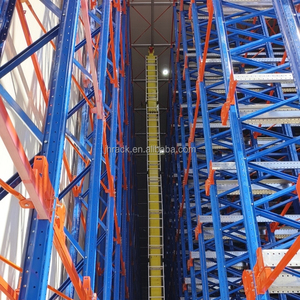
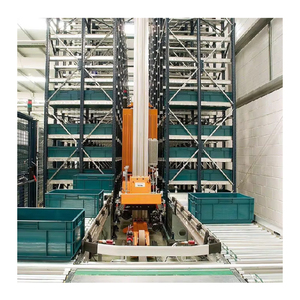
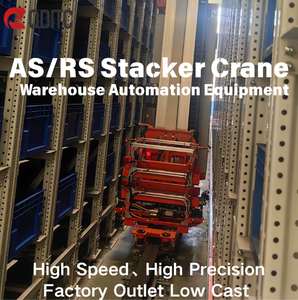
An AS/RS racking structure is not merely steel shelving; it is the ultra-precise structural backbone of an automated logistics plant. Operating alongside high-speed stacker cranes, four-way radio shuttles, vertical lift modules (VLMs), and autonomous mobile robots (AMRs), these heavy-duty structural frames require strict millimetric tolerances, superior steel yield strength, and certified compliance with European and British regulatory frameworks including BS EN 15512, BS EN 15620, and SEMA (Storage Equipment Manufacturers' Association) guidelines.
BS EN 15620 Tolerances
Precision cold-roll formed uprights designed to satisfy Class 100 to Class 400 crane deflection limits under full dynamic payload.
S355 Structural Steel
High-tensile certified structural steel profiles providing optimal structural rigidity while minimizing building self-weight.
UK HSE & SEMA Safe
Fully vetted load-bearing calculations and safety factor margins aligned with UK Health & Safety Executive (HSG76) parameters.
Localized UK Application Scenarios for Automated AS/RS Racking
Selecting the optimal AS/RS architecture depends heavily on localized operating conditions, thermal regimes, inventory velocity, and regional supply chain demands across Great Britain. Below are the primary deployment scenarios observed in top-tier UK industrial facilities:
1. The Midlands "Golden Triangle" Megasites
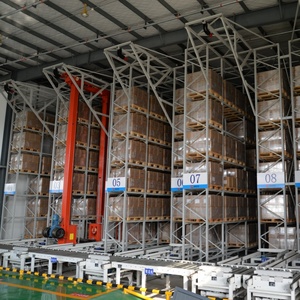
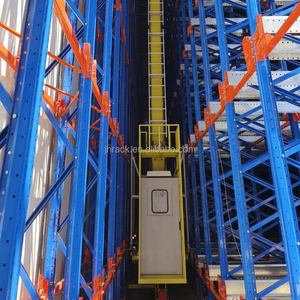
In distribution hubs surrounding Rugby, Daventry, Northampton, and Leicester, high-bay AS/RS rack-clad buildings (Clad-Rack structures) reaching heights of 30m to 40m are installed. In these installations, the steel AS/RS racking system serves a dual purpose: supporting the stored pallet loads and acting as the structural building frame for wall cladding and roofing, dramatically lowering civil construction costs per square meter.
2. Sub-Zero Cold Chain & Food Logistics
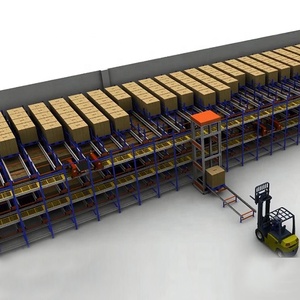
UK cold storage operators in Lincolnshire, Yorkshire, and the East of England face immense electricity expenditure. Implementing high-density Radio Shuttle AS/RS or double-deep stacker crane racking in -28°C environments compresses building volume by up to 60%, reducing refrigeration power consumption while preserving strict 100% FIFO/LIFO tracking under automated WCS command.
3. Urban Micro-Fulfillment (Greater London & Manchester)
To satisfy same-day e-commerce delivery SLAs along the M25 and urban North West, multi-tier mini-load AS/RS systems operating with plastic totes or small cartons are integrated into brownfield conversions. These systems operate with VNA aisle widths (< 1.5m), utilizing light-payload aluminum/steel guided shuttles for rapid picking rates exceeding 600 totes/hour per aisle.
4. Heavy Engineering & Automotive Manufacturing
In West Midlands automotive assembly corridors (e.g., Solihull, Coventry, Birmingham), heavy-duty AS/RS racking systems handle heavy press tools, dies, motor blocks, and stamping molds weighing up to 3,000 kg per storage cell. Reinforced beam profiles and dual-end lock connectors ensure structural stability during dynamic crane placement.
Localized UK Market Trends Driving Automation Sourcing
When sourcing AS/RS racking systems from global manufacturing factories and exporters, UK procurement teams must align with several critical market dynamics:
- Skyrocketing Energy Costs & Dark Warehouse Operations: High utility prices across the UK have accelerated the adoption of automated "dark warehouses" where automated stacker cranes operate in unlit, unheated, or reduced-oxygen spaces. Racking systems are engineered with anti-corrosion finishes (such as hot-dip galvanized or specialized epoxy powder coatings) to thrive without climate control.
- Post-Brexit Labor Availability Challenges: With warehouse labor turnover rising across UK fulfillment centers, automation provides predictable throughput. High-bay AS/RS systems minimize reliance on fork-truck operators while virtually eliminating manual handling damage to rack posts.
- Stringent Structural & Seismic Compliance: While the UK is historically a low-seismic zone, wind-loading, floor slab settlement, and dynamic braking forces from high-speed cranes (traveling up to 240 m/min) demand advanced Finite Element Analysis (FEA) testing during the design phase.
Information Gain: Critical Structural Tolerances for UK AS/RS Sourcing
Unlike standard adjustable pallet racking (APR) where localized beam deflections up to 1/200th of span are acceptable, high-bay AS/RS stacker crane racking demands strict deflection criteria. According to FEM 9.831 and BS EN 15620 Class 200/300 standards, maximum allowable rack deflection under full dynamic payload cannot exceed 1/500th of the bay span or ±1.5mm total horizontal sway. Failure to enforce these structural limits at the factory manufacturing level leads to crane sensor trips, operational downtime, and rapid mechanical wear on guide rails.
Technical Specifications Matrix: AS/RS System Architecture Comparison
Compare key architectural parameters across automated racking variants to determine the precise configuration required for your facility project:
| AS/RS Racking Type |
Max Stacker / Crane Height |
Aisle Width Requirement |
Payload Capacity (per cell) |
Throughput Rate (Pallets/Hr/Aisle) |
Primary UK Industry Fit |
| Single-Deep Stacker Crane |
Up to 40 meters |
1,400mm – 1,600mm |
500 kg – 1,500 kg |
35 – 55 Pallets/hr |
3PL, Pharma, Retail Distribution |
| Double-Deep Stacker Crane |
Up to 30 meters |
1,500mm – 1,700mm |
500 kg – 1,200 kg |
25 – 40 Pallets/hr |
High-Density FMCG Manufacturing |
| Radio Shuttle + AS/RS Crane |
Up to 25 meters |
1,500mm – 1,800mm |
1,000 kg – 2,000 kg |
40 – 70 Pallets/hr |
Cold Storage, Food & Beverage |
| 4-Way Pallet Shuttle System |
Up to 18 meters |
1,400mm (Omnidirectional) |
500 kg – 1,500 kg |
60 – 100+ Pallets/hr |
Omnichannel E-Commerce Hubs |
| Mini-Load Tote / Box AS/RS |
Up to 15 meters |
800mm – 1,200mm |
30 kg – 100 kg |
150 – 300+ Totes/hr |
Spare Parts, Electronics, Garments |
Factory Engineering Rigor & Global Export Capabilities
With a manufacturing legacy dating back to 1977, our structural steel fabrication complexes combine decades of cold-forming mastery with modern automated production lines. Exporting high-precision AS/RS structural racking to demanding international markets—including the UK, Middle East, Canada, and Western Europe—requires strict quality control protocols at every manufacturing stage:
Automated Fabrication & Roll Forming
Utilizing multi-stage continuous cold-roll forming machines equipped with CNC punch heads, we maintain exact hole-pitch accuracy (±0.2mm) across upright lengths up to 12 meters single-piece. This ensures effortless jobsite alignment and smooth crane guide-rail attachment.
Certified Steel Quality & Traceability
All structural uprights, diagonal bracing, and load beams are fabricated from high-grade prime coil steel (Q355B / S355JR grade equivalent) accompanied by EN 10204 3.1 Mill Test Certificates. Full material traceability is guaranteed from raw coil to finished export package.
Advanced Surface Finishing Lines
Components undergo multi-stage shot blasting followed by automated electrostatic epoxy powder coating or hot-dip galvanization. Finishing yields layer thicknesses between 60–100 microns, passing rigorous salt-spray durability testing for challenging ambient or cold-room environments.
Export Packaging & Container Logistics
Export shipments to UK ports (Felixstowe, Southampton, Liverpool, London Gateway) are bundle-packed with steel strapping, protective plastic wrap, and custom heavy-duty timber skids to prevent flex, abrasion, or moisture damage during transit.
UK Procurement Frequently Asked Questions (FAQ)
Key technical and commercial considerations for UK logistics engineers and procurement managers sourcing AS/RS racking structures:
Q: How do your AS/RS racking systems comply with UK SEMA guidelines and British Standards?
Our engineering designs undergo rigorous structural validation adhering to BS EN 15512 (Steel static storage systems - Adjustable pallet racking systems - Principles for structural design) and BS EN 15620 (Tolerances, deformations and clearances for automated storage systems), fully satisfying UK SEMA safety codes and HSE HSG76 compliance.
Q: What floor slab specification (e.g., FM1, FM2) is required for high-bay stacker cranes?
High-bay AS/RS systems reaching 15m–40m height require precise floor slab flatness. Typically, TR34 Class FM1 or Superflat standards are specified in crane running aisles. We provide detailed point-load layouts so your civil engineer can verify concrete slab reinforcement prior to installation.
Q: Can overseas factory controllers interface with existing UK WMS software like SAP EWM or Manhattan?
Yes. Our automation PLC controllers (primarily Siemens S7-1500 or Allen-Bradley) integrate seamlessly with WCS (Warehouse Control System) middleware via RESTful APIs, OPC UA, or Profinet protocols, bridging directly into top-tier enterprise WMS applications including SAP EWM, Blue Yonder, and Manhattan Associates.
Q: How are shipping container deliveries managed for UK inland destinations like Daventry or Rugby?
We coordinate complete door-to-door (DDP) or CIF logistics to major UK ports (Felixstowe, Southampton, Gateway). Components are pre-bundled to match your installation sequence, allowing direct offloading by crane or forklift at your UK site without staging delays.
Q: What is the typical ROI period for an automated AS/RS racking investment in the UK?
Given high UK industrial land rents and ongoing labor costs, most enterprise facilities achieve full payback within 2.5 to 4 years through a 60–80% reduction in land footprint, up to 50% energy savings in cold storage, and near-zero inventory damage.
Q: Do you provide installation supervision and structural signing-off in the United Kingdom?
Yes. We dispatch certified senior structural commissioning engineers to work alongside UK-based installation crews. They oversee 3D laser alignment, torque verification, vertical plumb checking, and issue final compliance documentation for insurance and HSE approval.