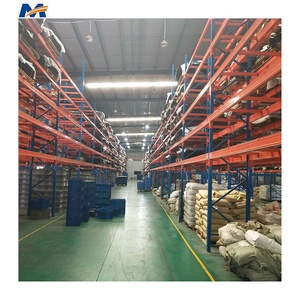
Top Trusted Pallet Rack Uprights Supplier & Exporters

Precision-Engineered Structural Columns, Continuous Cold-Formed Roll Profiles, and Seismic-Resilient Storage Uprights Serving Heavy Industrial Warehousing Across 4 Continents Since 1977.

Factory Direct Heavy-Duty Inventory

Featured Racking Systems & Modular Warehouse Equipment

Continuous-punch upright compatibility, certified vertical load margins, and high-density material handling systems calibrated for international logistics hubs.

Structural Engineering Authority

Engineering Anatomy of Industrial Pallet Rack Uprights

A rigorous examination of section modulus, cold-formed buckling mechanics, and structural framing calculations governing safe warehouse operations.

Omega & C-Profile Geometries

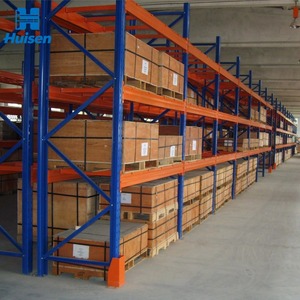
The primary load-bearing column post relies on an engineered multi-bend cross-section (commonly 8 to 12 cold-rolled continuous bends). These return flanges provide extreme torsional rigidity and prevent local web buckling under massive compressive axial loads, outperforming conventional hollow structural sections (HSS) in punch adaptability and field assembly speed.

Torsional-Flexural Buckling Limits

Pallet rack upright frames are designed against unbraced column lengths ($kL/r$), per RMI ANSI MH16.1 and EN 15512 specifications. Diagonal and horizontal C-channel bracing members are triangulated and mig-welded or bolted with high-tensile Grade 8.8 fasteners to resist combined shear strain and lateral sway caused by seismic events or forklift impact.

Baseplate Dynamics & Anchoring

Axial down-force is transferred into the reinforced concrete floor slab via laser-cut, oversized baseplates (typically 6mm to 10mm thick). Pre-drilled anchor apertures allow mechanical wedge anchors or chemical anchor bolts to withstand base shear forces and overturning moments caused by high bay elevations up to 12 meters.

Column Model Profile Dimensions (mm) Wall Thickness Max Bay Load Rating (kg) Continuous Punch Pitch Recommended Pallet Environment
PRO-UPR-80 80 mm x 60 mm 1.8 mm - 2.0 mm 8,000 - 11,500 kg 50 mm / 75 mm Light-to-medium retail & spare parts shelving
PRO-UPR-90 90 mm x 70 mm 2.0 mm - 2.3 mm 12,000 - 16,500 kg 50 mm / 76.2 mm Standard selective pallet racking & FMCG distribution
PRO-UPR-100 100 mm x 70 mm 2.3 mm - 2.5 mm 17,000 - 22,000 kg 75 mm Teardrop / Hex Heavy manufacturing, chemical & cold storage vaults
PRO-UPR-120 120 mm x 95 mm 2.5 mm - 3.0 mm 24,000 - 32,000 kg 75 mm Industrial Pitch Drive-in, double-deep, & heavy drive-through bays
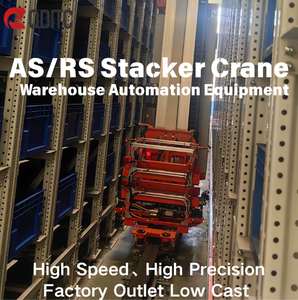
ASRS-UPR-EXT 140 mm x 100 mm (Boxed) 3.0 mm - 4.0 mm Up to 45,000 kg Precision CNC Micron High-bay automated stacker crane integration (10m - 30m)
1977
Established Heritage
45+
Years Engineering Storage
100%
High-Tensile Steel Purity
4+
Global Export Hubs
Strategic Procurement Intelligence

Future Procurement Trends in Logistics Storage Infrastructure

Key procurement vectors logistics directors, EPC contractors, and plant engineers must prioritize when sourcing heavy-duty upright columns over the next decade.

1. High-Yield Cold-Formed Steels with Gauge Optimization

Logistics enterprises are abandoning low-grade structural mild steels in favor of micro-alloyed, high-strength cold-forming grades (such as Q355B, ASTM A1011 HSLAS, and EN 10149 S355MC). These advanced alloys deliver higher yield strengths exceeding 355 to 420 MPa. As a result, upright columns can maintain ultra-high frame capacities (up to 30,000 kg) while decreasing deadweight by 12% to 18%, substantially cutting ocean freight shipping container fees and carbon footprint per pallet position.

2. Universal Interlock Geometry & Bolt-Together Modularity

Procurement teams are shifting away from all-welded upright frames toward modular, bolt-together knock-down upright assemblies. Bolted frames offer distinct total-cost-of-ownership (TCO) advantages: knocked-down frames can be shipped flat-packed in high-cube maritime containers at 3.5 times the density of welded frames. Moreover, if a lower column post is damaged by an errant counterbalance truck, only the affected vertical column or brace channel requires replacement rather than the entire welded bay structure.

3. AS/RS Tight-Deflection & Automated Shuttle Alignment

With warehouse robotics, autonomous mobile robots (AMRs), and automatic storage and retrieval systems (AS/RS) deploying rapidly worldwide, upright manufacturing tolerances must evolve. Modern procurement contracts stipulate strict plumbness criteria (often better than 1/1000 deflection tolerance over a 12-meter continuous span). Upright columns roll-formed with online laser sensor feedback guarantee punch-hole pitch accuracy within ±0.1mm, ensuring automated shuttle rails lock in without mechanical binding.

4. Advanced Surface Finishes & Cold Storage Passivation

Corrosion protection is a pivotal procurement factor in pharmaceutical cold-chain facilities operating down to -30°C. Buyers are transitioning from standard decorative paint to continuous pre-galvanized coils or multi-stage thermosetting epoxy-polyester powder coats cured at 200°C. These surfaces resist micro-cracking caused by cyclic thermal contraction, withstand rigorous washdown sanitation regimes, and resist ASTM B117 salt spray exposure for more than 500 hours without bubbling.

Manufacturer Since 1977

Divakaran Storage & Handling Systems Pvt. Ltd.

With an unbroken manufacturing lineage spanning more than four and a half decades, Divakaran Storage and Handling Systems Pvt. Ltd. operates a state-of-the-art heavy engineering fabrication plant in the G.I.D.C. Industrial Estate, Umbergaon, Gujarat. We are not brokers or intermediaries; we are full-cycle manufacturers of load-tested industrial racking, slotted angle shelving, high-capacity mezzanine floors, and bespoke intralogistics material handling hardware.

Our upright framing systems are fabricated in full compliance with recognized global structural standards, engineering safety margins, and rigorous metallurgical traceabilities. We serve long-term Tier-1 supply partnerships spanning India, the GCC, North America, and Southeast Asia.

  • Precision Roll-Forming Mills: Continuous multi-station roll-forming lines delivering exact structural profiles with minimal residual internal stress.
  • Verified Structural Steel: Sourced strictly with mill test certificates (MTC) verifying chemical yield, tensile limits, and elongation margins.
  • Export Container Packaging: Component nesting and custom timber bundling optimized for compact container loading and damage-free maritime transit.
  • End-to-End Engineering: Full structural bay load analysis, seismic baseplate calculations, and on-site engineering supervision.
Trusted by Global & Industrial Conglomerates
PepsiCo Larsen & Toubro (L&T) Reliance Industries Asian Paints Sun Pharma Cipla NTPC ONGC Hindustan Unilever Bayer CropScience Pidilite Voltas Essar Steel Welspun Air India Cargo Blue Star Parle Products Kansai Nerolac
Active Export Territories
Canada • Bahrain • Sri Lanka • United Arab Emirates • Kingdom of Saudi Arabia • Qatar • Oman • Kuwait

Procurement & Engineering FAQ

Frequently Asked Questions by Racking Procurement Teams

Clear, unvarnished technical answers regarding upright specification, seismic engineering, load verification, and international freight economics.

What crucial parameters are needed to calculate the load rating of an upright frame?
To determine the correct upright profile (e.g., 80mm, 90mm, 100mm, or 120mm) and steel wall thickness (1.8mm to 3.0mm), our structural engineers require:
1. Maximum Beam Level Spacing: The vertical distance from the floor to the first beam level and subsequent beam elevation spacing (unbraced column length $L_{cr}$).
2. Total Bay Load: Sum total of all loaded pallet tiers including dynamic safety factors.
3. Building Characteristics: Concrete slab compressive strength ($f'_c$ typically $\ge 25\text{ MPa}$), slab thickness, and seismic design category (PGA coefficient).
4. Material Handling Equipment: Turning radius and mast lift characteristics of counterbalance trucks, reach trucks, or automated VNA wire-guided equipment.
How do knock-down (bolted) upright frames compare to factory-welded frames for ocean export?
For international project deliveries (such as our exports to Canada, Bahrain, Sri Lanka, and the Middle East), knock-down (KD) bolted upright frames are the undisputed industry standard. Fully welded frames trap substantial empty air during containerization, dramatically driving up shipping expenses per pallet position. Knock-down frames allow vertical column posts and diagonal/horizontal C-channel braces to be packed flat in high-density bundles, maximizing maritime 40-foot High-Cube container payload weight up to the legal 26-28 metric ton limit. On site, our high-tensile locking bolts permit rapid, reliable torque-wrench assembly with zero structural compromise.
What steel grades and mill certifications are provided for export projects?
Every upright profile is manufactured exclusively from prime, hot-rolled pickled and oiled (HRPO) or pre-galvanized cold-forming coil steel. Primary grades utilized include certified Q235B and Q355B (equivalent to EN 10025 S235JR and S355JR, or ASTM A1011 HSLAS Grade 50). Each production heat lot is accompanied by a certified EN 10204 Type 3.1 Mill Test Certificate (MTC) detailing precise chemical composition (Carbon, Manganese, Silicon, Phosphorus, Sulfur) and verified mechanical properties (Yield Strength $R_e$, Tensile Strength $R_m$, and Elongation $A$).
How do you guarantee frame stability under seismic conditions or localized forklift impacts?
Structural resilience is engineered into the system through three protective layers:
• Seismic Baseplates & Heavy Shimming: Heavy-gauge footplates with multiple anchor patterns distribute uplifting tension and high base shear across seismic zones.
• Impact Column Guards: Independent floor-anchored steel column protectors, wrap-around poly-guards, and aisle-end heavy tubular barrier rails prevent direct forklift impact to upright corners.
• Continuous Bracing Geometry: Triangulated K-bracing or X-bracing panels maintain frame squareness and prevent torsional displacement, engineered under finite element analysis (FEA).
Can your uprights integrate with pre-existing third-party racking beams and systems?
Yes. We engineer upright columns with standardized punch patterns, including universal 50mm pitch, European 75mm pitch, and North American 76.2mm (3-inch) Teardrop slot configurations. During pre-sales technical consultation, our engineering team can review your existing beam end-connector claw drawings or send physical sample coupons to guarantee 100% mechanical engagement, safety pin locking alignment, and load transference compatibility.
What surface finish options are recommended for high-humidity or cold-storage environments?
For standard ambient distribution centers, our automated continuous electrostatic powder coating process applies an ultra-durable thermosetting polyester-epoxy powder (60-80 microns thick) cured at 200°C for exceptional chip and scratch resistance. For deep-freeze cold storage (-30°C), fertilizer plants, coastal facilities, or chemical environments, we recommend continuous hot-dip pre-galvanized steel (Z275 coating mass) or post-fabrication batch hot-dip galvanizing per ISO 1461 / ASTM A123, providing decades of self-healing cathodic rust protection.

Request Custom Upright Engineering Calculations & Pallet Rack Catalog

Connect directly with our senior intralogistics project engineers. Receive custom bay elevation layouts, structural section modulus analysis, and CIF port delivery schedules tailored to your facility parameters.