Precision-built workshop furniture engineered from structural steel and industrial-grade composite tops. Designed for harsh fabrication shops, clean electronic assembly lines, and ergonomic packing hubs.
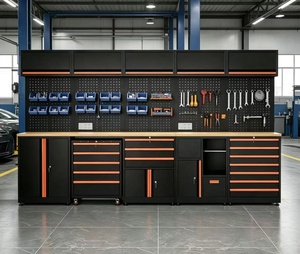
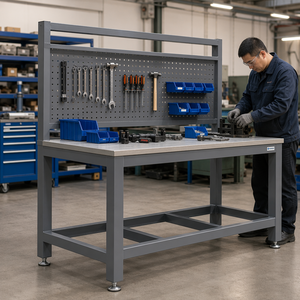
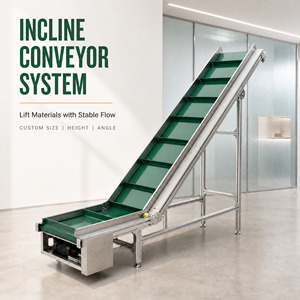
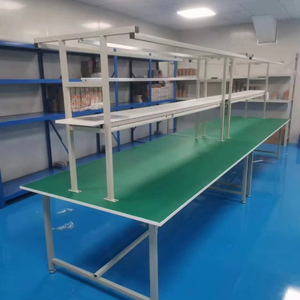
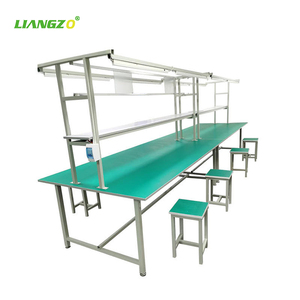
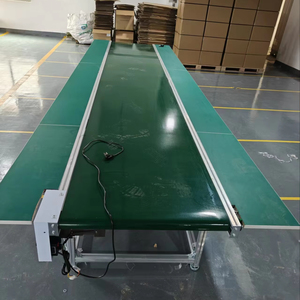
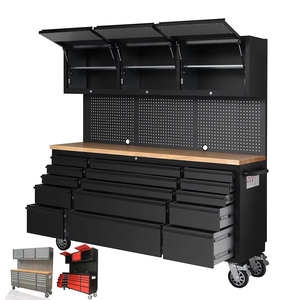
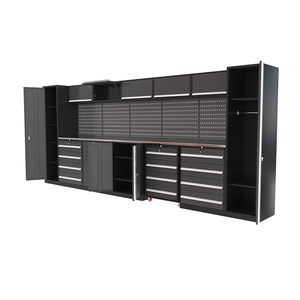
An in-depth analysis of structural load dynamics, ergonomic safety thresholds, and material specifications for procurement engineers and global plant managers.
In modern automated manufacturing, precision fabrication, and mission-critical electronics assembly, an industrial workbench is far more than a simple table. It represents the direct physical interface between the operational workforce, high-value tooling, and complex workflow execution. Substandard workstations lead to micro-vibration transfer in delicate inspection setups, structural deflection under cyclic mechanical loads, operator musculoskeletal disorders (MSDs), and catastrophic electrostatic discharge (ESD) events that destroy sensitive semiconductors.
The choice of structural skeleton fundamentally dictates the workstation's lifecycle, resonance damping capacity, and total load limits. For heavy mechanical environments, automotive tooling shops, and aerospace maintenance bays, fully welded structural steel frames using cold-rolled profiles (minimum gauge 14 to 11 AWG, or 2.0 mm to 3.0 mm wall thickness) provide unmatched torsional rigidity. These frames undergo pre-treatment degreasing, zinc phosphate passivation, and high-build electrostatic epoxy-polyester powder coating cured at 200°C, providing superior salt-spray corrosion resistance (surpassing ASTM B117 standards for over 500 hours).
Conversely, modular extruded aluminum profile workstations (utilizing 40×40 mm or 45×45 mm industrial T-slot profiles with anodized surfaces) are optimized for modular electronics assembly, cleanroom inspection lines, and reconfigurable production cells. T-slot aluminum systems allow seamless repositioning of auxiliary uprights, lighting fixtures, overhead tool balancers, and pneumatic manifolds without requiring hot work permits or welding on active factory floors.
Procurement teams must carefully calibrate countertop selection against the operational environment:
| Workstation Category | Structural Frame Spec | Countertop Material | Load Capacity (Static / Dynamic) | Compliance Standards | Primary Industrial Sector |
|---|---|---|---|---|---|
| Ultra Heavy Mechanical | Q235 Cold-Rolled 3.0mm Box Steel | 50mm Solid Beech / 3mm Steel Shell | 1,500 kg / 850 kg | ISO 9001, ANSI/BIFMA X5.5 | Heavy Engineering, Tool & Die, MRO |
| ESD Electronics Assembly | 2.0mm Formed Steel with Ground Stud | 28mm Dual-Layer ESD Core Laminate | 500 kg / 300 kg | IEC 61340-5-1, ANSI/ESD S20.20 | Semiconductor, SMT Lines, Medical Devices |
| Continuous Conveyor Inspection | 6063-T5 Anodized Aluminum Profile | PVC High-Tension Anti-Static Belt | 350 kg / 180 kg | CE Machinery Directive, ISO 12100 | Packaging, Sorting, Automotive Sub-assembly |
| Cleanroom Tooling Station | AISI 304 Polished Stainless Steel | Perforated/Solid 304 Grade (Ra < 0.8µm) | 800 kg / 450 kg | ISO 14644-1 Class 5 Cleanroom | Biotech, Aerospace Cleanroom, Pharma |
Rooted in a proven manufacturing lineage spanning nearly five decades, we deliver end-to-end metallurgical expertise, certified manufacturing, and turnkey OEM/ODM export solutions.
Operating from our specialized production facilities, our modern plant integrates high-precision CNC fiber laser cutting, automated press braking, robotic seam welding, and an automated continuous 9-stage powder-coating line. By retaining complete internal control over structural steel processing, we guarantee absolute dimensional consistency, batch-to-batch metallurgical purity, and strict cost efficiency for volume contracts.
Every upright column, horizontal crossbeam, and drawer slide assembly is calculated via Finite Element Analysis (FEA) to confirm load safety factors of at least 1.5× rated working capacity. Heavy-duty bearing drawers undergo rigorous 50,000-cycle push-pull endurance tests under full 100 kg loads, ensuring zero rail deformation or ball-cage slippage in demanding multi-shift shop environments.
We possess decades of overseas logistics competence, supplying heavy industrial storage and workstation furniture to demanding markets across Bahrain, Sri Lanka, Canada, the Middle East, and Europe. Workbenches are engineered in modular knock-down (KD) configurations, packed in reinforced fumigated wooden crates with moisture-barrier wrapping, maximizing 40ft HQ container loading density while ensuring rapid site assembly.
No two production lines are identical. Our dedicated engineering department works directly from client 3D STEP files or 2D architectural DWG plant layouts. We tailor bench height adjustments, modular overhead LED lighting systems, pneumatic air-drop connections, multi-standard international power busways (UK, EU, US, universal sockets), and cantilevered bin rails to exact client process requirements.
Prior to cutting steel, our CAD/BIM engineering desk conducts virtual workflow simulations, ergonomic reach envelope calculations, and aisle clearance validations. Clients receive full exploded-view technical drawings and certified load-rating declarations for facility engineer sign-off, eliminating post-delivery layout discrepancies or installation bottlenecks.
Every workstation frame follows standardized modular hole-pitch architecture. This guarantees that accessories purchased five or ten years later—such as articulated monitor arms, motorized height-adjustment columns, secondary storage cabinets, or louvred tool panels—remain fully backward compatible as factory operational needs evolve.
How automation, Lean 5S manufacturing, predictive workplace ergonomics, and ESG mandates are reshaping the global procurement landscape for industrial workshop infrastructure.
Global occupational safety bodies (including OSHA and EU-OSHA) are tightening guidelines regarding repetitive strain injuries and static standing fatigue. Procurement is shifting rapidly from fixed-height benches to dual-actuator electric telescoping lift systems capable of elevating 600 kg dynamic loads smoothly between 680 mm and 1,180 mm, accommodating diverse multi-shift operator heights.
Future workbenches are no longer passive steel fixtures. They incorporate integrated networked power channels, smart digital pick-to-light indicators, overhead sensor arrays verifying assembly sequences, and automated torque wrench data telemetry. Workstations directly integrate into Manufacturing Execution Systems (MES) to enforce zero-defect quality control.
With shorter product life cycles and high-mix low-volume production, static assembly lines are obsolete. Plant engineers favor modular workstations that unbolt, reconfigure into U-shaped lean manufacturing cells, or interface directly with AGV/AMR autonomous mobile transport carts through standardized docking pins and roller interfaces.
Corporate ESG benchmarks now audit the embedded carbon footprint of shop floor capital investments. Demand is surging for workbenches manufactured utilizing EAF (Electric Arc Furnace) recycled green steel, zero-VOC electrostatic powder coatings, and fully modular components designed for 100% material recyclability at end-of-life.
Detailed technical answers addressing custom manufacturing tolerances, international load certifications, surface resistivity verification, and containerized global shipment protocols.
Whether you are outfitting a high-throughput cleanroom electronics line, a regional distribution fulfillment center, or a heavy-duty mechanical maintenance workshop, our application engineering team delivers CAD layouts, structural calculations, and rapid global export fulfillment.