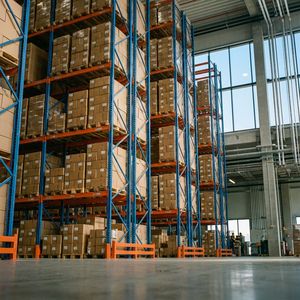
Explore our certified portfolio of heavy-duty personnel lockers, high-capacity workshop modular systems, heavy engineering stack racks, and structural warehousing solutions. Every fabrication utilizes premium heavy-gauge cold-rolled carbon steel, anti-deformation geometry, and industrial powder coatings built to withstand rigorous high-throughput environments.
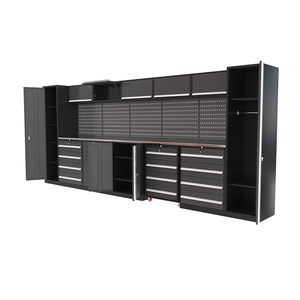
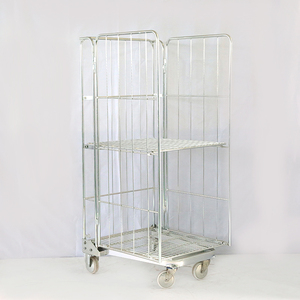
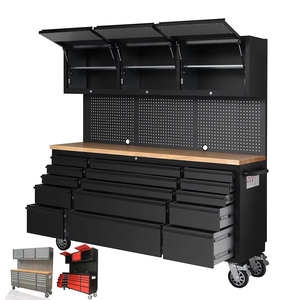
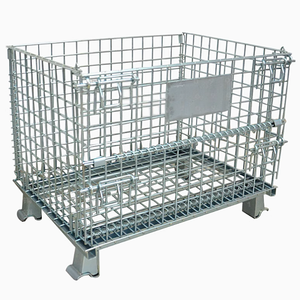
In modern manufacturing plants, logistics hubs, chemical processing sites, and institutional infrastructure, personal storage equipment and heavy tool security lockers represent critical logistical touchpoints. Unlike standard commercial sheet-metal cabinets engineered merely for light office duty, a heavy-duty locker system must guarantee structural resilience against physical torsion, pry attacks, severe dynamic loading, seismic vibration, and corrosive airborne contaminants.
Industrial procurement specialists frequently encounter field failures stemming from improperly specified gauge thickness, inferior spot welding, and inadequate electrostatic powder treatments. True industrial-grade lockers, heavy-duty workshop cabinets, and mobile logistics storage units are designed around ASTM A1008 / A1011 cold-rolled steel specifications or structural grades like Q235B and Q345B. The metallurgical composition ensures high yield strength, allowing structural frames to resist irreversible plastic deformation when subjected to continuous abuse or severe tool drop events.
The most defining differentiator between consumer-tier and heavy-duty industrial storage lies in metal gauge thickness. Commercial units typical of retail stores employ 20-to-24 gauge sheets (0.6mm to 0.9mm thickness), prone to denting, door sag, hinge binding, and lock-pocket failure within months of factory deployment.
Industrial manufacturers engineer heavy-duty locker uprights and doors using 14-gauge (1.9mm) to 12-gauge (2.66mm) cold-rolled steel. Internal shelving panels are fortified with formed box-flange return edges that increase sectional modulus without adding excessive dead weight. This structural stiffness prevents deflections greater than L/200 under maximum rated distributed loads (typically 150 kg to 500 kg per tier).
| Performance Parameter | Commercial Grade Lockers | Industrial Heavy Duty Lockers | Extreme-Duty Workshop Cabinets |
|---|---|---|---|
| Steel Sheet Gauge | 20 to 24 Gauge (0.6 - 0.9 mm) | 14 to 16 Gauge (1.5 - 1.9 mm) | 12 to 14 Gauge (1.9 - 2.7 mm) |
| Door Construction | Single-panel hemmed sheet | Double-pan box welded reinforcement | Unibody welded channel framework |
| Hinge Architecture | Butt hinges or friction pins | Continuous 14-gauge full-height piano hinge | Heavy-duty 7-gauge welded leaf hinges |
| Latching Mechanism | Single-point cam or friction catch | 3-Point cremone bolt with pry protection | Tamper-resistant 3-point lock bar system |
| Shelf Load Capacity | 25 kg to 45 kg UDL | 120 kg to 250 kg UDL | 400 kg to 650 kg UDL |
| Surface Pre-Treatment | Basic solvent wipe-down | Multi-stage iron/zinc phosphate conversion | Automated shot blast + epoxy primer |
| Expected Operating Life | 2 - 4 Years | 15 - 25+ Years | 30+ Years (Lifetime Industrial) |
When drafting technical tender documents, engineering procurement teams must evaluate structural joinery: fully assembled all-welded unibodies versus modular knock-down (KD) bolt-together designs. All-welded unibodies feature continuous seam MIG welding along corner pillars, creating an ultra-rigid monocoque shell ready for immediate anchor-bolting. This eliminates the vulnerability of loose fasteners or progressive racking caused by floor undulations.
Conversely, modern precision CNC-stamped knock-down lockers, designed with interlocking tab-and-slot joinery and structural metric bolts, offer substantial ocean freight logistics optimization. International shipments to regions like North America, the Middle East, or the Caribbean benefit from up to 70% freight cube reductions, drastically curtailing carbon footprint and landed procurement cost without compromising erected structural stiffness.
Heavy-duty lockers situated in harsh environments—such as marine coastlines, chemical processing suites, or humid mining staff facilities—demand advanced metallurgical surface defense. Leading manufacturers utilize automated shot-blasting to remove mill scale, followed by an automated 5-to-7 stage phosphate pre-treatment.
The final barrier consists of an electrostatically applied, thermoset architectural epoxy-polyester powder coating cured at 200°C (392°F). This yields a dry film thickness of 70 to 90 microns, passing ASTM B117 salt spray exposure tests exceeding 500 to 1,000 hours without blistering. Where biological cleanliness is mandated—such as in food processing or pharmaceutical personnel lock rooms—specialized antimicrobial silver-ion additives prevent pathogen colonisation across contact surfaces.
Double-channel reinforced door stiffeners eliminate flexing and defeat manual crowbar intrusion attempts in remote tool cribs.
Reinforced gusseted base plates ensure secure mechanical fastening into concrete floor slabs compliant with local seismic codes.
Precision deadbolts engage at the top, bottom, and center door jambs, managed by a solid 3/8-inch steel vertical linkage.
Louvered door ventilation arrays or diamond perforated sidewalls maximize passive air exchange to mitigate moisture build-up.
The procurement of heavy-duty lockers and warehouse metal containment is evolving from passive capital expenditure into an active driver of operational intelligence, worker safety, and ESG compliance. Forward-thinking procurement teams must navigate three strategic macro shifts.
Heavy-duty lockers are rapidly transitioning into automated Point-of-Use (PoU) dispensing systems. Equipped with internal 110V/220V power busbars, USB-C PD fast chargers, and RFID/biometric credential scanners, lockers now track and recharge high-value diagnostic meters, cordless torque tools, and intrinsically safe radios. Cloud management systems verify checkout telemetry, eliminating tool shrinkage and reducing shift changeover bottlenecks.
Global enterprise tenders increasingly require Environmental Product Declarations (EPDs). Procurement frameworks favor manufacturers leveraging electric arc furnace (EAF) steel with scrap metal content exceeding 60%, powered by renewable energy. Low-VOC, heavy-metal-free polyester coatings applied via closed-loop powder recovery booths ensure zero landfill contamination and align with LEED v4.1 industrial green building certifications.
Single-region sourcing vulnerabilities have led Fortune 500 EPC contractors to diversify storage system procurement toward proven, high-capacity manufacturing centers such as India. Modern automated roll-forming and robotic welding facilities provide predictable lead times, rigorous British/European/American code compliance, and containerized flat-pack freight optimization that mitigates maritime supply chain volatility.
The manufacturing paradigms shaping high-durability storage systems are experiencing rapid automation. Hand-sheared panels and manual resistance welding have given way to integrated fiber-laser punching and cutting centers paired with robotic press brakes. These automated workcells hold dimensional tolerances within ±0.25mm across high-volume production batches.
Such geometric precision guarantees absolute squareness of locker carcasses, ensuring that interlocking doors, deadbolts, and multi-tier compartments align effortlessly during field installation. Furthermore, robotic welding arms deliver uniform heat distribution along critical seam joints, preventing the thermal warping, burn-through, and micro-cracking common in lower-tier manual assembly.
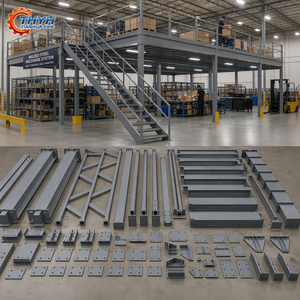
In modern 3PL distribution centers and cross-dock facilities, spatial efficiency demands seamless integration between personnel lockers, tool cribs, and structural storage infrastructure. Heavy-duty lockers are increasingly designed on modular architectural grids that align directly with pallet racking bays, heavy duty shelving, and multi-tier structural mezzanine floors.
Engineers can position locker banks into the ground-level upright frames of selective pallet racks or tuck high-density mobile compactor lockers underneath mezzanine stairwells. By engineering bolt holes to match standard upright teardrop or slotted hole patterns, facility planners turn dead cubic volume into secure, high-density inventory storage.
Established in 1977, Divakaran Storage and Handling Systems Pvt. Ltd. stands as an authentic industrial manufacturing powerhouse—not an intermediary or trading house. For more than 45 years, our dedicated manufacturing complex located at C1/16 & 17, G.I.D.C. Industrial Estate, Umbergaon (Umargam) – 396171, Dist. Valsad, Gujarat, India, has engineered robust, load-rated storage solutions for the world’s most demanding industrial operations.
Our comprehensive industrial storage portfolio extends beyond heavy-duty lockers to include selective pallet racking, slotted angle shelving, mobile compactor systems, heavy-duty workshop workstations, cantilever racks, and modular mezzanine structures. Each system is designed and fabricated under strict ISO-compliant quality management protocols, adhering to international structural and safety benchmarks.
Divakaran’s heavy-duty storage installations operate reliably across demanding climates worldwide. We maintain an established direct export footprint spanning:
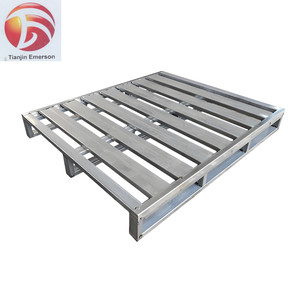
All overseas export shipments are packed using knock-down (KD) methodologies, shrink-wrapped with vapor-corrosion-inhibitor (VCI) films, corner-protected with heavy-gauge corrugated edge-boards, and steel-banded to ISPM-15 heat-treated timber or galvanized steel pallets for safe maritime container transport.
Our long-standing structural integrity is verified by enduring procurement relationships with leading global conglomerates, pharmaceutical leaders, petrochemical plants, and infrastructure contractors:
Before releasing a Request for Quotation (RFQ) to locker suppliers, project engineers and procurement heads should verify these three core technical evaluation gates to guarantee lifetime asset reliability.
Demand certified Mill Test Certificates (MTCs) verifying sheet steel tensile strength (370–500 MPa), yield strength (>235 MPa), and precise chemical composition (carbon <0.20%, phosphorus and sulfur <0.045%) to guarantee weldability and ductile crack resistance.
Mandate documented coating performance under ASTM D3359 (Method B cross-hatch adhesion rating 4B/5B) and ASTM B117 salt fog corrosion testing (minimum 500 hours with <1mm creep from scribe), safeguarding against premature rust in demanding coastal or chemical installations.
Specify physical cycle testing exceeding 50,000 door open/close operations without hinge drop or latch misalignment. Require door torsion load resistance tests ensuring no permanent deflection when a 100 kg vertical load is applied to the outer corner of an open door.
Comprehensive technical answers addressing the critical mechanical, coating, dimensional, and logistical inquiries raised by international engineering and procurement specialists.
Partner with Divakaran Storage and Handling Systems Pvt. Ltd. Connect directly with our Umbergaon engineering design office to evaluate load ratings, receive CAD space plans, and secure competitive export pricing.