Direct factory configurations fabricated with high-yield carbon steel, automated CNC roll forming, and specialized epoxy powder finishes for North American, European, and global supply networks.
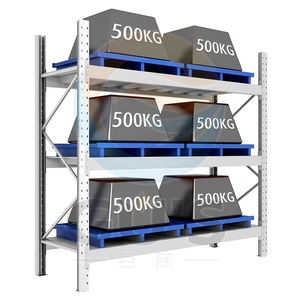
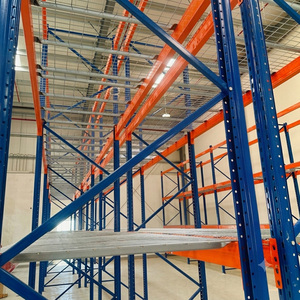
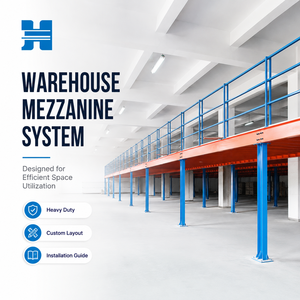
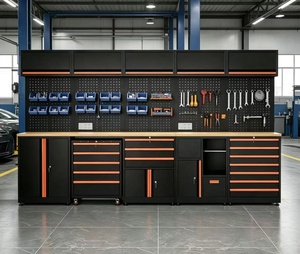
An engineering breakdown of cold-formed steel yield behavior, inverted teardrop hole punching geometry, and beam-to-column connector mechanics.
The teardrop pallet racking profile remains the undisputed industry standard across North American, South American, and global logistics facilities. Characterized by its inverted teardrop-shaped punching pattern spaced on strict 2-inch vertical centers, this geometry enables completely boltless, rapid beam adjustment while providing mechanical self-wedging resistance under gravity load. When sourcing from premier China manufacturers, understanding the cold-forming metallurgy and structural engineering integrity is essential for supply chain resilience.
Fabricated using certified Q235B and high-yield Q355B carbon steel (chemically equivalent to ASTM A36 and ASTM A572 Grade 50). Minimum yield strengths exceed 355 MPa, ensuring resistance to localized buckling under seismic loading.
Engineered precisely to conform with the Rack Manufacturers Institute (RMI) Specification for the Design, Testing and Utilization of Industrial Steel Storage Racks. Column punch tolerances are locked to ±0.15mm via automated continuous punching dies.
Integrated gravity auto-locks or heavy-duty zinc spring pins automatically seat into the vertical slot. The tapered pin engages the narrowing teardrop aperture, creating rigidity that neutralizes horizontal dynamic sway during forklift entry and egress.
Under maximum rated pallet payloads, horizontal step beams must not exceed an elastic deflection ratio of 1/180 of the clear span length (in accordance with ANSI MH16.1 section 5.3). Chinese manufacturing plants with advanced CAE finite element analysis (FEA) calibrate roll-formed step profiles to balance section modulus, moment of inertia, and steel tonnage optimization.
Direct engineering parameter comparison for warehouse operations directors evaluating international capital expenditure (CAPEX).
| Racking Standard | Pitch Geometry | Connection Type | Interchangeability | Max Load / Level | Ideal Application |
|---|---|---|---|---|---|
| American Teardrop (Standard) | 2.00 Inch (50.8 mm) | Inverted Teardrop Pin / Step Beam | Universal High | Up to 4,500 kg | 3PL, Distribution Hubs, Retail Warehousing |
| European Speedlock (Hexagonal) | 50 mm / 75 mm | Hooked Connector with Safety Clip | Regional (EU) | Up to 4,200 kg | European Logistics Centers, Cold Storage |
| Slotted Angle Shelving | Custom Oval Slot | Corner Plate & Bolted Joint | Modular / Proprietary | 150 - 400 kg | Manual Parts Stores, Archive Storage, Workshops |
| Structural C-Channel Rack | 3.00 Inch (76.2 mm) | High-Strength Grade 5 Bolted Joints | Manufacturer Specific | Up to 6,000+ kg | Heavy Manufacturing, Tool & Die Storage, Freezers |
| Drive-In / Drive-Through | Continuous Guide Rail | Cantilever Bracket Support | System Matched | Batch LIFO Pallets | Cold Storage, Beverage & High-Density SKU |
How enterprise supply chains navigate automated storage integration, tariff mitigation, and cold-chain environmental requirements.
The global procurement landscape for industrial teardrop pallet racking is undergoing a rapid technological and operational shift. Overseas warehouse developers and material handling dealers are no longer evaluating suppliers purely on base steel price per metric ton. Sourcing teams today prioritize automated manufacturing precision, structural integration for Automated Storage and Retrieval Systems (ASRS), and optimized containerization packing schemes.
As autonomous mobile robots (AMRs), automated guided vehicles (AGVs), and stacker cranes replace traditional counterbalanced forklifts, rack manufacturing tolerances have narrowed dramatically. Deflections that were historically acceptable in manual warehouses cause optical navigation faults in robotic shuttles.
With the exponential growth of refrigerated pharmaceuticals, frozen food logistics, and chemical processing, coating longevity under thermal cycling is paramount. China's top teardrop rack factories have transitioned beyond standard single-pass painting:
In-house metallurgy, automated roll forming, robotic welding cells, and comprehensive ocean freight packing optimization.
Leading Chinese manufacturing hubs in Jiangsu, Zhejiang, and Shandong have consolidated the entire value chain of cold-formed steel manufacturing. By bypassing intermediaries and purchasing directly from verified enterprise factories, corporate buyers achieve substantial capital cost reductions while ensuring verified material traceability.
Modern production halls feature 24 to 28-station sequential roll-forming lines. This gradual cold-working process minimizes residual internal stresses in steel angles and channel flanges, eliminating twisted or warped upright frames.
Every coil batch arrives with original EN 10204 Type 3.1 chemical analysis inspection certificates. Mechanical properties are continuously validated with in-house tensile testing, weld penetration cross-sectioning, and salt spray chambers.
Uprights are supplied pre-welded or knock-down (bolted assembly) based on customer freight preference. Bolted upright frames allow maximum cube utilization in 40ft High Cube (40HQ) containers, reducing shipping cost per pallet position by up to 35%.
Clear, engineering-backed answers addressing compatibility, international building codes, load testing, and logistics execution.
Connect directly with our senior structural engineering team. Receive customized CAD warehouse layout drawings, finite element load capacity analysis, and direct factory container pricing within 24 hours.