Engineered to international FEM, RMI, and ISO parameters. Explore foundational dynamic racking modules, industrial cantilevers, decks, and structural pallets engineered for zero-failure warehouse throughput.
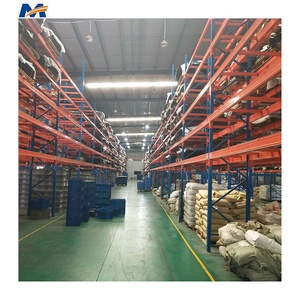
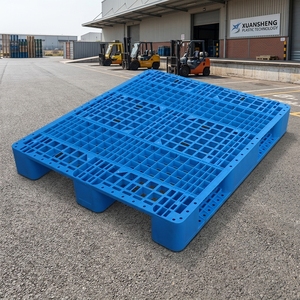
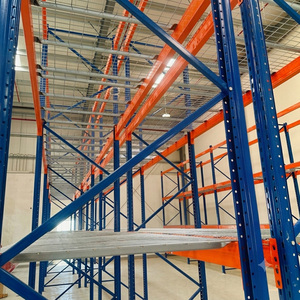
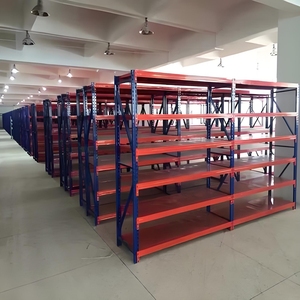
A rigorous examination of kinetic dissipation, pitch engineering, roller metallurgy, and high-density material handling execution.
Pallet Flow Racking, recognized in industrial intralogistics as Gravity Flow Racking, operates as a dynamic, ultra-high-density storage mechanism operating on an unpowered gravitational gradient. Unlike static selective pallet racks that necessitate parallel access aisles for forklift maneuvers, a pallet flow infrastructure consolidates aisle allocations into dedicated charging (loading) and discharge (unloading) faces. Pallets enter from the elevated rear face, traverse an inclined roller or skate-wheel track spanning depths from 2 to more than 25 pallet positions under gravity, and queue seamlessly at the retrieval face for immediate discharge. This architecture secures absolute First-In, First-Out (FIFO) stock rotation, eliminating inventory obsolescence for perishable foodstuffs, pharmaceuticals, fast-moving consumer goods (FMCG), and chemical precursors.
The core operating efficiency of an industrial gravity flow rack rests upon the equilibrium between gravitational acceleration and dynamic rolling resistance. Standard flow tracks are set at an engineered slope ranging strictly between 3.0% and 4.5% gradient (approx. 1.7° to 2.6° from horizontal). Insufficient incline creates lane stalls, where friction exceeds gravitational force component ($F_g \cdot \sin\theta \le F_r$), necessitating unsafe manual intervention. Conversely, an excessive incline causes uncontrolled acceleration, resulting in violent impact forces at the unloading pick face that risk catastrophic structural deflection, product spillage, or premature wear on structural uprights.
To preserve load integrity, China's elite manufacturing plants integrate heavy-duty centrifugal brake rollers (speed controllers) distributed along the lane at designated intervals—typically one brake roller for every pallet position starting from the second pallet. These mechanical governors utilize internal planetary gearing and centrifugal friction shoes that engage proportionally as roller revolutions increase. This dynamic damping limits pallet terminal velocity to a secure speed of 0.20 to 0.30 meters per second (m/s), regardless of whether the pallet carries a lightweight load of 250 kg or a heavy industrial payload exceeding 1,500 kg.
The mechanical longevity of a pallet flow bed under round-the-clock shift operation is governed by steel grade selection and roll-forming tolerances. Premium suppliers utilize cold-formed Q235B and high-strength Q355B structural carbon steel for upright columns and load-bearing horizontal rails, compliant with European Standard EN 15512 and American ANSI/RMI MH16.1 specifications. Rollers are manufactured from heavy-wall welded carbon steel pipes (standard outer diameters: 50mm, 60mm, or 76mm) or electro-galvanized cold-drawn steel, supported by precision-machined, spring-loaded solid steel hexagonal axles and sealed, greased-for-life deep-groove ball bearings.
Internal mechanical governors continuously absorb kinetic energy through frictional drag, preventing uncontrolled velocity spikes and maintaining pallet velocity under 0.3 m/s across deep-lane configurations exceeding 20 meters.
Automatic isolating foot latches disengage the second pallet from the discharge pallet by 150mm. This removes continuous line back-pressure (hydrostatic load pressure), allowing forklift operators to extract the pick pallet cleanly without binding or drag.
Heavy-gauge structural end stops equipped with high-energy polyurethane rubber buffers or heavy-duty hydraulic shock absorbers anchor the discharge face, safely arresting pallets carrying up to 1,800 kg during high-cycle cycles.
Strategic evaluation matrix benchmarking Pallet Flow Systems against Drive-In, Push-Back, Automated Radio Shuttle, and Selective Racking topologies.
| Storage Topology | Inventory Logic | Space Utilization | Throughput Speed | Forklift Aisle Needs | Forklift Impact Risk | Overall ROI Horizon |
|---|---|---|---|---|---|---|
| Pallet Flow (Gravity) | Strict FIFO | Up to 85% | High (Continuous Flow) | Low (2 External Aisles) | Very Low (Zero Entry) | 18 – 24 Months |
| Radio Shuttle System | FIFO or LIFO | Up to 88% | High (Semi-Automated) | Low (External Aisles) | Very Low (Zero Entry) | 24 – 36 Months |
| Drive-In Racking | Strict LIFO | Up to 75% | Slow (Mast Maneuvering) | Very Low (Lane Entry) | High (Bay Collisions) | 12 – 18 Months |
| Push-Back Racking | Strict LIFO | Up to 70% | Medium (Cart Push) | Medium (Single Face) | Low (Face Operation) | 16 – 22 Months |
| Selective Pallet Racking | FIFO / LIFO Arbitrary | 35% – 45% | High (100% Selectivity) | High (Aisles every row) | Medium | 6 – 12 Months |
How the convergence of Industry 4.0, sub-zero cold chain logistics, AGV fleets, and metallurgical sustainability is reshaping Chinese racking production.
Global procurement teams navigating international warehouse fit-outs are encountering rapidly shifting operational parameters. In past decades, procurement directors evaluated gravity flow systems purely through raw steel weight, weld aesthetics, and price per position. In the modern logistics climate, technological evolution in automated guided vehicles (AGVs), strict cold-chain safety regulations, and ESG carbon mandates have revolutionized engineering expectations.
Driven by pharmaceutical cold chains and rapid growth in frozen food e-commerce, pallet flow racks are increasingly deployed in climate-controlled environments down to -30°C. Conventional roller lubricants thicken and freeze under these thermal constraints, resulting in seized roller bearings, track glazing, and lane stalls. Chinese high-tier manufacturers have pioneered cryogenic roller systems featuring fluorinated synthetic synthetic greases, polyurethane elastomer wheel formulations that prevent flat-spotting under static dwell times, and zinc-iron alloy anti-corrosion plating that resists cyclic condensation during defrost procedures without hydrogen embrittlement.
Modern distribution centers are transitioning from manned counterbalance forklifts to autonomous systems. Pallet flow installations must feature tighter interface tolerances at charge and discharge faces. Precision-machined self-centering optical docking plates, laser-cut entry guides, and multi-stage electronic sensor docks are now integrated into racking front uprights. These allow Autonomous Mobile Robots (AMRs) to place and pull pallet units with spatial repeatable accuracy within $\pm 2.0\text{ mm}$, eliminating the human operator variable and minimizing mast strikes.
A significant technological breakthrough emerging from top Chinese advanced R&D centers is the non-contact Eddy Current Magnetic Speed Controller. Traditional mechanical friction brake rollers rely on internal linings and springs that experience wear over hundreds of thousands of duty cycles, demanding preventative inspection and eventual replacement. Eddy current rollers generate magnetic resistive force proportional to pallet speed via electromagnetic induction without physical friction surfaces, eliminating heat buildup, brake degradation, and mechanical dust generation—an essential criterion for cleanroom pharmaceutical and high-care food manufacturing facilities.
Environmental declarations are moving from optional compliance to mandatory procurement criteria for multinational warehouse developments. Forward-thinking Chinese producers are adopting electric arc furnace (EAF) recycled billet structural steel, drastically reducing the carbon footprint per ton of cold-formed uprights. Simultaneously, closed-loop powder-coating lines utilizing heavy-metal-free, zero-VOC triglycidyl isocyanurate (TGIC) polyester coatings guarantee 1,000+ hours of salt-spray resistance while recycling over 98% of oversprayed powder, aligning with LEED and BREEAM industrial facility standards.
Drawing on an established manufacturing history tracing back to 1977, our operational framework combines more than 45 years of steel fabrication pedigree with contemporary computer-integrated manufacturing. Unlike export trading intermediaries, our factory complex executes complete vertical integration: from in-house slitting and roll-forming of high-yield structural sections to automated laser punching, robotic welding cells, and automated multi-stage pre-treatment coating lines.
Direct sourcing from Tier-1 domestic mills with continuous Mill Test Certificates (MTC). Guaranteed yield and tensile properties engineered to absorb heavy seismic dynamic loads.
Every lane configuration undergoes rigorous computerized stress modeling and simulation for live dynamic deflection, ensuring upright stability compliant with FEM 10.2.02 and RMI standards.
Precision-nested component engineering delivers maximum container cube utilization, dramatically minimizing ocean freight costs per pallet location for international distribution.
In-house test beds allow us to test client-specific physical pallets and cargo profiles on dedicated gravity flow slopes before final line fabrication, verifying speed and separation reliability.
Proven track record supplying industrial installations across North America, the Middle East, Southeast Asia, Europe, and India, meeting regional regulatory and building codes.
Dedicated post-installation operational support, including detailed 3D step-by-step erection diagrams, video commissioning guidance, and guaranteed 10-year OEM wear component availability.
A systematic, transparent 5-stage project lifecycle engineered for international logistics developers and EPC project managers.
Comprehensive evaluation of warehouse dimensions, clear height under truss, concrete slab load capacity, SKU velocity, and physical pallet bottom-board integrity.
CAD layout modeling, lane gradient calculations (3.5% nominal), braking interval positioning, and dynamic FEA stress analysis under full seismic criteria.
Roll-forming of structural uprights, continuous seam welding, automated electrostatic powder coating, and precision assembly of roller track beds.
Protective knock-down nesting, anti-abrasion wrapping, moisture barrier application, and reinforced steel banding optimized for container destuffing efficiency.
Comprehensive installation blueprints, anchor torque verification, pitch leveling, test pallet trial runs, and operator safety sign-off protocols.
Engineering insights addressing real-world queries encountered by procurement directors, industrial consultants, and logistics engineers.