In modern logistics infrastructure, land scarcity, civil real estate valuation, and cold storage thermal run costs dictate warehouse return on investment (ROI). Conventional selective pallet racking dedicates over 60% of floor plates strictly to forklift access aisles. As a premier China mobile pallet racking manufacturer and engineering exporter, we engineer electronically synchronized mobile carriages mounted onto laser-aligned structural floor rails—condensing multiple static aisles into a single, high-throughput dynamic service corridor that accelerates inventory velocity while cutting energy expenditures by up to 50%.
Every component is manufactured from certified high-tensile structural steel (Q235B / Q355B), robotically welded, and electrostatically powder coated for severe industrial duty cycles, cold stores down to -30°C, and heavy toolrooms.
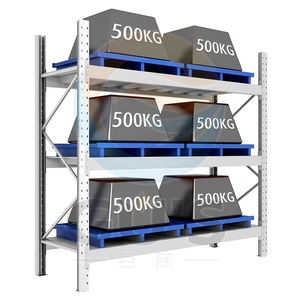
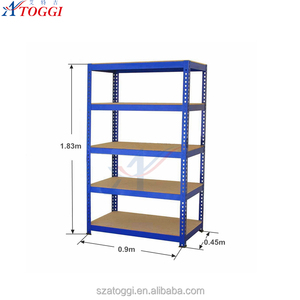
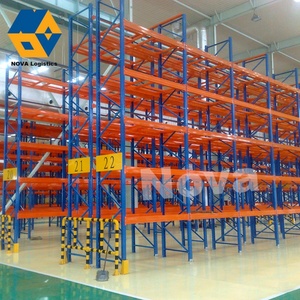
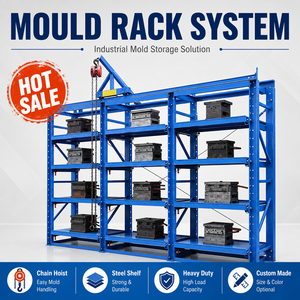
Mobile pallet racking mounts conventional multi-tier superstructure uprights onto motor-driven, heavy-section steel chassis bases. Understanding the electromechanical foundation is vital for global supply chain procurement managers.
Fabricated from heavy welded box beams with torsion-resistant longitudinal tie-beams. Each wheel assembly integrates high-precision ductile iron dual-flange wheels mounted on self-aligning spherical roller bearings, distributing point loads evenly over embed rails.
DIN 18202 Class 4 CompliantUtilizes independent helical-bevel geared motor drives distributed across the chassis length rather than a central torque tube. Controlled by variable frequency drives (VFD) for soft-start and soft-stop acceleration curves that prevent load destabilization.
VFD Ramp Synchronicity: < 0.5%Equipped with continuous optical safety light barriers along working aisles, proximity radar sensors, and emergency stop impact edges on every mobile carriage face. Tripping an optical line during carriage movement triggers instantaneous zero-drift braking.
IEC 61508 / EN ISO 13849-1Evaluate capital expenditure (CapEx), operating expenditure (OpEx), volumetric space utilization, and SKU direct accessibility across leading intralogistics configurations.
| Racking Topology | Floor Utilization (%) | Volume Utilization (%) | SKU Selectivity | Forklift Speed | Cold Store Energy Saving |
|---|---|---|---|---|---|
| Electric Mobile Racking (MOVO) | 80% – 90% | 85% – 95% | 100% Direct Selective | Standard Reach Truck | 40% – 50% Reduction |
| Standard Selective Racking | 35% – 45% | 40% – 50% | 100% Direct Selective | Standard Counterbalance | 0% Baseline Reference |
| Very Narrow Aisle (VNA) | 55% – 65% | 65% – 75% | 100% Direct Selective | VNA Man-Up Turret | 15% – 20% Reduction |
| Drive-In / Drive-Thru Racking | 65% – 75% | 70% – 80% | Strict LIFO / FIFO Lane | Slow (Risk of Upright Impact) | 25% – 30% Reduction |
| Radio Shuttle Cart Racking | 75% – 85% | 80% – 90% | Batch / Deep Channel | High Shuttle Cycle Speed | 30% – 35% Reduction |
| Automated AS/RS Crane System | 85% – 95% | 90% – 98% | 100% Computerized | High Autonomous Speed | 45% – 55% Reduction |
Intralogistics procurement is transitioning from disconnected structural steel purchases to data-synchronized smart warehousing modules. Global buyers must factor in the following evolutionary vectors:
Tomorrow’s mobile racking no longer relies on physical aisle-push buttons. Bidirectional industrial Ethernet (PROFINET, EtherCAT) and MQTT cloud protocols integrate mobile carriage controls directly with the Warehouse Management System (WMS). Aisles open automatically via automated picking orders before the forklift driver reaches the bay, reducing cycle delays to zero.
Automated Pick AnticipationRather than relying solely on human-operated reach trucks, next-gen cold chain facilities pair mobile racking blocks with automated autonomous reach trucks (AMRs). Fleet management software dynamically commands the mobile carriages to open, allowing AMRs to navigate precision corridors using LiDAR SLAM without risk of human safety interlock trips.
Lights-Out Cold ChainCold chain facilities account for massive electrical loads. Smart mobile bases now integrate "Night Parking" or "Holiday Mode" routines. When dormant, carriages automatically space themselves at uniform 150mm air channels, allowing optimized thermal convection, reducing refrigeration compressor loads by an incremental 18% during off-peak hours.
18% Secondary kWh SavingsWith an industrial heritage rooted in high-capacity storage manufacturing since 1977, our production plant bridges automated Chinese roll-forming economies of scale with rigorous European FEM / EN intralogistics standards.
From initial slab flatness assessment (DIN 18202 / EN 15620) to structural Finite Element Analysis (FEA) under dynamic seismic loadings, our technical engineering office provides complete layout design, load-bearing certification, and containerized dispatch.
Critical engineering, foundation, installation, and operating parameters to verify before releasing your request for proposal (RFP).
Mobile pallet racking requires guided floor rails set flush or surface-anchored into the warehouse slab. Floor flatness must comply with DIN 18202 Class 4 or EN 15620 guidelines. Embedded tracks utilize adjustable leveling plates grouted with non-shrink high-strength epoxy mortar (min. 60 MPa compressive strength) to maintain rail elevation within ±1.0 mm across the entire run.
For sub-zero cold stores, we equip mobile bases with low-temperature synthetic lubricants, IP65/IP67 rated sealed drive units, internal cabinet thermostatic heaters, low-temp silicone cabling, and cold-ductile structural steels that prevent embrittlement. Inverter ramping prevents slippage on frozen rail tracks.
Systems can be integrated into secondary backup generators (UPS/Genset). For facilities without emergency power generation, each mobile bogie incorporates a mechanical gearbox release mechanism, enabling maintenance personnel to manually disengage brakes and crank the required aisle open via manual ratcheting.
Carriage traversal speed is engineered between 4.0 to 5.0 meters per minute under full nominal payload. Opening a typical 3.2-meter working clear aisle takes approximately 35 to 45 seconds. By utilizing remote forklift radio transmitters or automated WMS pre-opening calls, the aisle opens while the forklift is in transit.
Yes. If your existing upright frames and load beams comply with certified structural load charts, our engineering department can fabricate custom mobile base chassis and adaptor plates to bolt beneath your existing frames, upgrading your facility to high-density mobile operation while preserving previous racking capital investments.
Mobile base wheel bogies and structural transoms are secured in custom welded steel transport cradles inside containers. Uprights and beams are bundled with composite corner protectors and waterproof poly-wrapping to resist salt air during maritime transit. Detailed container packing lists and 3D stowage schematics accompany every dispatch.