Precision-fabricated in our automated robotic roll-forming and submerged-arc welding facilities. Built to ANSI/RMI MH16.1, FEM 10.2.02, and AS4084 international loading tolerances.
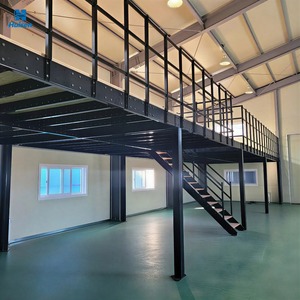
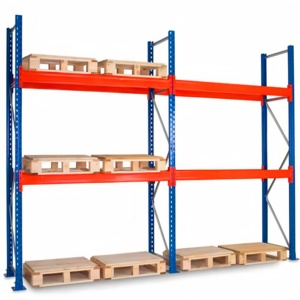
Evaluating point-load moments, longitudinal deflection boundaries, and automated loading envelopes for heavy round bars, seamless tubing, and structural profiles.
Storing long material—such as solid carbon steel round bars (AISI 1018, 4140), structural rectangular tubing, stainless hollow sections, and aluminum extrusions—presents structural challenges distinct from standard pallet racking. In standard selective systems, loads are distributed across paired horizontal cross-beams in pure downward shear. In bar stock cantilever systems, every individual load creates a concentrated bending moment ($M = P \times L_{arm} / 2$) transferred directly through the bolted or wedge-pinned connection into the vertical column.
When engineering high-capacity bar stock systems, structural engineers calculate the load center distance based on the exact center of gravity ($CG$) of the material pack. If material sags between unsupported arm intervals, dynamic secondary stresses are introduced. Our structural columns are cold-roll-formed or fabricated from hot-rolled I-beams (such as IPE, HEA, or domestic Q355B wide-flange beams) with continuous submerged-arc welding. This ensures the column bases resist overturn moments with a minimum design safety factor of 1.65 to 2.0 under maximum combined live and seismic load regimes.
Deflection Tolerance Standard: In compliance with ANSI/RMI MH16.1 specifications, arm tip deflection under static working load must not exceed $L/200$ to $L/250$ of the unsupported arm span. Our proprietary design implements a calibrated factory pre-camber angle of 1.5° to 2.0° on the cantilever arms, guaranteeing that under full payload, the arm deflects to horizontal without creating a negative slide hazard.
A frequent dilemma for industrial procurement teams is selecting between roll-formed gauge steel and hot-rolled structural steel profiles. While roll-formed cantilever racks offer lower upfront cost and modular arm height adjustability on tighter pitches (typically 75mm to 100mm), structural steel systems built with heavy channel and I-sections deliver unmatched impact resistance against forklift mast strikes.
| Structural Parameter | Cold Roll-Formed Bar Racks | Hot-Rolled Structural (I-Beam) Racks | Crank-Out / Roll-Out Cassette Racks |
|---|---|---|---|
| Primary Steel Grade | Q235B Cold-Rolled Strip Steel | Q355B / ASTM A572 Grade 50 Heavy IPE/UB | Q355B Chassis + High-Tensile Pivot Arms |
| Arm Load Capacity | 250 kg – 1,200 kg / arm | 1,000 kg – 4,500 kg / arm | 1,000 kg – 5,000 kg / drawer level |
| Impact Resistance | Medium (Susceptible to tine puncture) | Very High (Tolerates glancing tines) | Very High (Enclosed cassette structure) |
| Handling Mechanism | Forklift / Side-loader / Combilift | Heavy Side-loader / 10T Overhead Crane | 100% Overhead Crane (Vacuum/Magnet/Sling) |
| Aisle Width Requirement | 3.8m – 5.5m (Standard Forklift clearance) | 2.2m – 3.2m (Guided Guided VNA / Side-loader) | 0m (Zero aisle required; loads overhead) |
| Ideal Material Profile | Light PVC pipes, conduit, timber, small rods | Heavy structural channels, billet steel, solid shafting | Tool steel flats, polished mold bars, short runs |
Reliability in bar stock storage begins at the steel billet source. Low-cost rack fabricators frequently utilize re-rolled scrap steel with uncontrolled carbon equivalents ($CEV$), leading to micro-cracking in the heat-affected zones (HAZ) adjacent to heavy arm bracket welds. Our manufacturing plant sources 100% prime structural steel plates and coils exclusively from tier-one Chinese state mills (such as Baosteel, Ansteel, and HBIS Group).
Every heat batch is subjected to tensile yield testing (verifying $\sigma_s \ge 355\text{ MPa}$ for Q355B structural sections) and Charpy V-notch impact tests at 0°C to eliminate cold-brittleness risks in sub-zero or refrigerated industrial environments. Welded column-to-base and arm-to-bracket assemblies are executed via OTC robotic pulsed-MIG welding cells utilizing AWS A5.18 ER70S-6 wire shielding gases (80% Ar / 20% CO₂), achieving deep penetration and consistent throat thickness validated via non-destructive ultrasonic testing (NDT).
Engineered configurations tailored to length, weight, accessibility frequency, and overhead hoisting equipment.
The standard workhorse for high-tonnage bar storage. Built with hot-rolled structural H-columns and tapered cantilever arms bolted via Grade 8.8 or 10.9 high-strength structural fasteners. Arms feature integrated retention pins to stop circular stock roll-off.
Designed for compact machine shops where forklift aisles are non-existent. Each storage shelf extends 100% outward using a manual hand crank or electro-mechanical rack-and-pinion drive, enabling direct hoist access by overhead cranes and vacuum lifters.
Optimized for manual picking of smaller diameter rods, conduit pipes, polished brass rods, and structural extrusions. Vertical and pigeon-hole compartments divide disparate alloys into tagged vertical lanes, preventing surface scuffing and tangling.
Key market vectors shaping how Fortune 500 equipment builders, steel distributors, and regional fabricators procure storage systems from China over the next decade.
Transition from passive static racking to enclosed, fully automated honeycomb bar storage systems. Crane-retrieved cassette boxes interface with automated saws and laser cutters, slashing retrieval times from 25 minutes down to 90 seconds while logging batch-level traceability.
European and North American procurement mandates demand audited Product Carbon Footprints (PCF). Tier-1 Chinese manufacturers are migrating toward EAF (Electric Arc Furnace) scrap-recycled steel and solar-powered powder-coating lines to meet CBAM tariff thresholds.
Smart uprights equipped with embedded fiber-optic or strain-gauge sensors. Real-time stress data feeds facility maintenance dashes, warning managers immediately if an overloaded arm tip deflects past the $L/200$ safety parameter or registers micro-cracks from seismic tremors.
Rising sea freight costs drive innovation in bolted modularity. All welded structural frames are re-engineered into flat-pack, precision-matched multi-piece column stubs, increasing 40HQ ocean shipping container volumetric utilization from 58% up to 92% per container.
Operating at the intersection of precision structural engineering, rigorous material testing, and global compliance since 1977.
By leveraging direct Chinese mill steel purchasing agreements and fully robotic production lines, we reduce project capital expenditure by 35%–45% compared to Western European or American manufacturers, without compromising steel thickness or structural weld penetration.
Our structures are certified against international engineering standards: ANSI/RMI MH16.1 (North America), EN 15512 / EN 15635 (Europe), and AS4084 (Australia). Full finite element analysis (FEA) reports with localized wind, seismic, and floor slab load calculations are provided with every quote.
Every component undergoes a 7-stage automated chemical pre-treatment wash and shot-blasting to Sa 2.5 cleanliness, followed by electrostatic Swiss Gema powder application. We achieve dry film thicknesses of 70–90µm, passing 500-hour ASTM B117 salt spray testing with optional hot-dip galvanization.
Technical, logistical, and structural answers to streamline your bar stock storage RFQ process.
The spacing between vertical cantilever columns is governed primarily by the diameter and modulus of elasticity ($E$) of the material stored, rather than the rack's weight capacity alone. Storing flexible 20mm round bars requires tight arm spacing (typically 1,000mm to 1,200mm centers) to prevent material sagging between arms. Excessive sag creates point-load concentrations, hinders forklift insertion, and introduces unsafe dynamic bouncing.
For heavy, rigid material like 150mm structural H-beams or solid square billets, column centers can be extended to 1,500mm–2,000mm. The general engineering rule specifies that the overhang past the outermost arms must never exceed half the distance between the columns ($Overhang \le Center\_Span / 2$), ensuring symmetrical arm loading across the entire system run.
Straight cantilever arms are typically engineered for flat, boxed, or crated loads (such as sheet timber, plywood, or sheet metal cassettes) and provide a flat, uniform surface. However, when storing loose cylindrical items like round steel bars, seamless steel tubing, or oil country tubular goods (OCTG), straight arms introduce a roll-off hazard if struck by handling equipment.
Our heavy bar stock systems utilize upward-tapered arms with an engineered 1.5°–2.0° pitch slope toward the column. This inclination counteracts mechanical deflection under maximum load, ensuring the arm settles into a level horizontal plane without tipping downward. We also integrate removable vertical pipe stop-pins (heights ranging from 100mm to 250mm) at the arm tip to lock cylindrical packs securely in place.
Outdoor bar stock racks are subject to extreme overturning moments ($M_{overturn}$) caused by combined wind drag acting on bundled stock, dynamic seismic ground acceleration, and asymmetric single-sided arm loading (where one side of a double-sided column is fully loaded while the opposite side is empty). This asymmetric condition is the most critical failure mode for cantilever columns.
Our engineering team performs localized finite element calculations to determine the exact uplift and compressive reaction forces at each column base. We provide certified baseplate drill patterns and specify heavy-duty chemical or mechanical wedge anchor bolts (e.g., M20 to M24 Grade 8.8 anchors). Foundation slabs typically require reinforced concrete with minimum compressive strength $f'_c \ge 25\text{ MPa}$ and depths ranging between 200mm to 450mm depending on column height and soil bearing capacity.
Yes. Every crank-out and roll-out bar cassette system is custom-manufactured to client specifications. In addition to storing standard 6-meter and 12-meter profile lengths, the internal cassette drawers can be lined with ultra-high-molecular-weight polyethylene (UHMW-PE), vulcanized rubber, or oil-resistant polyurethane dampening liners. This prevents surface scratch damage or galvanic corrosion on polished stainless steel, aircraft titanium rods, or delicate architectural aluminum extrusions.
Internal modular dividers can also be adjusted on a 50mm grid, allowing maintenance crews to separate dies, injection molds, and residual raw material bar ends in a single unified drawer space.
Every commercial export order includes a comprehensive Engineering & QA Compliance Package consisting of: (1) Certified Mill Test Certificates (MTCs) to EN 10204 3.1 detailing chemical composition and mechanical yield/tensile values; (2) AWS D1.1/D1.3 certified welder qualifications and non-destructive weld inspection reports; (3) Finite Element Analysis (FEA) structural calculation notes stamped by licensed structural engineers; (4) Salt spray test certificates and paint dry film thickness (DFT) gauge inspection sheets; and (5) Detailed 3D CAD/Tekla assembly and anchor installation manuals.
Share your storage dimensions, bar profiles, unit load weights, and handling preferences. Our senior structural engineers deliver a full 2D/3D CAD concept layout, load calculation sheet, and competitive direct-factory quotation within 24 hours.