Directly manufactured under rigorous ISO 9001 and European FEM 10.2.02 racking codes. Configured with high-tensile steel, CNC punching, and automated electrostatic powder coating.
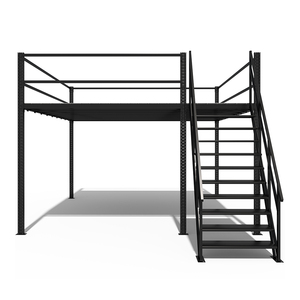
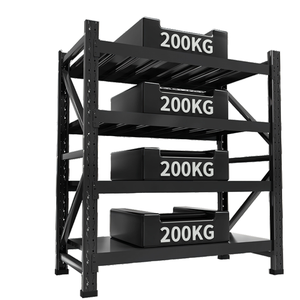
Dedicated structural steel fabrication established since 1977.
Yield strengths exceeding 355 MPa for severe warehouse seismic ratings.
Supplying Canada, Bahrain, UAE, Sri Lanka, and European 3PLs.
CBM-optimized containerized packaging to minimize oceanic freight.
In modern industrial logistics and omnichannel fulfillment, metal shelving units and pallet racking structures represent far more than static steel shelves. They serve as the critical load-bearing backbone of the global supply chain. Engineering procurement directors face an increasingly complex international manufacturing ecosystem where material thickness, steel metallurgy, roll-forming tolerances, and surface passivation dictate long-term facility safety and capital expenditure return.
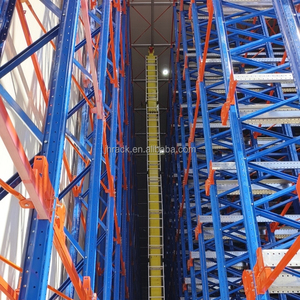
The global industrial shelving and pallet racking market is undergoing a seismic technological transformation. With land acquisition costs escalating across Tier-1 logistics hubs, warehouse designs are moving rapidly vertical. Facilities are deploying high-bay automated storage and retrieval systems (ASRS), cantilever platforms for specialized long materials, high-density mobile compactor carriages, and heavy-duty structural steel mezzanines that effectively double or triple facility volumetric efficiency without expanding exterior building footprints.
Strategic Engineering Directive: Structural integrity in metal shelving cannot be evaluated on per-ton steel price alone. International safety authorities (including the European FEM 10.2.02, American ANSI MH16.1, and British SEMA) mandate rigorous testing protocols regarding beam deflection ratios (typically restricted to L/200), upright column buckling under torsional loads, and floor anchoring resilience against seismic vibrations.
Based on manufacturing capacity, structural steel engineering certifications, roll-forming precision, global export infrastructure, and third-party quality compliance, our senior supply chain engineering council has benchmarked the top 10 industrial metal shelving and racking manufacturers operating internationally:
Over 45 years of integrated OEM manufacturing. Specializes in heavy-duty structural pallet racks, boltless shelving, mobile compactor carriages, and Q345B heavy-welded mezzanines. Primary exporter to Canada, the Middle East, and worldwide.
Global titan in fully automated high-bay warehouses, modular cantilever racks, and plastic container integration. Renowned for stringent German DIN standards and software-integrated ASRS installations.
Operating extensive automated roll-forming mills worldwide. Specializes in pallet flow racks, mobile racking carriages, and proprietary Easy WMS software integrations for pharmaceutical and third-party logistics.
The premier structural steel pallet rack manufacturer in North America. Uses hot-rolled structural steel channel uprights offering supreme impact resistance against heavy forklift operations.
Pioneers in high-density pallet shuttle systems (Stow Atlas) and heavy-duty industrial shelving. Highly regarded across Western and Eastern European automotive and heavy machinery sectors.
Global market leader in intralogistics material handling. Integrates ultra-high tolerance structural rack-supported buildings, automated stacker cranes, and automated guided vehicles (AGVs).
Historic inventor of the slotted angle rack system. Offers advanced carton live storage, wide-span light-to-medium boltless shelving, and multi-tier picking towers built to FEM standardizations.
Specialists in small parts boltless steel shelving, automated mini-load storage units, and multi-tier picking installations. Highly engineered precision cold-rolled profile geometry.
End-to-end warehouse infrastructure provider. Combines heavy industrial cantilever and drive-in racks with narrow-aisle (VNA) automated material handling turret trucks and telematics.
The North American arm specializing in high-throughput selective pallet racking, teardrop boltless punch patterns, and drive-in systems certified under RMI (Rack Manufacturers Institute) standards.
A persistent flaw in commercial metal shelving procurement is treating structural racks as standard commodity hardware. In enterprise installations, steel chemistry and profile geometry directly dictate life expectancy and catastrophic collapse resilience. Below is an engineering comparison matrix defining structural standards across the dominant shelving categories:
| System Category | Standard Steel Grades | Yield Strength (ReH) | Standard Deflection Limit | Surface Finish Protocol | Seismic Compliance |
|---|---|---|---|---|---|
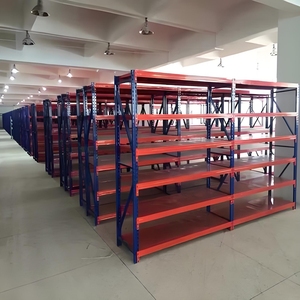
| Selective Pallet Racking | Q235B / Q355B / ASTM A36 | ≥ 235 - 355 MPa | L / 200 of Clear Span | 70-90µm Electrostatic Epoxy | EN 16681 / ANSI MH16.1 |
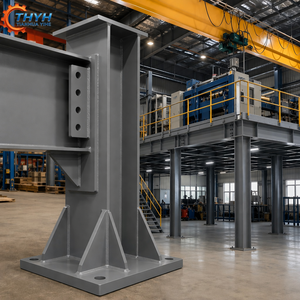
| Heavy Mezzanine Floor | Q345B / Q355B / S355JR | ≥ 345 - 355 MPa | L / 300 to L / 500 | Shot Blast Sa 2.5 + Anti-Rust Primer | AISC 360 / Eurocode 3 |
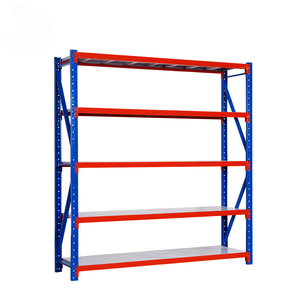
| Boltless Long-Span Shelves | Cold-Rolled SPCC / Q195 | ≥ 195 - 235 MPa | L / 200 Max UDL | Thermoset Polyester Powder | Light Seismic Anchor Rated |
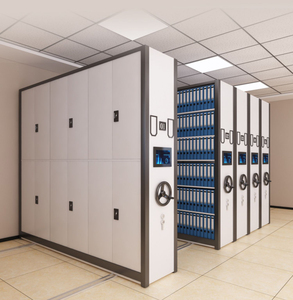
| Mobile Compactor Archive | Cold Rolled CRCA High Grade | ≥ 210 MPa | Zero Jamming Deflection | Pre-Treatment 9-Tank Phosphating | Anti-Tip Mechanical Base Rails |
| ASRS High-Bay Racking | High-Tensile Low Alloy Q355D | ≥ 355 MPa | FEM 9.831 Ultra-Tight Limits | Hot-Dip Galvanized / Multi-Coat | Class 1 Critical Infrastructure |
| Cantilever Long-Load Systems | Hot Rolled IPE / HEA Beams | ≥ 275 - 355 MPa | L / 150 of Total Arm Length | Heavy Industrial Dual Powder | Heavy Torsional Moment Resistant |
Tier-1 manufacturers prioritize high-strength low-alloy (HSLA) structural steels such as Q345B/Q355B. This provides a minimum 50% increase in tensile yield strength compared to baseline commercial mild steel (Q195/Q215). In heavy-duty upright column roll-forming, this enables higher buckling resistance without excessively penalizing container shipping weights.
The industrial storage industry is witnessing significant shifts driven by robotics, micro-fulfillment, and carbon accountability. Enterprise procurement teams must anticipate these evolving technical vectors to future-proof their supply chain assets:
Traditional static shelving is transforming into dynamic robotic grid environments. Racks are now manufactured with integrated guide rails for autonomous mobile robots (AMRs), robotic shuttles, and precision busbars that supply continuous electrical power directly to racking tiers.
Under the EU's Carbon Border Adjustment Mechanism (CBAM) and global ESG initiatives, tier-1 procurement contracts increasingly demand certified low-carbon steel produced via Electric Arc Furnaces (EAF) with scrap-recycled content exceeding 65%.
Procurement is shifting away from static catalogue sizing toward custom Finite Element Analysis (FEA). Engineers simulate exact warehouse floor slab deflections, seismic shear loads, and thermal stress distributions (critical in -30°C cold-chain blast freezers) before steel coils enter roll-forming lines.
Drawing on an established manufacturing history dating back to 1977, our production ecosystem in Umbergaon, Gujarat, demonstrates the capabilities demanded by multinational corporations. Rather than functioning as a commercial export trading intermediary, our facilities maintain direct physical control over every metallurgical, cutting, continuous cold roll-forming, and surface-passivation process:
We source prime structural steel coils with verified heat certificates and chemical traceability. Utilizing automated multi-station cold roll-forming lines ensures consistent hole pitch and tight dimensional tolerances across long upright lengths.
All products—from 30-meter high-bay pallet racking to interlocking mezzanine floor modules—are engineered into completely bolt-together, knock-down configurations. Bundled with custom wooden dunnage, steel banding, and moisture-sealed shrink wrapping for flawless sea container transport.
Exporting to Bahrain, Canada, Sri Lanka, and the Middle East. Our systems meet the exacting engineering requirements of global enterprises, including Pepsi, L&T, Asian Paints, Sun Pharma, and Reliance Industries.
Procuring industrial racking from overseas requires thorough verification of structural capabilities, load-bearing limitations, and installation timelines. Here are verified technical answers to the most common inquiries received by our senior applications engineering team:
Load limits are calculated using the finite element method (FEM) and validated via physical destructive testing in accordance with European FEM 10.2.02 and American RMI MH16.1 specifications. Beam deflection under full Uniformly Distributed Load (UDL) is restricted to a maximum of 1/200th of the clear bay span (L/200). For automated ASRS installations, tighter tolerances of L/300 to L/400 are enforced to prevent automated stacker crane optical sensor misalignments.
Cold-rolled sheet steel (CRCA / SPCC) undergoes continuous roll-forming at room temperature, resulting in excellent dimensional precision, smooth surfaces, and uniform wall thickness (ideal for boltless garage shelving, slotted angle racks, and medium-duty warehouse systems). Hot-rolled structural steel (channels and I-beams) features thicker walls and rounded flanges, providing superior impact resistance against forklifts in heavy industrial yards and high-traffic selective pallet rack operations.
Our standard manufacturing incorporates an automated 9-stage pre-treatment process, including degreasing, zinc-iron phosphating, and deionized water rinsing, followed by automated electrostatic epoxy-polyester powder coating cured at 180°C–200°C (film thickness 70–90 microns). For high-humidity coastal sites or cold-storage environments, we provide hot-dip galvanization conforming to ASTM A123 / ISO 1461, achieving up to 500+ hours of continuous salt spray resistance under ASTM B117 standards.
To produce an optimized CAD proposal, our engineering team requires: (1) Architectural drawings showing clear warehouse ceiling heights, column grids, fire sprinkler locations, and floor joints; (2) Pallet or SKU dimensions (Width x Depth x Height, including product overhang); (3) Maximum weight per pallet or shelf tier; (4) Material handling equipment (forklift model, minimum aisle turning radius, maximum mast reach height); and (5) Local seismic zone classifications.
Industrial mezzanines transmit concentrated point loads down to the facility's concrete foundation through baseplates secured with chemical or mechanical expansion anchor bolts. Standard mezzanine installations require a reinforced concrete slab (minimum grade C25/30 or 3,000–4,000 PSI) with a minimum depth of 150mm to 200mm. If the slab cannot accommodate point loads exceeding 40 kN, our structural team designs oversized load-spreading sub-plates or coordinates footing excavations.
Yes. Because our factory operates proprietary CNC punching dies and adjustable cold roll-forming tooling, upright post heights, bay widths, and shelf depths can be configured to exact millimeter specifications. Upright columns feature precision punched drop-in keyhole or butterfly slots at 50mm or 75mm increments, allowing users to reconfigure shelf levels manually without specialized tools or hardware.
All structural components are bundled in knock-down format to maximize container cubic space. Beams and uprights are protected with corner protectors, separated with timber runners to eliminate metal-on-metal rubbing, strapped with high-tensile polyester/steel strapping, and sealed with heavy-duty stretch film containing desiccants to prevent container-sweat oxidation. Detailed container stuffing plans are engineered to optimize unloading sequences on project sites.
A reputable tier-1 manufacturer should furnish: (1) Raw Material Mill Test Certificates (EN 10204 3.1) verifying steel yield and tensile strength; (2) Factory ISO 9001:2015 Quality Management and ISO 14001 certificates; (3) Third-party weld inspection reports (NDT / visual) for structural mezzanines; (4) Powder coating dry film thickness (DFT) and cross-hatch adhesion test records; and (5) Structural engineering calculations signed by a licensed professional engineer.