Configured for strict load ratings, space optimization, and maximum floor slab utilization. Sourced by global procurement directors across industrial manufacturing, cold-chain fulfillment, and automated logistics hubs.
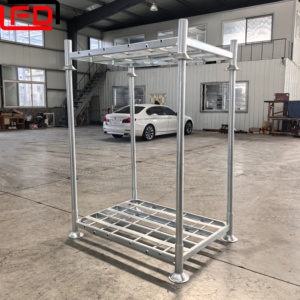
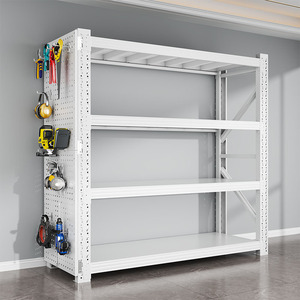
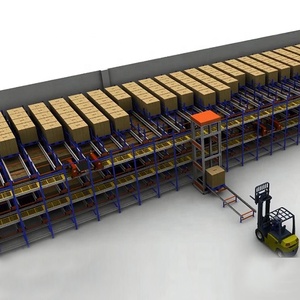
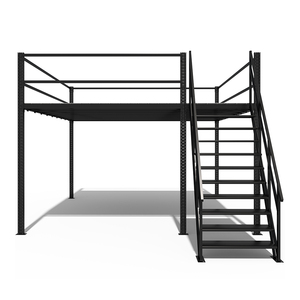
A rigorous engineering appraisal of warehouse racking mechanics, steel metallurgy, FEA finite element structural simulations, and global testing codes (EN 15512, RMI MH16.1, AS 4084).
The structural load-bearing performance of high-bay warehouse racks is fundamentally dictated by cold-formed strip steel grade and cold-roll profile geometry. We utilize certified structural grade Q235B and high-yield Q355B (Yield Strength fy ≥ 355 N/mm²), providing an optimal strength-to-weight ratio compared to conventional hot-rolled sections.
Our continuous automated roll-forming lines feature multi-station progressive roll dies that generate multi-bend Omega (Ω) upright profiles. These complex bend profiles incorporate stiffening ribs along the web and return lips, drastically mitigating localized plate buckling under severe axial and eccentric compressive loads. Every punch slot configuration (50mm / 75mm pitch teardrop or diamond slot) undergoes computer-controlled hydraulic punching prior to roll-forming to ensure zero residual micro-cracking across punch margins.
Under both static and live pallet cargo loads, load beam engineering adheres strictly to the vertical deflection criterion L/200 (or L/300 for sensitive automated systems), wherein the maximum allowable sag at mid-span under full rated uniformly distributed load (UDL) cannot exceed span length divided by 200. This stringent limit prevents plastic deformation and ensures fork entry clearances remain unobstructed.
Our welded box beams feature twin interlocking C-channels robotically seam-welded along continuous seams. The welded connector end-plates incorporate 3, 4, or 5 heavy-gauge claw lugs designed with progressive taper engagement. This mechanical wedging action converts shear and moment forces safely into the upright column, stabilized by high-visibility safety spring locking pins with a minimum shear displacement resistance exceeding 10.5 kN per pin.
Examine volumetric density, throughput capacity, and technical compliance parameters across primary warehouse cargo rack typologies to guide procurement specifications.
| Racking Architecture | Floor Space Utilization | Direct Pallet Accessibility | Standard Load Capacity (UDL) | Typical Deflection Threshold | Target Handling Equipment | International Standard |
|---|---|---|---|---|---|---|
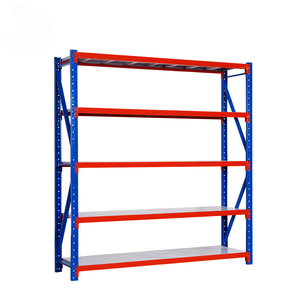
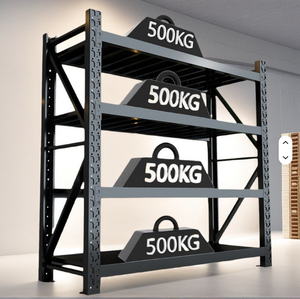
| Selective Pallet Racks | 40% – 50% (Standard Aisle) | 100% Immediate (FIFO) | 1,000 – 4,500 kg / Level | L / 200 to L / 250 | Counterbalance, Reach Trucks | EN 15512, RMI MH16.1 |
| Drive-In / Drive-Through | 65% – 75% (High Density) | Low (Bulk LIFO / FIFO) | 1,000 – 2,000 kg / Pallet | Rail Deflection < 3mm | Reach Trucks, Specialized Guide | FEM 10.2.07, AS 4084 |
| Automatic Radio Shuttle | 75% – 85% (Ultra High Density) | Channel Controlled (LIFO/FIFO) | 1,500 kg / Pallet Position | L / 350 Precision Shuttle Rail | AGV, Automated Lifter, Forklift | CE, FEM 9.831, ISO 12100 |
| Multi-Tier Mezzanine Racks | 100% – 250% (Multiplied Vertically) | 100% Manual Hand-Pick | 300 – 1,200 kg / m² Floor | L / 300 Floor Framing | Conveyors, Vertical Goods Lift | AISC 360, EN 1993 Eurocode 3 |
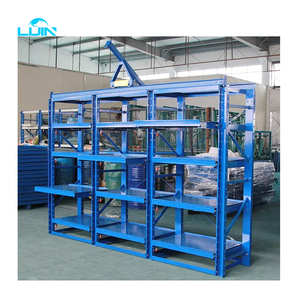
| Heavy Duty Mould Drawer | 60% – 70% Toolroom Floor | 100% Overhead Crane Access | 500 – 2,500 kg / Drawer | Slide Rail Tolerance ±0.5mm | Overhead Hoist, Workshop Crane | Machinery Directive 2006/42/EC |
Strategic purchasing insights for supply chain executives, intralogistics planners, and third-party logistics (3PL) facility developers navigating dynamic industrial markets.
With industrial real estate land premiums escalating globally, international buyers are transitioning away from conventional single-deep selective racking toward vertical high-density configurations. Facilities exceeding 12 to 24 meters clear height now prioritize Automated Radio Shuttle and ASRS (Automated Storage and Retrieval Systems).
This macro shift necessitates ultra-tight manufacturing tolerances on rack upright plumbness (under 1:1000 vertical deviation) to accommodate autonomous laser-guided pallet shuttles operating seamlessly across sub-zero cold-storage and rapid-turnover FMCG fulfillment centers.
Global logistics engineering contracts increasingly enforce strict seismic compliance criteria (Seismic Design Category D, E, and F according to IBC/UBC and Eurocode 8). Procurement guidelines now demand comprehensive dynamic response analysis.
Industrial racking systems require enlarged ductile footplates, engineered chemical resin anchors, and cold-formed cross-aisle portal bracing frameworks to absorb cyclic dynamic energy without catastrophic frame detachment, safeguarding billion-dollar inventories against seismic disruptions in vulnerable distribution corridors.
Containerized ocean shipping costs have catalyzed demand for 100% demountable, modular knock-down engineering. OEM exporters must engineer packaging schemes that achieve maximum volumetric packing efficiency per 40ft High Cube container.
By shifting from pre-welded upright frames to nested, site-bolted structural configurations with specialized interlocking bracing members, cargo density is doubled per FEU, drastically trimming landed import duties and transatlantic/transpacific logistics expenses for overseas importers.
How advanced material science, IoT stress monitoring, and robotic picking interfaces are fundamentally redefining heavy-duty cargo storage assets.
Forklift impacts remain the leading cause of catastrophic structural rack collapses worldwide. Emerging smart rack installations integrate wireless tri-axial accelerometer sensors and piezo-electric strain gauges directly onto the base of high-traffic upright frames.
These industrial IoT telemetry modules instantly broadcast real-time collision alerts and structural overload alerts to the warehouse management dashboard (WMS), enabling preventative maintenance inspections before microscopic metal fatigue propagates into full-bay frame failures.
Traditional hot-dip galvanizing and standard wet painting are being augmented by continuous ZAM (Zinc-Aluminum-Magnesium) alloy hot-rolled coil technology. ZAM self-healing metallurgical coatings deliver up to 5 times greater atmospheric corrosion resistance than traditional zinc galvanizing.
This surface innovation ensures multi-decade structural survival in corrosive marine coastal export warehouses, heavy chemical processing plants, and sub-zero humidity condensing zones without hazardous flakes or structural section pitting.
Modern mezzanine platforms are no longer passive static storage shelves; they serve as dynamic operational floors for Autonomous Mobile Robots (AMRs) and automated sorting bots. This transition requires extreme floor flatness tolerances conforming to DIN 18202 and TR34 specifications.
Interlocking tongue-and-groove composite galvanized steel decks coupled with anti-slip high-density wear layers prevent wheel slippage, guarantee optical navigation tracking, and absorb cyclic mechanical vibration generated by continuous robotic swarms.
Leveraging over 45 years of continuous production excellence, computerized roll-forming precision, and documented supply chain integrity for critical storage projects worldwide.
Established in 1977, our primary manufacturing facility at G.I.D.C. Industrial Estate, Umbergaon, Gujarat operates automated roll-forming mills, automated continuous seam welders, and conveyorized electrostatic powder coating tunnels capable of processing thousands of tons of structural steel annually.
Our OEM/ODM cargo storage solutions are deployed across demanding environments in Bahrain, Sri Lanka, Canada, the United Arab Emirates, Saudi Arabia, and throughout the Middle East, manufactured strictly to container shipping tolerances for rapid overseas port clearance.
Our engineering team delivers comprehensive pre-sales consultations, AutoCAD layout schematics, and 3D Finite Element Analysis (FEA). We evaluate specific slab thickness, concrete compressive PSI ratings, seismic zones, and forklift mast clear heights before executing tooling.
Every steel batch undergoes documented tensile testing, ultrasonic weld inspection, and salt-spray corrosion chamber evaluations. We provide lifelong engineering support, layout reconfiguration advice, and verified replacement components to safeguard multi-year ROI.
Key technical, commercial, and engineering questions addressed for logistics directors, procurement contractors, and supply chain project leaders.
Send your warehouse floor plans, load specifications, or OEM customization requirements. Receive detailed engineering layout options, load calculations, and competitive factory-direct export quotations.