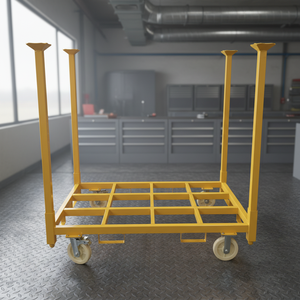
Custom-engineered industrial racks, platforms, and automated racking accessories manufactured to ISO & FEM standards.
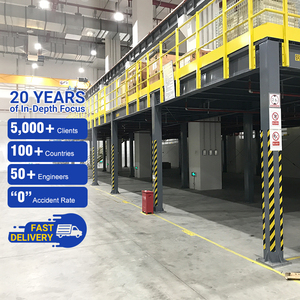
An authoritative white paper on structural mechanics, FIFO inventory management, load dynamics, and custom manufacturing specifications for high-density warehouse storage environments.
Unlike standard selective racking that prioritizes individual pallet accessibility, Drive-Thru Racking Systems are meticulously engineered for maximum volume utilization, eliminating operational aisles to consolidate up to 85% of cube space. Utilizing continuous horizontal support rails mounted on heavy-duty cantilever arms, forklifts can physically enter the racking matrix from either front or rear entry points.
This dual-access entry architecture allows true First-In, First-Out (FIFO) stock rotation, making Drive-Thru racking the premier choice for fast-moving consumer goods (FMCG), cold storage logistics, chemical distribution, and perishable food processing facilities where strict expiration date tracking is paramount.
While often grouped together, Drive-Thru and Drive-In systems possess distinct structural engineering characteristics. A Drive-In system features a single access entry/exit point, enforcing Last-In, First-Out (LIFO) inventory control, anchored by rigid rear cross-bracing. In contrast, Drive-Thru systems require unobstructed open-ended lanes.
To compensate for the absence of traditional back-bracing, our OEM/ODM structural engineers implement specialized heavy-gauge overhead horizontal tie-beams and top portal frames. This design ensures horizontal frame rigidity, seismic absorption, and structural integrity under heavy lateral forklift movement.
Strategic insight for procurement directors, supply chain executives, and structural consultants evaluating long-term capital investments in material handling infrastructure.
With global cold chain logistics expanding rapidly across the Middle East, Asia-Pacific, and North America, warehouse operators demand sub-zero storage density. OEM customization now heavily leans toward cold-rolled Q355 structural steel treated with hot-dip galvanizing (minimum 65 to 85 microns thickness). This process prevents hydrogen embrittlement and surface degradation down to -30°C in deep-freeze environments.
Modern procurement strategies prioritize modular racking layouts that can seamlessly transition from manual counterbalanced forklift loading to automated Pallet Shuttle (AGV/AMR) integration. ODM manufacturers are tasked with designing dual-purpose pallet rails that accommodate standard pallet runners today while providing guiding tracks and sensor reflectors for autonomous radio shuttles tomorrow.
Regulatory standards (EN 15512, RMI, and AS4084-2023) mandate dynamic seismic engineering for high-bay drive-thru installations. Global buyers now favor cold-formed high-tensile steel upright profiles featuring 50mm or 75mm teardrop/diamond pitch adjustments. These allow optimal section modulus values while minimizing total structural deadweight without compromising structural safety margins.
How advanced engineering, material science, and IoT technology are transforming industrial high-density storage solutions.
Upright frame collisions remain a critical hazard in drive-in/drive-thru lanes due to tight vehicle clearances. Emerging ODM standards integrate piezoelectric wireless impact sensors and tilt transducers directly inside heavy-duty upright columns and ground guide rails.
These embedded sensors broadcast real-time structural health alerts to warehouse management systems (WMS). This notifies maintenance crews immediately if a forklift strike exceeds structural tolerance thresholds, preventing catastrophic rack collapses before they occur.
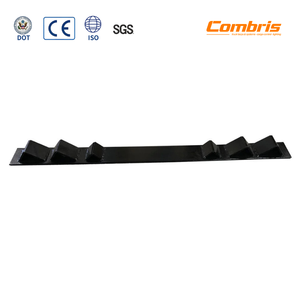
Modern drive-thru lane design incorporates flared entry guide rails stamped from heavy-wall structural steel, lined with ultra-high-molecular-weight (UHMW) polyethylene shock absorbers. This self-centering geometry smoothly steers forklift tines and pallets into the storage lane, significantly reducing operator fatigue, equipment wear, and column scraping during high-speed turnover shifts.
Comparative technical performance metrics to guide procurement selection for bulk storage infrastructure.
| Storage System Type | Floor Space Utilization | Access SKU Rotation | Standard Load Capacity (kg/Pallet) | Forklift Entry Required | Capital Cost Ratio |
|---|---|---|---|---|---|
| Drive-Thru Racking | 80% – 85% (High) | FIFO (First-In, First-Out) | 500 kg – 1,800 kg per level | Yes (Full Lane Drive) | Moderate - High |
| Drive-In Racking | 75% – 85% (High) | LIFO (Last-In, First-Out) | 500 kg – 1,500 kg per level | Yes (Single Access) | Moderate |
| Selective Pallet Racking | 35% – 45% (Standard) | 100% Direct Access | 800 kg – 3,500 kg per beam level | No (Aisle Access Only) | Baseline (Economical) |
| Radio Shuttle Racking | 85% – 90% (Ultra High) | FIFO / LIFO Configurable | 1,000 kg – 2,000 kg per shuttle | No (Automated Shuttle) | High (Automation Premium) |
| Heavy Duty Mezzanine Platform | Doubles Floor Footprint | Bulk Platform Access | 800 kg – 1,500 kg / qm | No (Stair / Lift Access) | Custom Structural |
Established in 1977, our Umbergaon (Gujarat, India) manufacturing facility represents over 45 years of continuous innovation in heavy-duty structural steel engineering and industrial storage system fabrication.
Our state-of-the-art facility operates automated multi-stage CNC continuous roll-forming lines. We manufacture upright profiles with engineered ribbing patterns, ensuring exact cross-sectional tolerances, high section modulus, and exceptional bending stiffness under heavy loads.
All load-bearing pallet support arms, frame connectors, and portal beams undergo robotic MIG welding to guarantee deep weld penetration, high fatigue resistance, and absolute dimensional consistency across high-volume OEM manufacturing contracts.
Components are packed in knock-down condition using steel strapping, heavy-duty protective corner guards, and moisture-proof plastic wrapping. This maximizes container cube efficiency for export shipments across the Middle East, North America, Sri Lanka, and Europe.
Consult with our structural engineering team today to receive CAD layout planning, static load calculations, and competitive FOB/CIF export pricing tailored to your warehouse height and vehicle turning radius.
Critical engineering, structural, and international export questions answered by senior racking experts.
Transform your warehouse floor space into a high-density, high-throughput logistical asset with custom-engineered Drive-Thru racking solutions.