Engineered for high-throughput fulfillment hubs, industrial assembly lines, and high-density material staging environments.
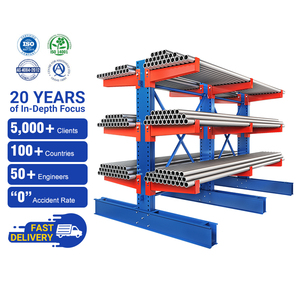
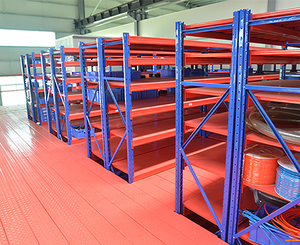
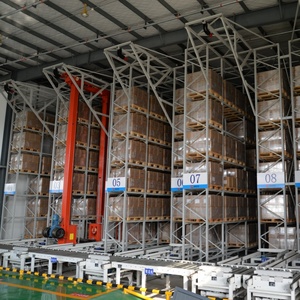
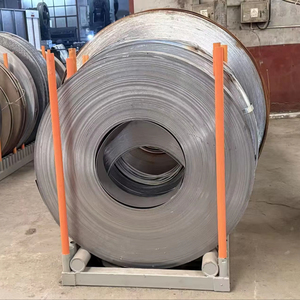
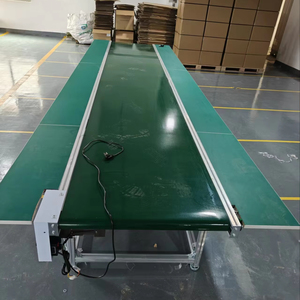
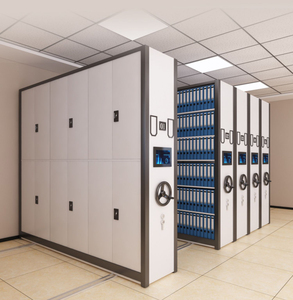
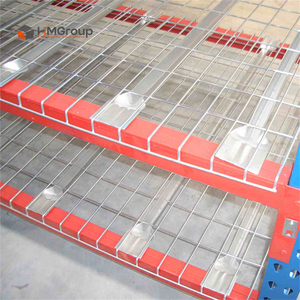
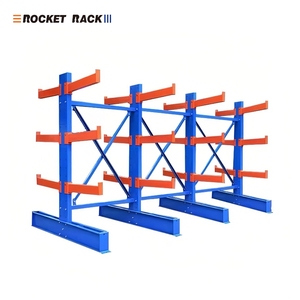
Dynamic carton flow beds operate on passive gravity kinematics, drastically cutting unnecessary travel steps, eliminating replenishment bottlenecks, and maximizing SKU density along order-picking fronts.
In modern high-velocity distribution centers and lean manufacturing facilities, order fulfillment bottlenecks are rarely caused by a shortage of floor space; rather, they stem from inefficient SKU accessibility and congested pick faces. A custom OEM carton flow rack operates as a dynamic, gravity-fed live storage system. Utilizing inclined wheel beds or continuous roller tracks, individual cartons, totes, and plastic bins are loaded from the rear stocking aisle (charge face) and automatically slide down via controlled gravity to the forward retrieval aisle (discharge face). This structural separation of replenishment and order picking eliminates cross-aisle traffic interference, drastically accelerates picking cycle times, and establishes absolute First-In, First-Out (FIFO) stock turnover without continuous electrical power consumption.
As a seasoned original equipment manufacturer (OEM), our factory engineers carton flow solutions from high-tensile structural steel, configuring load capacities ranging from 50 kg/m² for lightweight pharmaceutical totes to over 350 kg/m² for heavy automotive sub-assembly kitting. Unlike generic off-the-shelf shelving, our custom carton flow designs incorporate cold-formed adjustable drop-in track hangers, dynamic speed controllers for heavy parcels, ergonomic pick trays with pick-to-light (PTL) sensor mountings, and specialized zinc-galvanized or high-impact polypropylene rollers calibrated to specific carton coefficients of friction.
Review comprehensive material parameters, structural cross-sections, and engineering options across our custom OEM carton flow product series.
| System Module | Track Profile & Rollers | Bed Gradient / Slope | Shelf Load Capacity | Structural Metallurgy | Industry Compliance |
|---|---|---|---|---|---|
| Light-Duty E-Com Flow | Polycarbonate skate wheels / Plastic axle | 2.5% – 3.5% (1.5° – 2.0°) | 50 – 120 kg/sqm | Q235B Cold-Rolled Steel Frame | ISO 9001:2015 |
| Medium-Duty Distribution | High-impact ABS full-width rollers / Steel pin | 3.0% – 4.5% (1.7° – 2.6°) | 120 – 250 kg/sqm | Q235B / Structural Steel Uprights | FEM 10.2.02 |
| Heavy Industrial Kitting | Galvanized steel steel-tube rollers / Bearings | 3.5% – 5.5% (2.0° – 3.2°) | 250 – 500 kg/sqm | Heavy-gauge Q345B High-Strength Steel | RMI Standards |
| Cold-Chain & Deep Freeze | Low-temp lubricated acetal resin rollers | 3.0% – 4.0% (1.7° – 2.3°) | 100 – 300 kg/sqm | Hot-Dip Galvanized / Epoxy Finish | HACCP / GMP |
| Electronics ESD Flow | Conductive carbon-infused antistatic wheels | 2.8% – 3.8% (1.6° – 2.2°) | 80 – 200 kg/sqm | Ground-Lug Equipped ESD Powder Coat | ANSI/ESD S20.20 |
The core science of a successful carton flow bed lies in managing momentum and runaway prevention. If the conveyor incline is too steep, heavy corrugated cartons accelerate excessively, resulting in box deformation, product spillage, or structural impacts at the forward retrieval stops. If the incline is too shallow, cartons experience static friction lock, particularly under high humidity or when corrugated cardboard bottoms sag slightly between rollers. Our factory resolves this through rigorous Finite Element Analysis (FEA) and customized pitch calculation: roller center-to-center distances are engineered such that a minimum of three rollers remain in continuous surface contact with the shortest carton footprint at all times. For high-mass cases exceeding 25 kg, integrated centrifugal friction brakes are incorporated directly into the roller tracks, maintaining a smooth, constant descent velocity below 0.3 meters per second.
How supply chain executives, intralogistics architects, and plant procurement managers are future-proofing warehouse operations for the 2025–2030 cycle.
Next-generation procurement demands carton flow racks with engineered discharge cantilevers that enable both human pickers and autonomous mobile robots (AMRs) to access inventory simultaneously. Automated guided top-pickers and robotic arms require tight dimensional tolerances (±1.0 mm) on roller track ends to facilitate vision-guided robotic carton grasping.
Static, welded roller beds are obsolete. Enterprise buyers now specify tool-less, clip-in track retainers that allow warehouse maintenance teams to reconfigure lane widths, replace individual roller segments, or adjust decline gradients within minutes, adapting seamlessly to changing seasonal SKU package geometry.
Global fulfillment centers are shifting toward paperless sorting. Procurement specifications now routinely include factory-prepunched wire channels, integrated light-bar extrusion clips, and low-voltage power bus-ways directly on the pick tray lips to support seamless integration with warehouse management system (WMS) pick-to-light arrays.
Continuous investment in material science, metallurgical precision, and kinetic efficiency ensures our factory remains at the vanguard of dynamic intralogistics engineering.
Formulated with self-lubricating fluoro-polymers, our advanced composite skate wheels decrease starting resistance by 28%, permitting carton movement on gentle slopes down to 1.8 degrees without carton stalls.
Urban micro-fulfillment centers demand reduced ambient decibel levels. Our sound-absorbing elastomer-backed track beds reduce roller rumble noise by 14 dBA compared to standard open sheet-metal tracks.
Replacing traditional thin zinc coatings, our proprietary alloy galvanic bath delivers over 1,200 hours of continuous salt-spray corrosion resistance, critical for pharmaceutical wash-downs and coastal warehouses.
Currently in pilot deployments, IoT strain-gauge rollers embedded directly in pick beds transmit real-time telemetry to WMS networks, pinpointing empty bin events and preventing stockout exceptions autonomously.
Combining heavy-industry fabrication infrastructure with four decades of rigorous global storage equipment manufacturing.
Since 1977, our manufacturing operations have maintained strict metallurgical integrity. We utilize certified prime structural steel with documented tensile strength, verified chemistry, and mill test certificates (MTCs), ensuring every upright, beam, and flow frame withstands continuous dynamic warehouse vibrations.
We are a direct industrial manufacturer, not an assembly broker or trading firm. Our dedicated technical engineering office works from architectural CAD and Revit layouts to create custom track pitches, non-standard bay spans, stepped ergonomic pick trays, and seamless tie-ins with your existing pallet rack uprights.
Our heavy storage systems, mezzanine structures, and carton flow installations are reliably deployed across Bahrain, Sri Lanka, Canada, the Middle East, and worldwide hubs. All components are packed in knocked-down, modular shipping crates engineered for safe, high-cube container transit and fast site erection.
Analysis of carton dimensions, weights, carton base deflection, and target picks-per-hour.
Structural calculation, FEA stress verification, and bespoke drop-in bracket engineering.
CNC cold roll-forming, laser punching, multi-stage degreasing, and electrostatic powder coating.
Dynamic test gravity flow rolling tests, destructive load verification, and zinc thickness checks.
Knocked-down steel band strapping with moisture-barrier wrapping for international sea freight.
Direct technical answers addressing critical engineering questions raised by project engineers, facility managers, and international procurement specialists.
The standard incline angle varies between 2.5% and 5.0% (approximately 1.5° to 3°). The optimal slope depends primarily on bottom surface flatness and total box mass: rigid plastic containers slide smoothly at a 2.5% gradient, whereas corrugated cartons with minor bottom sagging require 3.5% to 4.5% to overcome start friction. Our factory performs physical gravity-slide testing on client-provided sample cartons to lock in exact track angles.
Yes. We specialize in custom-engineered drop-in hanging brackets. By capturing your existing upright profile, beam depths, and teardrop or slotted hole punches, we manufacture universal intermediate hanger beams that hook securely into your current pallet racking framework without requiring on-site cutting or welding.
Skatewheel beds (polycarbonate wheels staggered across dynamic track channels) offer maximum versatility for mixed SKU widths, allowing variable lane arrangements without track repositioning. Full-width roller tracks provide continuous surface support, which is mandatory for soft-bottom corrugated cartons, heavy plastic totes, and wire-mesh containers that would otherwise jam between skate wheels.
For high-density storage lanes exceeding 4 meters in depth or cartons weighing over 20 kg, we incorporate three defensive measures: (1) internal centrifugal speed-retarder rollers spaced every 1.5 meters, (2) ergonomic impact-absorbing rubber stops at the shelf exit, and (3) tilt trays that gently transition the lead carton from incline to horizontal, neutralizing kinetic momentum.
For standard temperature-controlled warehouses, our automated electrostatic thermosetting powder coat provides a durable, abrasion-resistant finish. For cold-chain facilities, cleanrooms, and coastal regions, we supply hot-dip galvanized steel components (compliant with ASTM A123) and continuous stainless steel roller shafts to permanently eliminate peeling and rust.
Standard OEM custom production typically spans 3 to 4 weeks depending on overall bay volume and track complexity. Component parts are completely modular, flat-packed, and banded with heavy steel strapping onto export-certified wooden or steel cradles, maximizing container cube density and minimizing global freight costs.