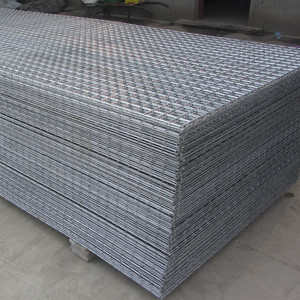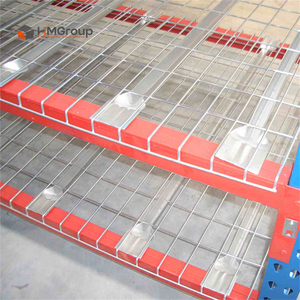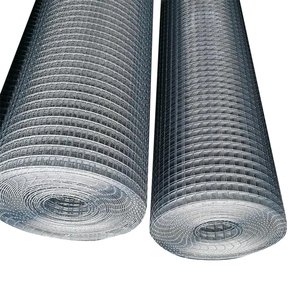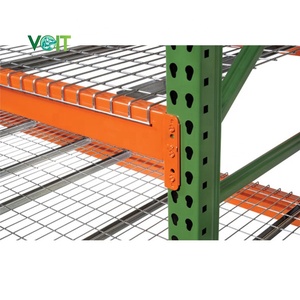
China Wholesale Wire Mesh Decking Manufacturers & Manufacturer

Precision-Engineered Heavy Duty Wire Mesh Decks for Industrial Storage, High-Bay Logistics, and AS/RS Warehousing Systems Meeting ANSI MH26.2 and NFPA 13 Standards.

Direct OEM/ODM Manufacturer Certified UDL Load Tested Rapid 40HQ Container Dispatch
Engineered Warehouse Storage Racks

Standard & Custom Wire Mesh Decking Solutions

Explore our export-grade galvanized and powder-coated welded wire mesh decking lines, designed to integrate seamlessly with standard step beams, box beams, and structural C-channels worldwide.

45+
Years Engineering Lineage
1,200,000+
Decks Produced Annually
3,500+ kg
Custom Ultimate Load Test
60+
Global Export Destination Ports
Technical Whitepaper Deep Dive

Engineering Architecture & Load Calculus of Wire Mesh Decking

A rigorous industrial assessment of structural geometry, channel dynamics, metallurgy specifications, and fire-sprinkler hydraulic transmission for global logistics planners.

Cold-Formed Channel Geometries

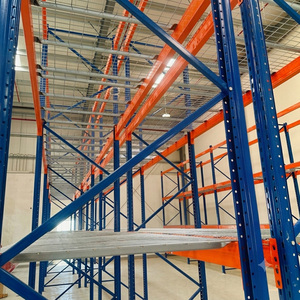
The structural load of an industrial wire deck is predominantly governed by the geometry, thickness, and distribution of its bottom support channels. We engineer cold-rolled steel channels in thicknesses from 14-gauge (1.9mm) to 16-gauge (1.5mm). Universal flanged waterfall channels rest securely over both standard 1-5/8" step beams and structural box/C-beams. Inverted flared channels prevent dirt and debris accumulation in sensitive food and pharmaceutical facilities, while internal drop-in flush channels preserve clear vertical beam face clearance for barcode reading and automated picking machinery.

Universal Flange Inverted Flare Drop-in Flush

UDL & Deflection Mechanics

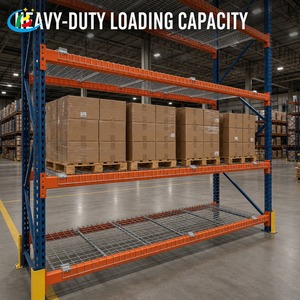
Every wire mesh deck fabricated in our manufacturing facility is designed to comply with ANSI MH26.2 specifications governing Uniformly Distributed Load (UDL) capacities. Under full design payload, maximum vertical deflection does not exceed the engineering threshold of L/240 (span length divided by 240). By employing computer-controlled resistance spot welding at every wire-to-wire and wire-to-channel intersection, shear stress is effectively distributed across the entire structural plane, preventing localized tensile fatigue when pallets are placed dynamically by forklifts.

L/240 Deflection Uniform Load Dynamic Placement

NFPA 13 Fire Sprinkler Permeability

Unlike solid plywood shelves or corrugated metal pans that act as solid fire barriers, wire mesh decking provides an open surface area exceeding 70%. In the event of an in-rack fire emergency, this open-aperture matrix permits unhindered downward water penetration from ceiling ESFR (Early Suppression Fast Response) sprinklers directly through multi-tier rack bays. This compliance eliminates the expensive requirement for dedicated in-rack sprinkler pipework on intermediate levels while dramatically lowering insurance premiums for facility operators.

NFPA 13 Compliant 70%+ Open Ratio ESFR Optimized
Deck Model & System Configuration Nominal Dimensions (D x W) Wire Grid Aperture Channel Type & Qty UDL Capacity Rating Recommended Pallet & Load Type
Standard Industrial Step Deck 42" x 46" (1067 x 1168 mm) 2" x 4" (50 x 100 mm) 3 Flanged U-Channels 2,500 lbs (1,134 kg) Standard GMA / EUR wooden pallets
Heavy Duty Step Deck 48" x 46" (1219 x 1168 mm) 2" x 4" (50 x 100 mm) 4 Flanged U-Channels 3,500 lbs (1,588 kg) Heavy automotive dies, bulk drums
Inverted Clean-Room Channel Deck 42" x 46" (1067 x 1168 mm) 2" x 2" (50 x 50 mm) 3 Inverted Flared Channels 2,500 lbs (1,134 kg) Pharma, food-processing, small items
Universal Flange Box Beam Deck 36" x 46" (914 x 1168 mm) 2" x 4" (50 x 100 mm) 3 Universal Flange Channels 2,000 lbs (907 kg) Structural channel and box beam racks
Flush Inset Deck (Zero Beam Overhang) 48" x 44" (1219 x 1118 mm) 1" x 4" (25 x 100 mm) 4 Drop-in Flat Channels 3,000 lbs (1,360 kg) AS/RS Automated shuttle systems
Stainless Steel 304 Hygienic Deck 42" x 46" (1067 x 1168 mm) 2" x 4" (50 x 100 mm) 3 Stainless Formed Channels 2,500 lbs (1,134 kg) Cold storage, washdown meat & chemical

Surface Metallurgy & Corrosion Protection Performance

Choosing the correct surface treatment dictates the lifetime return on investment, particularly in temperature-controlled or high-humidity facilities:

  • Electro-Galvanized Zinc (EG): Cold electroplated zinc layer (8–12 μm) per ASTM B633. Ideal for dry indoor ambient distribution centers, providing high aesthetic brightness and smooth surface touch.
  • Hot-Dip Galvanized (HDG): Full immersion in molten zinc bath at 450°C yielding a heavy metallurgical alloy layer (60–85 μm) per ASTM A123. Essential for sub-zero freezer warehouses (-30°C), exterior storage, and marine port environments.
  • Electrostatic Powder Coating: Thermoset TGIC polyester powder cured at 200°C over iron-phosphate pre-treated steel. Delivers 500+ hours salt spray performance with custom high-visibility corporate color coding.

Structural Integrity, Channel Fitment & Load Vectors

Proper integration between rack beams and wire decking channels prevents premature deformation and catastrophic rack collapse:

  • Waterfall Overhang Engineering: A 1.5" (38mm) front and rear waterfall edge locks the wire deck firmly over the beam faces, mechanically arresting beam spread under heavy lateral loading.
  • Channel Spacing Uniformity: Computer-controlled automated jigging ensures channel pitch is aligned within ±1.0 mm, guaranteeing uniform contact across the support beams without rocking.
  • Weld Point Shear Strength: Every cold-drawn Q235 steel wire junction undergoes hydraulic shear testing, sustaining over 3.5 kN of joint shear load without weld detachment.
Industry Foresight 2025 - 2030

Future Procurement Trends in Industrial Wire Decking

How supply chain executives, global EPC contractors, and fulfillment facility planners are revolutionizing their sourcing strategies for the next generation of automated intralogistics.

AS/RS & Automated Intralogistics Alignment

As distribution hubs migrate toward Autonomous Mobile Robots (AMRs), automated storage and retrieval systems (AS/RS), and high-speed robotic shuttles, procurement teams are shifting toward high-precision flat-top wire decks. Tolerances on planar flatness have tightened to under 2.0 mm across a 48" span to avoid false triggers on optical proximity sensors, while snag-free chamfered wire edges protect automated carton belts and robotic end-effectors.

Total Cost of Ownership (TCO) & Cube Optimization

Freight volatility has transformed procurement from focusing solely on FOB unit costs to optimizing container cubic utilization. Progressive buyers mandate engineered "nested channel" designs where channel profiles nest inside one another when stacked. This structural innovation increases 40HQ container packing counts by 18% to 22% (loading up to 1,400 standard decks per container), reducing landed per-unit freight charges by up to $1.20 per deck.

Nearshore Quality Auditing & Raw Material Hedging

Tier-1 procurement organizations are mitigating steel raw material price swings through indexed pricing contracts tied to the Shanghai Metal Market (SMM) and London Metal Exchange (LME). Simultaneously, procurement protocols now demand real-time third-party QA validation (such as SGS or TÜV) inspecting zinc coating thickness, tensile yield tests, and weld integrity before container sealing.

Decarbonization & Circular Steel Sourcing

Global environmental mandates, including the EU Carbon Border Adjustment Mechanism (CBAM) and corporate ESG policies, require documented environmental product declarations (EPD). Modern Chinese wire deck manufacturers are transitioning to scrap-recycled electric arc furnace (EAF) steel wire, achieving a 38% reduction in embedded carbon footprint compared to traditional blast furnace wire rod.

Manufacturing Innovation

Technological Frontiers in Wire Mesh Deck Fabrication

Continuous automation, intelligent resistance welding, high-strength alloy integration, and IoT logistics interfacing driving manufacturing efficiency.

Automated Multi-Point CNC Robotic Spot Welding

Legacy manual jig welding creates micro-variations in electrical current dwell time, causing occasional cold-weld joints that fail under dynamic impact. Our advanced manufacturing floor utilizes synchronized CNC multi-point resistance welders. These systems calibrate pressure, current, and cycle timing for every single intersection down to the millisecond. The result is 100% metallurgical fusion across all 80+ weld points per deck, completely eliminating seam detachment when heavy point loads are dropped from forklift tines.

High-Strength Low-Alloy (HSLA) Wire Rod Integration

By shifting from conventional low-carbon Q195 wire to micro-alloyed HSLA Q235B wire treated with vanadium and titanium trace elements, yield strength is boosted from 235 MPa to over 345 MPa. This structural upgrade allows wire diameters to be engineered from 5.5mm down to 4.8mm while sustaining identical 2,500 lbs UDL capacity thresholds. The resulting tare weight reduction decreases shipping costs, simplifies ergonomic handling for installation contractors, and reduces raw steel material intensity.

Smart RFID & Machine-Vision Inventory Interfacing

The convergence of physical racking and automated inventory tracking has prompted new developments in deck design. Wire decking is increasingly fabricated with dedicated stamped indentation channels that protect embedded passive UHF RFID tags from forklift impact. Furthermore, high-contrast electro-galvanized wire finishes combined with non-reflective matte gray powder-coated beam frames optimize machine-vision barcode scanning for overhead drone-assisted inventory auditing.

Why Direct Sourcing With Us Delivers Measurable ROI

Manufacturing Pedigree & Industrial Infrastructure

Backed by over four decades of storage system design and automated fabrication, our plant engineers load-rated warehouse infrastructure that powers leading international retail, logistics, and manufacturing giants.

Direct Manufacturer & Heavy Fabrication

We are a dedicated heavy manufacturing powerhouse, not a trading intermediary. Our industrial compound houses automated wire-drawing lines, cold-roll forming mills, CNC stamping presses, and robotic mesh welders capable of processing 120 tons of raw steel daily.

ANSI MH26.2 Verified In-House Load Testing

Our quality assurance department operates a computerized 10-ton hydraulic load-test rig. Every production batch undergoes destructive testing to verify ultimate load limits, elastic deflection thresholds (L/240), and weld shear resistance prior to container loading.

International Project Export Track Record

Our industrial pallet racking and mesh decking lines are deployed in mission-critical facilities across North America, the Middle East, Bahrain, Sri Lanka, Canada, and Europe, trusted by corporations such as L&T, Pepsi, Asian Paints, Sun Pharma, and Unilever.

Bespoke Architectural & Industrial Customization

From custom 1" x 2" tight-mesh aperture decks for hand-loaded retail apparel to ultra-heavy 5-channel decks engineered for 5,000 lbs chemical drum racks, our engineering team generates 3D SolidWorks and CAD models to match your rack drawings within 24 hours.

Optimized Export Packaging & Fast Freight

Units are packaged using customized heavy-duty steel cradles, edge protectors, and non-slip fumigated dunnage that prevent forklift transit damage. Our close proximity to major deep-water container ports guarantees streamlined customs clearance and short ocean transit times.

Lifecycle Engineering & After-Sales Support

We provide comprehensive technical documentation, mill test certificates (MTR), third-party salt-spray test sheets, and structural load deflection calculation reports with every shipment, ensuring smooth handover during municipal building code and fire inspections.

Technical Knowledge Base

Frequently Asked Questions by Global Procurement Teams

Critical engineering considerations, code compliance clarifications, and procurement best practices for specifying wire mesh decking.

What is the structural difference between ANSI MH26.2 Uniformly Distributed Load (UDL) and Concentrated Point Load?

Under ANSI MH26.2 standard specifications, a Uniformly Distributed Load (UDL) rating assumes that the entire cargo weight is evenly distributed across the entire contact surface of the wire deck, transferring weight proportionally into all support channels and the step beams below. A concentrated point load occurs when heavy items (such as pallet feet, machinery skids, or small steel bins) exert force onto a tiny, isolated zone—frequently spanning only two or three wires.

If your warehouse operations involve 2-stringer or 9-block pallets where concentrated weight is transferred through narrow runner points, you must specify reinforced channel configurations or thicker 6.0 mm wire gauges to prevent localized wire punch-through, even if the total pallet weight is well below the rated UDL limit.

Why do municipal fire marshals insist on wire mesh decking over solid timber or steel panels under NFPA 13?

National Fire Protection Association (NFPA) Standard 13 rules dictate that storage shelving decks located under ceiling sprinkler arrays must maintain a minimum open area of 50% (and typically over 70% in high-rack configurations). Solid wood decking, particle boards, and continuous solid sheet steel panels act as fire shields: they block sprinkler water from reaching combustion occurring on lower tiers, and they trap heat, accelerating lateral fire spread throughout the warehouse.

Open wire mesh decking permits instant vertical drainage of water directly to the base tiers, suppressing flame spread rapidly. In addition, wire mesh surfaces prevent the accumulation of combustible dust and do not ignite or feed toxic smoke generation during an emergency event.

How do I determine whether to specify Universal Flanged Channels or Inverted Step Channels?

The choice between channel styles depends on your beam profile and hygiene requirements:

  • Universal Flanged Channels: Feature flattened wing-like outer lips at both channel ends. They can sit securely on top of standard 1-5/8" step beams as well as box beams and structural C-channels. This is the most versatile design for general-purpose 3PL facilities with mixed beam types.
  • Step Channels: The channel ends drop directly into the 90-degree step of the beam, resting flush with the upper beam surface. This eliminates horizontal channel overhang on the beam face.
  • Inverted Channels: Built with the open channel "U" facing downward. This prevents dirt, loose cardboard dust, and food particles from accumulating inside the channel trough, making them mandatory in FDA-regulated pharmaceutical, cleanroom, and food storage facilities.
What are the practical lifespan differences between Electro-Galvanizing (EG) and Hot-Dip Galvanizing (HDG)?

Electro-Galvanizing (EG) deposits an 8 to 12 micron uniform zinc layer via electrolytic current. It is cost-effective, bright, and provides 10 to 15 years of rust-free service in dry, climate-controlled indoor logistics centers with relative humidity below 60%.

Hot-Dip Galvanizing (HDG) immerses the entire welded deck into a bath of 450°C molten zinc, producing an iron-zinc alloy coating measuring 60 to 85 microns thick. This heavy coating physically seals all weld joints and raw edges, providing 25+ years of robust corrosion protection in sub-zero blast freezers (-30°C), exterior unconditioned staging docks, high-salinity coastal warehouses, and chemical facilities.

Does the waterfall design eliminate the need for pallet rack beam cross-ties?

A standard 1.5" (38 mm) waterfall edge curves over both the front and rear faces of the step beam. Under moderate loading, this lip mechanically captures the beams and helps resist lateral beam spread. However, for beam spans exceeding 108" (2743 mm) or rack bays carrying extreme loads over 6,000 lbs per pair of beams, structural cross-ties (flanged beam ties or bolted ties) may still be required by building engineering codes to prevent torsional rotation of the beams.

We provide full structural load calculations to confirm whether your specific bay span and load class requires supplementary mechanical ties or whether our heavy-channel wire decks alone satisfy seismic and torsional limits.

What manufacturing tolerances and quality certifications should be specified in an international PO?

When drafting an international purchase order with a Chinese wire mesh deck manufacturer, procurement professionals should specify the following rigorous tolerance thresholds:

  • Dimensional Tolerances: Depth and width within ±2.0 mm; diagonal squareness deviation under 3.0 mm.
  • Wire Diameter Tolerance: ±0.08 mm per cold-drawn steel wire standard ASTM A510.
  • Weld Joint Shear Strength: Minimum shear load threshold of 3.5 kN per spot weld point under hydraulic shear test.
  • Coating Standards: ASTM B633 for electro-galvanizing or ASTM A123 / ISO 1461 for hot-dip galvanizing, backed by a minimum 72-hour salt spray test without red rust occurrence.
How does pallet deck nesting impact container shipping freight costs from China?

Because wire decking is a bulky item, shipping freight cost is heavily determined by cubic volume optimization rather than gross weight limits. Standard non-nested channel decks require approximately 30% more vertical space when stacked, limiting a standard 40HQ container to roughly 900–1,000 decks before cubic volume is maxed out.

By engineering nested channel geometries—where each underlying channel nests snugly inside the channel above it—stacking height per bundle is reduced by nearly 40%. A standard 40HQ container can accommodate between 1,250 and 1,450 nested decks. This 20–25% increase in container payload translates to immediate ocean freight savings of $0.80 to $1.40 per deck delivered to European or North American ports.

Request Custom Engineering Drawings & Factory Price List

Send your warehouse layout, beam profile dimensions, and target load capacity. Our technical sales engineers will calculate deflection matrices and deliver a transparent FOB/CIF container quote within 12 hours.