Continuous automated roll-forming, laser CNC profiling, and heavy-gauge structural steel engineering designed to maximize vertical warehouse volume and operational throughput.
A rigorous examination of cold-formed steel mechanics, deflection thresholds, and global structural compliance codes for modern material handling facilities.
Procuring heavy material racks on a global scale requires moving beyond basic dimensional parameters. Structural integrity in high-density logistics facilities is dictated by cold-formed thin-walled steel mechanics, complex moment-connection behaviors between upright columns and horizontal load beams, and strict compliance with international structural frameworks. At our manufacturing facility, we adhere strictly to FEM 10.2.02 (European Handling Federation), RMI MH16.1 (Rack Manufacturers Institute), and AS 4084-2023 (Steel Storage Racking) standards.
We utilize certified Q355B structural carbon manganese steel for our main upright column profiles, yielding a minimum tensile strength of 355 MPa. Compared to standard commercial-grade Q235B steel, Q355B provides a 34% increase in yield strength, preventing premature elastic buckling under extreme vertical axial compression.
Every horizontal box beam and step beam profile is engineered according to the maximum permissible serviceability deflection equation: δ ≤ L / 200 for standard manual operations, and δ ≤ L / 300 for automated crane and automated guided vehicle (AGV) interfaces, preventing permanent plastic sag under rated Uniformly Distributed Loads (UDL).
Our heavy-duty baseplates, floor-anchoring sleeve bolts (M12 to M16 grade 8.8), and diagonal bracings are mathematically modeled via finite element analysis (FEA) to withstand horizontal seismic spectral acceleration coefficients up to 0.35g, preserving stability during high-magnitude harmonic ground excitations.
| Racking Architecture | Material Grade | Nominal Bay Payload | Recommended Pallet / Material Profile | Floor Slab Spec Required | International Standard |
|---|---|---|---|---|---|
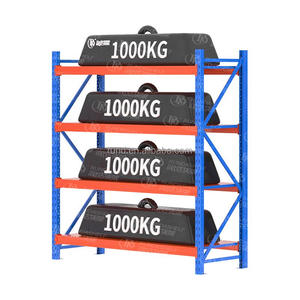
| Heavy Selective Pallet Racking | Q355B Steel | 1,000 – 4,500 kg / level | Standard Euro / GMA Pallets (FIFO) | C25/30 Concrete (Min 180mm) | FEM 10.2.02 / RMI MH16.1 |
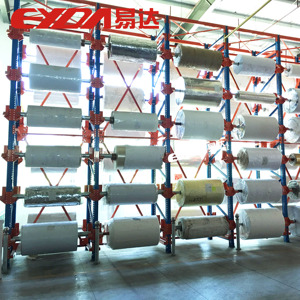
| Multi-Level Coil Cantilever Rack | Hot-Rolled I-Beam | Up to 2,000 kg / arm | Coils, Steel Billets, Aluminum Extrusions | C30/37 Fiber Reinforced (220mm) | EN 1993-1-3 (Eurocode 3) |
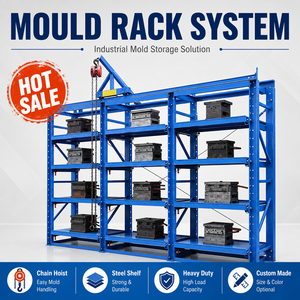
| High-Load Sliding Mould Drawer | Solid Steel Plate | 3,000 kg / drawer | Injection Moulds, Stamping Dies, Tooling | Standard Industrial Floor (150mm) | GB/T 13005-2011 Mechanical |
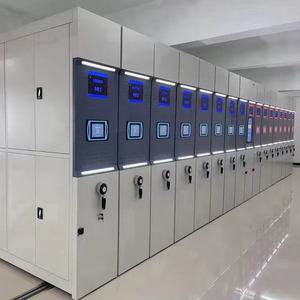
| Electric Mobile High-Density Base | Q355 Cold Formed | Up to 24,000 kg / train | Cold Storage Palletized Goods / Spares | Embedded Ground Rails (Laser Level) | CE Machinery Directive 2006/42 |
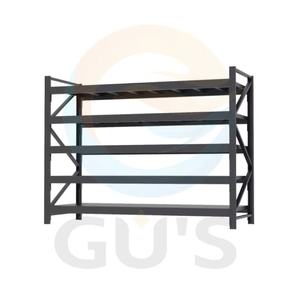
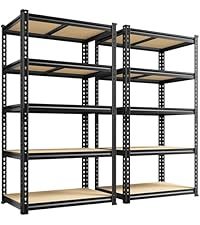
| 5-Layer Boltless Rivet Heavy Shelving | Cold Rolled SPCC | 300 – 800 kg / shelf | Cartons, Hand-loaded Spares, Hardware | Standard Screed / Workshop Slab | ISO 9001 / BS EN 15620 |
Combining primary steel supply traceability, computer-controlled cold roll-forming, and rigorous quality inspection protocols under one roof.
We source raw hot-rolled pickled and oiled (HRPO) coils directly from primary Chinese steel mills like Baosteel and Shougang. Every production run is issued an authentic Mill Test Certificate (MTC) certifying exact carbon, phosphorus, and manganese chemistries, ensuring zero trace impurities or brittle inclusions.
Our workshop houses 18 automated multi-station cold roll-forming lines integrated with inline hydraulic punching dies. Upright perforations maintain a pitch accuracy of ±0.1 mm over a 12-meter continuous span, eliminating field-erection misalignment and connector friction wear during seismic cycles.
Components undergo an automated 9-stage pre-treatment process (including silane degreasing, ultrasonic water rinsing, and zinc-phosphate film conversion) before electrostatic powder coating. Cured at 200°C, the resulting thermo-hardened polyester finish exceeds 1,000 hours of ASTM B117 neutral salt spray testing.
Key intralogistics transformations influencing enterprise procurement decisions, lifecycle depreciation, and warehouse automation over the coming decade.
Procurement teams are shifting away from standalone manual racking toward systems pre-engineered for autonomous mobile robots (AMRs) and automated 4-way pallet shuttle integrations. Racking must be fabricated with ultra-tight tolerance upright rails and specialized guide-way attachments.
High-saline, coastal, and chemical warehouse procurement is replacing post-fabrication hot-dip galvanizing with continuously coil-coated Zinc-Aluminum-Magnesium (ZAM) alloys. ZAM delivers 4x the corrosion barrier protection and provides self-healing galvanic coverage along punched cut edges.
Next-generation racking involves embedded wireless fiber-optic strain gauges and piezoelectric accelerometer impact sensors mounted on critical upright footplates. These systems report dynamic rack deflection, tilt drift, and forklift collisions in real time directly to warehouse WMS platforms.
Surging ocean freight rates make shipping cubage a critical metric. Next-generation structural components feature interlocking nesting geometry, allowing 40-foot high-cube containers to achieve over 95% volumetric packing efficiency without risking surface scuffing during transit.
Critical answers for sourcing managers, structural consultants, and warehouse operations directors evaluating factory direct partnerships.
Consult directly with our structural engineering team. Receive comprehensive CAD warehouse layouts, static load calculation reports, and factory-direct volume manufacturing quotes within 24 hours.