
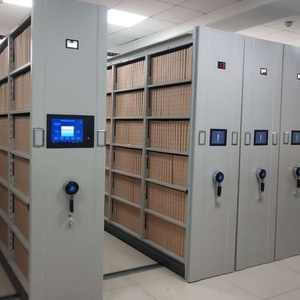
Precision-manufactured in our high-capacity Chinese production plant. Every unit undergoes automated laser cutting, continuous robotic submerged welding, and certified yield-strength inspection prior to knocked-down export shipment.
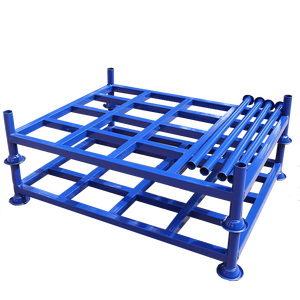
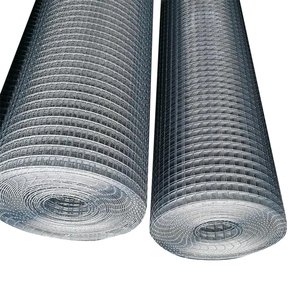
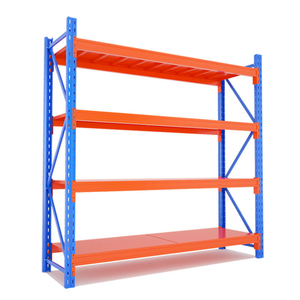
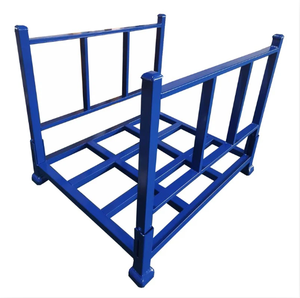
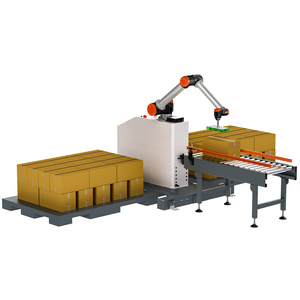
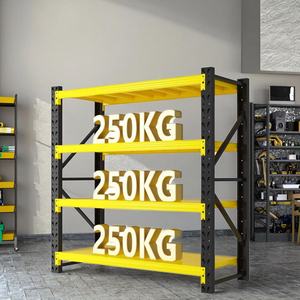
In modern distribution centers and cold storage facilities, material handling operations face non-stop forklift speeds, high-density traffic, and stringent earthquake codes. Discover why global procurement directors are replacing light cold roll-formed steel with Chinese heavy hot-rolled structural steel racks.
| Key Engineering Parameter | Hot-Rolled Structural Channel Racks | Conventional Cold Roll-Formed Racks | Industrial Impact Assessment |
|---|---|---|---|
| Steel Section Profile | Hot-rolled C-channel (ASTM A36 / GB Q355B) with solid webs | Thin-gauge open-profile roll-formed sheets (1.5mm - 2.5mm) | Structural resists 400% higher torsional twisting |
| Upright Wall Thickness | Heavy 4.0 mm to 8.0 mm uniform hot-rolled thickness | 1.8 mm to 2.5 mm thin cold-stamped sheet steel | Eliminates crumpling from forklift mast strikes |
| Forklift Impact Resistance | Resists direct 3.5-ton forklift side impacts without collapse | Prone to catastrophic buckling requiring urgent upright repair | Drastically reduces facility maintenance TCO |
| Beam-to-Column Connection | Grade 8.8 structural high-tensile bolting through thick flanges | Teardrop clip-in slots subject to notch stress fatiguing | Zero risk of beam dislodgement under dynamic loads |
| Sub-Zero Freezing (-30°C) Performance | No ductile-to-brittle cold failure; thick steel absorbs shock | Micro-cracks propagate along stamped cold-work bend radii | Essential benchmark for food cold-chain automation |
| Lifespan & Residual Value | 25 to 40+ years continuous heavy service life | 7 to 12 years before extensive bay section replacement | Substantially lower asset depreciation over 3 decades |
Structural channel racks are fabricated from solid hot-rolled structural steel profiles conforming to ASTM A36 and Q355B low-alloy high-strength metallurgy. Unlike cold roll-forming—which introduces residual tensile stresses along internal bend radii—hot-rolled sections feature isotropic crystalline grain structures that prevent localized notch brittleness, providing superior impact damping when hit by heavy counterbalanced trucks.
Yield Strength ≥ 355 MPaFor high-risk seismic environments (Zone 3 and Zone 4), structural racks deliver superior moment-resisting frame behavior. Bolted flange joints with Grade 8.8 bolts produce semi-rigid joint ductility, meeting ANSI MH16.1 drift limits and Eurocode 3 standards. This prevents lateral plastic deformation and secondary P-Delta buckling during severe ground accelerations, keeping stored pallets safely locked in place.
Seismic Factor Ss up to 2.5gCold storage distribution centers running at -25°C to -30°C cause severe condensation during defrost cycles. Structural channel racks offer continuous smooth surface geometry without the trapped inner channels of roll-formed tubes. Combined with automated Hot-Dip Galvanizing (HDG) per ASTM A123 or dual thermosetting epoxy-polyester electrostatic coating, our systems prevent internal hidden oxidation for decades.
ISO 1461 HDG 85μm - 100μmGlobal supply chain directors are no longer purchasing static steel uprights; they are investing in robotic automation interfaces, ESG-compliant carbon footprints, and high-density vertical engineering. Here is how structural pallet rack exporting is transforming.
As automated storage and retrieval systems (AS/RS) reach vertical clear heights of 30 to 45 meters, cumulative deflection tolerances tighten to less than 1/1000th of upright height. Hot-rolled structural channels guarantee the structural stiffness needed for tight optical sensor guidance and high-speed automated shuttles without track binding.
Export contracts increasingly specify IoT sensor integration within structural upright baseplates. Tri-axial strain gauges and micro-accelerometers monitor real-time beam load deflection and inadvertent forklift collisions, transmitting structural stress data directly to enterprise warehouse management systems (WMS).
International EPC contractors across North America, Europe, and the Middle East now evaluate Environmental Product Declarations (EPDs). China's leading structural rack exporters utilize electric arc furnace (EAF) steel with recycled scrap content exceeding 60%, achieving substantial Scope 3 carbon emission reductions.
Procurement models are shifting away from initial-purchase-price bias toward 20-year lifecycle evaluations. Given that roll-formed rack facilities replace up to 15% of bottom uprights annually due to forklift impacts, structural channel racks deliver positive ROI within 4.5 years via negligible repair downtime.
Rooted in over 45 years of continuous industrial steel fabrication heritage since 1977, we are a genuine heavy manufacturing facility—not a trading intermediary. Our operations combine massive Chinese raw material reserves with German-engineered automated CNC drilling and automated powder-coating lines.
From raw billet rolling to shot blasting, multi-axis automated CNC punching, and robotic submerged-arc welding, all operations are managed under ISO 9001, ISO 14001, and ISO 45001 management systems. We maintain strict batch traceability for every single heat of steel delivered from tier-1 mills.
Zero Outsourced Critical ProcessingOur structural designs are verified via Finite Element Analysis (FEA) and dynamic shaking-table load tests. We deliver fully stamped structural calculation books conforming to USA RMI/ANSI MH16.1, Australian AS 4084, European EN 15512, and Canadian CSA S16 building codes.
Third-Party PE Stamped CalculationsShipping heavy structural steel requires advanced stowage planning to prevent damage and maximize container payload limits. Our knocked-down (KD) modular configurations use custom steel cradles and heavy-gauge strapping to reach 26 to 28 tons per 40ft HQ container without bent flanges or scuffed paint.
Exported to 85+ NationsAvoid costly engineering revisions, on-site installation delays, and mismatched floor anchor embedments by verifying these critical technical metrics before issuing an international Request for Proposal (RFP).
Structural channel racks distribute massive point loads through baseplates. Procurement managers must confirm concrete slab compressive strength (typically ≥ 25 to 35 MPa), slab thickness (minimum 180 mm to 250 mm), reinforcing rebar grid spacing, and joint locations. High seismic sites require heavy Hilti/Fischer chemical capsule anchors or mechanical wedge anchors with certified embedment depths of 120 mm to 180 mm to resist uplift overturning moments.
Critical Step: Obtain a recent floor core-drill compressive test report to provide to your structural rack engineer.
Provide exact pallet outer dimensions (Width × Depth × Height, including product overhang). Standard ISO, EUR (800 × 1200 mm), and GMA (40 × 48 inch) pallets require custom bay beam lengths (e.g., 2300 mm for 2-pallet bays, 3300 mm for 3-pallet bays) to maintain the mandatory 75 mm to 100 mm side clearance required by OSHA and EN 15635. Always specify whether pallets are solid timber, plastic runners, or perimeter steel skids to select proper wire mesh decking or front-to-back pallet supports.
Critical Step: Account for maximum gross weight of individual pallet loads, including shrink wrap and moisture absorption.
Direct technical answers addressing structural engineering, factory lead times, sea freight logistics, tariffs, and site commissioning.
Structural C-channel racks are manufactured from heavy hot-rolled steel with solid webs up to 6mm to 8mm thick, compared to 1.8mm thin stamped sheets on roll-formed racks. In high-traffic distribution centers, fast-moving forklifts frequently hit bottom column corners. A roll-formed frame will crimp and experience catastrophic structural buckling, requiring costly offloading and upright replacement. Structural channel racks absorb these impacts with zero structural deflection, drastically lowering your 20-year maintenance overhead.
All our structural export products are designed strictly in accordance with ANSI MH16.1 (Specification for the Design, Testing, and Utilization of Industrial Steel Storage Racks), EN 15512 (Steel Static Storage Systems), and Australian Standard AS 4084. We submit complete Finite Element Analysis (FEA) computer models, weld inspection reports, mill test certificates (EN 10204 3.1), and third-party Professional Engineer (PE) stamped structural calculation books for regional building permit approvals.
We utilize certified primary hot-rolled structural steel conforming to GB Q355B (equivalent to ASTM A572 Grade 50 or European S355JR) for heavy upright columns and main load beams, and GB Q235B (ASTM A36) for cross-bracing and pallet supports. Every raw steel heat arriving from state-owned tier-1 mills is verified with spectral chemical analysis and universal tensile testing for yield strength, elongation, and Charpy V-notch impact toughness at sub-zero temperatures.
Yes. We specialize in high-seismic configurations (UBC Zone 4, ASCE 7 Spectral Response Acceleration Ss ≥ 2.0g). Our seismic engineering involves oversized CNC-cut baseplates (e.g., 200×200×16mm or larger), heavy anchor bolts, full-height double-flange upright reinforcing sleeves, moment-resisting bolted beam connections, and top horizontal portal seismic bracing ties that absorb and dissipate cyclic lateral earthquake forces.
For sub-zero freezers (-30°C) with heavy condensation cycles or exterior open-air lumber/pipe yards, we recommend Hot-Dip Galvanizing (HDG) per ASTM A123 / ISO 1461. The steel components are dipped into molten zinc at 450°C, forming an iron-zinc alloy metallurgical bond with 85μm to 100μm thickness that provides 30+ years of rust immunity. For standard temperature-controlled warehouses, our automated 9-stage pre-treatment and electrostatic epoxy-polyester powder coat (80μm - 120μm) offers outstanding impact and scratch durability.
Structural steel is heavy, meaning containers reach weight limits before volume limits. We engineer custom knocked-down (KD) bolted frame kits. Uprights, horizontal struts, and diagonal bracings are bundled in heavy steel channels with nested wood dunnage, high-strength PET strapping, and edge corner protectors. We utilize specialized loading software to balance cargo weight, achieving maximum legal payload (26,000 kg to 28,000 kg per 40ft HQ) without cargo shifting, ensuring easy forklift unloading at destination ports.
Following final approval of architectural CAD approval drawings and structural calculation submittals, our standard factory manufacturing lead time is 25 to 35 calendar days for a typical 20 to 50 container project. We run multiple automated CNC punching, laser cut, and robotic welding lines simultaneously, allowing continuous staggered container dispatches to major international sea shipping terminals (Shanghai, Ningbo, Qingdao, Shenzhen).
Yes. Every export project includes comprehensive 3D assembly shop drawings, component piece-mark identification tags, bolt torque schedules, and step-by-step video installation manuals. For large distribution centers and complex multi-tier mezzanine rack structures, we dispatch bilingual senior installation supervisors to lead your local rigging crew. We provide a 10-year comprehensive structural warranty against manufacturing defects and structural material failure.