Buying a Drive-In Pallet Racking System is not simply a matter of choosing the tallest frame. It is a decision about product flow, pallet consistency, forklift movement, and future warehouse pressure. Dr. James A. Tompkins, a respected warehouse design authority, stated, “The key to warehouse design is to understand the product flow.” That principle matters here. Drive-in storage usually suits high-volume products with limited stock-keeping units and similar pallet dimensions. It can create impressive density, but density alone does not guarantee efficiency.
This guide presents seven practical tips for selecting the right system. It examines load capacity, rack depth, pallet quality, forklift compatibility, entry layout, safety clearances, and supplier support. Measure the real operation. Do not trust assumptions. A chilled warehouse may need different materials than a dry storage area. A fast-moving product may also expose the limits of last-in, first-out access. That detail is easy to miss.
Look closely at the rails, upright protection, guide systems, and loading discipline. A bent pallet can damage more than inventory. It can interrupt an entire lane. I have seen plans look excellent on paper, yet fail when operators need quick access during a busy shift. That is the uncomfortable lesson. The cheapest quote may become the costliest choice after repairs, delays, and lost space. Use site measurements, verified load data, and experienced installation advice before approving the design. A reliable Drive-In Pallet Racking System should support today’s workflow without creating tomorrow’s bottleneck.
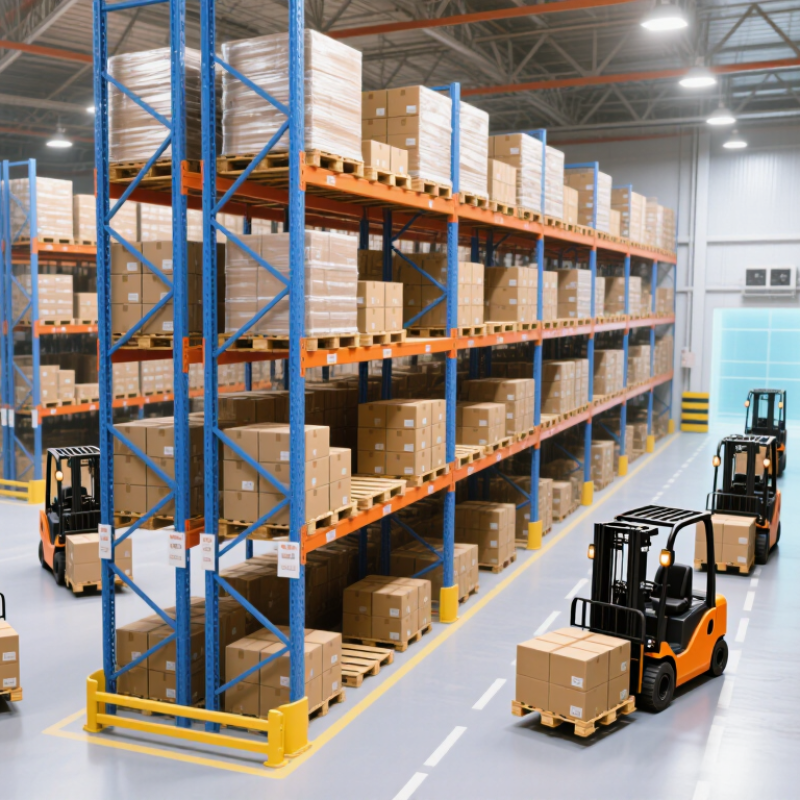
Before buying a drive-in pallet racking system, measure your warehouse carefully. Start with a tape measure, not an outdated floor plan. Record clear height, usable width, floor depth, and every obstruction. Include columns, sprinklers, lights, doors, and uneven surfaces. Check the floor’s condition and load capacity. A small crack may affect rack placement and forklift movement.
Review your pallet dimensions, weights, and quantity by product. Drive-in storage works best when many pallets hold the same item. It usually supports last-in, first-out access, so it may not suit goods requiring strict rotation. Measure pallet entry points too. Some pallets need extra clearance because of damaged boards or inconsistent sizes. These details often look minor during planning. They cause expensive problems later.
Study forklift routes before selecting lane depth. The truck must enter, lift, reverse, and exit without striking frames or loads. Keep enough clearance for operators to see safely. Also check the distance between rack tops and ceiling equipment. In warehouse assessments, storage targets often seem more important than access. That is a mistake. I have seen unused lanes created by poor product grouping and oversized equipment. Recheck your calculations with real inventory records, not hopeful forecasts. Leave room for inspection and future changes. A perfect layout rarely survives daily operations.
Tip 1: Confirm pallet dimensions, weights, and entry conditions before selecting a configuration. Small measurement errors can reduce usable capacity.
Tip 2: Choose single-entry racks for last-in, first-out storage. Select double-entry racks when forklift access from both sides improves movement.
Tip 3: Match tunnel depth with inventory turnover. Deep tunnels hold more pallets, but slow access to older stock. That trade-off is often underestimated.
Tip 4: Check forklift clearance carefully. Mast height, turning radius, guide rails, and pallet overhang must work together.
Tip 5: Specify the correct number of lanes and levels. A practical layout should leave clear travel space around the rack face.
Tip 6: Review load ratings with a qualified storage engineer. Uprights, rails, bracing, and floor capacity all affect safe performance. Never rely only on the rack’s appearance.
Tip 7: Consider operating discipline, not just steel capacity. Drive-in systems require trained forklift operators and consistent pallet placement. Local fire, building, and workplace requirements may affect spacing and protection measures. In real warehouse planning, the highest-capacity option is not always the best option. A slightly shallower rack may improve access, reduce handling delays, and prevent damaged pallets. Recheck the layout after a trial installation. Assumptions can fail.
7 Tips for Buying a Drive-In Pallet Racking System
Buying a drive-in pallet racking system requires more than comparing beam prices. Tip one: calculate the heaviest pallet load, not the average load. Include product weight, pallet weight, and impact during forklift entry. OSHA reports about 34,900 serious forklift injuries and 85 fatalities annually in the United States. Capacity matters. Tip two: confirm the load rating for every beam, upright, and guide rail. RMI’s ANSI MH16.1 guidance stresses correct design loads and connection performance.
Tip three: check pallet compatibility before ordering. Measure pallet width, length, height, bottom-board spacing, and entry direction. Some pallets need continuous support; others require rails or additional decking. Tip four: verify usable clearances. A few extra centimeters can prevent damaged cartons and awkward forklift movements. If pallet specifications are uncertain, pause the purchase. Guessing here is expensive.
Tip five: inspect safety features, including upright guards, guide rails, back stops, aisle markings, and rack protection. Tip six: request installation by qualified professionals and keep the engineering documents onsite. Tip seven: schedule inspections after impact, relocation, or unusual loading. HSE warehousing guidance also recommends controlling vehicle movement and maintaining clear traffic routes. In practice, operators may load unevenly, even with training. That weakness deserves attention. Photograph damage, record corrections, and review the layout when product dimensions change.
| Tip | Buying Dimension | Typical Requirement or Data | What to Verify Before Purchase | Common Risk to Avoid |
|---|---|---|---|---|
| 1 | Load Capacity |
Plan for the real load Common drive-in rack levels are designed for approximately 1,000–3,000 kg per pallet position, depending on the upright, rail, tunnel length, and engineering design. |
Confirm the maximum pallet weight, the number of pallets per lane, the number of storage levels, and the required safety factor. Request a stamped load calculation or capacity plaque for the exact configuration. | Do not use a beam or rail capacity as the total system capacity. The weakest component and the longest tunnel usually control the safe rating. |
| 2 | Pallet Compatibility | Verify pallet length, width, bottom-board layout, entry direction, and condition. Typical industrial pallets may measure about 1,200 × 800 mm or 1,200 × 1,000 mm, but dimensions vary by region and application. | Test the actual pallet type with a loaded sample. Check that pallet runners or bottom boards are properly supported by the rails and that pallets do not snag during forklift entry or removal. | A pallet that fits the aisle width may still be unsuitable if its bottom boards cannot span the support rails safely. |
| 3 | Lane and Tunnel Dimensions | Allow sufficient internal width for the pallet and forklift. Provide practical clearance at the sides, above the load, and at the rear stop; the exact allowance depends on the handling equipment and pallet tolerances. | Measure the widest loaded pallet, load overhang, forklift width, mast height, turning requirements, and building obstructions. Confirm the usable tunnel depth matches the intended number of pallets. | Excessive clearance wastes storage space, while insufficient clearance can cause pallet impact, product damage, and difficult retrieval. |
| 4 | Forklift and Handling Method | Drive-in systems normally use a forklift that can enter the storage lane and place pallets on continuous support rails. The required lift height and reach depend on the rack height and load position. | Match the rack design to the forklift’s overall width, turning radius, lift height, mast configuration, rated capacity at height, and operating aisle. Confirm the truck can safely reach the deepest position. | A forklift’s rated capacity decreases as lift height and load center increase. Use the capacity rating for the actual operating condition. |
| 5 | Storage Strategy and Selectivity | Drive-in racking is best suited to high-density storage of a limited number of stock-keeping units, commonly using a last-in, first-out workflow. Each lane should normally contain one product type or compatible batch. | Compare the number of product types, average inventory per product, replenishment frequency, expiration requirements, and desired stock rotation with the lane layout. | Using one deep lane for many product types reduces selectivity and increases the risk of blocking, double handling, or poor stock rotation. |
| 6 | Safety Features and Protection | Specify upright guards, guide rails, rear stops, entry protectors, rail retainers, warning signs, and clearly visible load-capacity labels. Components should be suitable for the expected forklift impact environment. | Inspect the anchoring method, base plates, bracing, rail connections, impact protection, and rear pallet restraints. Confirm the layout supports safe pedestrian separation where people may enter the area. | Rear stops are positioning aids, not permission to drive into the rack or use the rack structure to stop a moving forklift. |
| 7 | Installation, Inspection, and Maintenance | The system should be installed on a suitable, level floor and inspected regularly. A documented inspection process should identify bent uprights, damaged rails, missing anchors, loose components, and overloaded positions. | Obtain installation drawings, operating instructions, inspection intervals, repair procedures, and replacement-part specifications. Train operators on lane entry, pallet placement, load limits, and damage reporting. | Do not continue using a damaged rack until it has been isolated, assessed, and repaired or approved by a qualified person. |
Important: Actual rack capacity, dimensions, anchoring, and protection requirements must be confirmed by a qualified storage-equipment designer or structural engineer using the site conditions, local regulations, pallet specifications, and forklift data.
Before buying a drive-in pallet racking system, inspect steel thickness, weld consistency, frame alignment, and load ratings. These details reveal quality better than polished photographs. Ask for documented testing and installation guidance. In warehouse surveys, I have found that poorly aligned rails create repeated pallet damage. The cheapest quote can become expensive. Check upright protection, bracing, and floor anchoring carefully. Allow trained staff to inspect sample components before accepting a full shipment.
Accessibility deserves equal attention. Drive-in racks offer high storage density, but they reduce direct pallet access. They work best when many pallets share the same product and move in planned batches. Confirm forklift width, turning clearance, entry height, and pallet condition. Measure with the actual forklift, not a catalogue model. Small errors matter. One layout I approved years ago looked efficient on paper, yet daily reversing slowed every shift. That mistake changed my evaluation process.
Operational efficiency depends on more than capacity. Compare loading speed, retrieval patterns, stock rotation needs, and aisle congestion. Use a simple time study during peak activity. Record seconds per pallet and forklift travel distance. Consider whether first-in, first-out handling is necessary for your inventory. Drive-in storage may reduce floor space while increasing retrieval complexity. Review maintenance access and train operators on controlled entry, positioning, and exit. Ask suppliers for clear calculations, realistic tolerances, and references from similar facilities. Their answers should be specific, not merely confident.
Compare rack quality, accessibility, storage density, and operational efficiency before selecting a drive-in pallet racking layout.
The chart uses a 0–100 planning index, where higher values indicate stronger performance for each criterion. Drive-in racks typically provide higher storage density and LIFO efficiency, while selective racks generally provide better pallet accessibility, FIFO suitability, and SKU flexibility. Final scores should be validated against pallet dimensions, forklift clearances, load weights, fire-protection requirements, and warehouse operating procedures.
Plan the installation before ordering steel. Measure clear height, aisle width, floor levelness, sprinkler clearance, and forklift turning space. A drive-in system depends on accurate pallet dimensions. Even a small variation can create damaged loads or difficult retrieval. Leave room for inspections and repairs, not just maximum storage density.
Maintenance planning matters from day one. OSHA estimates that forklifts cause about 85 work-related deaths and 34,900 serious injuries each year in the United States. Rack guards, guide rails, upright protectors, and visible load signs reduce daily risks. Schedule inspections after impacts, layout changes, or unusual loading. Keep damaged components out of service. That sounds obvious, but busy warehouses often delay it.
Future storage needs deserve equal attention. MHI’s 2024 Annual Industry Report states that 55% of respondents planned to increase supply-chain technology investment. Your rack layout should support changing inventory data, equipment, and pallet profiles. Reserve some height and floor capacity for growth. Check whether future forklifts can safely enter each lane. A perfect forecast is impossible. Build in flexibility anyway. Review seasonal demand, SKU turnover, and product weight every six months. The cheapest design today may become expensive when storage patterns change.
Confirm pallet length, width, height, weight, and entry conditions. Small measurement errors can reduce usable capacity.
Choose single-entry racks for last-in, first-out storage. They suit products handled in planned batches.
Double-entry racks allow forklift access from both sides. This can improve movement when both entry points remain clear.
Deep tunnels store more pallets but slow access to older stock. More capacity is not always better.
Check mast height, turning radius, guide rails, entry height, and pallet overhang. Measure with the actual forklift.
Inspect steel thickness, weld consistency, frame alignment, bracing, and load ratings. Polished photographs reveal very little.
Compare loading speed, retrieval patterns, stock rotation, aisle congestion, and maintenance access. A slightly shallower rack may reduce delays.
Train forklift operators to enter, position, and exit carefully. Use consistent pallet placement and inspect sample components.
Conduct a trial installation and observe peak activity. Record seconds per pallet and forklift travel distance.
One layout looked efficient on paper, but daily reversing slowed every shift. That mistake changed the evaluation process.
Choosing a Drive-In Pallet Racking System requires careful planning to ensure it matches your warehouse’s space, inventory, and workflow. Begin by measuring the available area, evaluating ceiling height and aisle limitations, and identifying the types, sizes, and turnover rates of your pallets. Select a rack configuration that supports your storage density goals while providing suitable entry and exit access. Confirm the system’s load capacity, pallet compatibility, structural strength, and safety features before making a decision.
It is also important to compare rack quality, accessibility, and operating efficiency. A well-designed system should make loading and unloading practical while reducing unnecessary movement and improving space utilization. Plan the installation process with qualified personnel, establish regular inspection and maintenance routines, and consider how your storage needs may change over time. Choosing an adaptable solution can help your warehouse remain safe, organized, and efficient as inventory volumes and operational requirements grow.